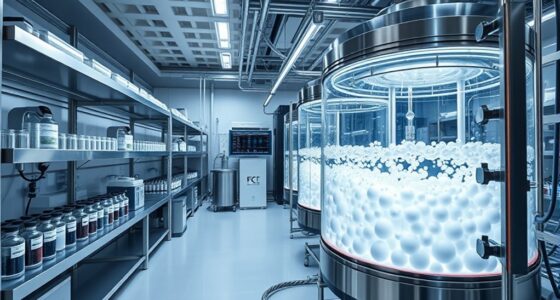
Pharma’s green push focuses on reducing solvents, catalysts, and overall waste in drug manufacturing. You’ll see a shift toward eco-friendly solvents like water or bio-based options and safer, recyclable catalysts. Companies aim to lower Process Mass Intensity (PMI), cutting waste and energy use while improving efficiency. Regulatory support drives these changes, helping the industry meet sustainability goals. Discover how these innovations are shaping a more responsible pharmaceutical future as you explore further.

Get school and study supplies delivered free — and shop member deals
- Fast, free delivery on millions of items
- Access to Prime Big Deal Days deals on October 6–7
- Prime Video, Amazon Music and more included
Key Takeaways
- Pharma companies are replacing toxic solvents with water or bio-based alternatives to reduce environmental impact.
- Green catalysts are being developed for higher efficiency and recyclability, decreasing waste and improving process sustainability.
- Process Mass Intensity (PMI) targets are guiding the industry to minimize waste and optimize resource use in drug manufacturing.
- Regulatory support and industry initiatives are driving adoption of eco-friendly solvents, catalysts, and greener manufacturing practices.
- Integrating green chemistry principles enhances process efficiency, lowers costs, and aligns pharma production with global sustainability goals.
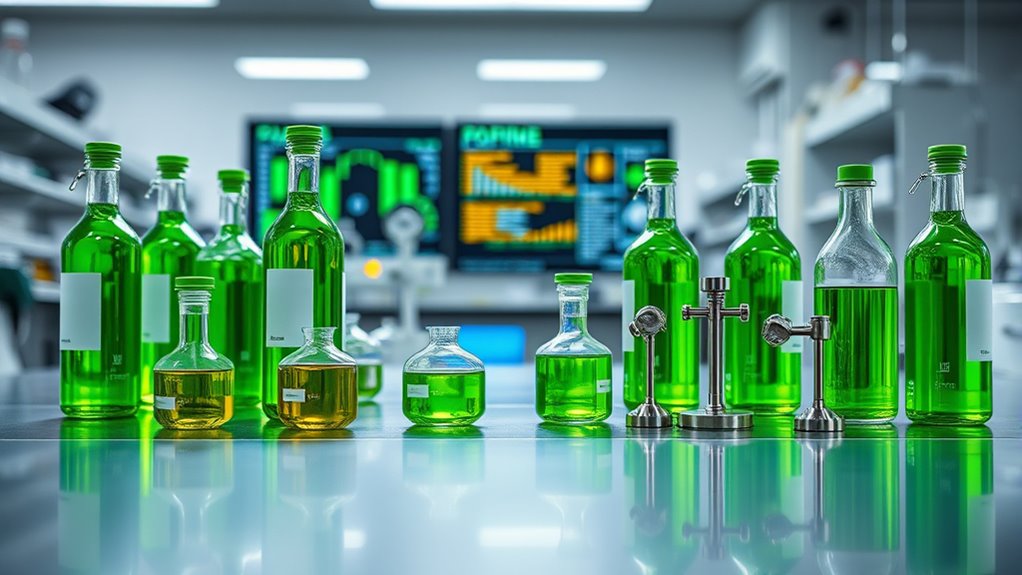
As the pharmaceutical industry faces growing pressure to reduce its environmental impact, companies are increasingly adopting sustainable practices and green technologies. This shift is particularly evident in how drugs are manufactured, with a focus on sustainable manufacturing processes that minimize waste and energy consumption. You’re encouraged to explore how green chemistry principles are transforming the way active pharmaceutical ingredients (APIs) and their intermediates are produced, emphasizing safer solvents, catalysts, and reaction conditions. By integrating these practices, you help reduce the industry’s carbon footprint and reliance on hazardous substances, aligning with global sustainability goals.
Pharmaceuticals are adopting green chemistry to reduce waste, energy use, and hazardous substances in drug manufacturing processes.
Sustainable manufacturing in pharma isn’t just about compliance; it’s about rethinking traditional production methods to be more eco-friendly. You’ll find that green chemistry plays a central role here, promoting the development of processes that generate less waste and use safer, more sustainable materials. For instance, replacing toxic solvents with water or bio-based alternatives can markedly cut down on hazardous waste. Catalysts are also evolving—more efficient, recyclable, and less toxic options are now favored, which improves process efficiency and reduces environmental impact. These innovations not only make production cleaner but also more cost-effective, helping companies meet their PMI (Process Mass Intensity) targets. PMI measures how efficiently raw materials are converted into the final product, and lowering it means less waste and resource use per unit of medicine produced.
You’re likely to see many companies setting ambitious PMI reduction goals, driven by both environmental responsibility and economic benefits. Achieving these targets involves streamlining chemical processes, optimizing reaction conditions, and adopting continuous manufacturing techniques. These strategies reduce solvent use, energy consumption, and waste generation, making the entire process more sustainable. Moreover, regulatory agencies and industry standards are increasingly supporting green chemistry initiatives, encouraging you to innovate and adopt eco-friendly solutions. The push towards sustainable manufacturing isn’t just a trend; it’s becoming a core part of strategic planning in pharma, with companies investing in research to develop greener catalysts, solvents, and processes.
Ultimately, your role in this transition is essential. By embracing sustainable manufacturing practices and green chemistry innovations, you help the industry move toward more environmentally responsible production. This not only benefits the planet but also enhances your company’s reputation, reduces costs, and ensures compliance with evolving regulations. As pharma continues its green push, your commitment to reducing environmental impact will be pivotal in shaping a more sustainable future for medicine production.
eco-friendly pharmaceutical solvents
As an affiliate, we earn on qualifying purchases.
As an affiliate, we earn on qualifying purchases.
Frequently Asked Questions
How Do Green Solvents Compare in Cost to Traditional Ones?
Green solvents generally cost more than traditional ones, but a thorough price analysis shows that their higher initial expense can be offset by benefits like reduced disposal costs and lower environmental impact. You might find the cost comparison favors green solvents over time, especially when considering regulatory compliance and sustainability goals. While they are usually pricier upfront, their overall value often justifies the investment, making them a smarter choice for eco-conscious operations.
What Are the Biggest Challenges in Replacing Catalysts?
Replacing catalysts isn’t easy; ironically, the biggest hurdles are catalyst regeneration and toxicity. You’ll find that developing processes to regenerate catalysts efficiently while minimizing toxicity is complex—and costly. It’s a delicate balance, as safer, greener catalysts often struggle with stability and activity. Overcoming these challenges requires innovation and significant investment, making the progression more about patience and persistence than quick fixes.
How Are PMI Targets Influencing Solvent and Catalyst Choices?
PMI targets drive you to choose solvents and catalysts that support sustainable practices. You prioritize options like biodegradable polymers and energy-efficient processes to meet these goals. This means opting for greener solvents and catalysts that reduce environmental impact while maintaining efficiency. By aligning your choices with PMI targets, you not only comply with regulations but also enhance your company’s reputation for environmental responsibility and innovation in pharmaceutical manufacturing.
What Innovations Are Emerging in Sustainable Pharmaceutical Manufacturing?
You should know that over 60% of new pharmaceutical processes now incorporate sustainable innovations. Emerging trends include using biodegradable polymers to reduce plastic waste and harnessing renewable energy sources to power manufacturing facilities. These advancements minimize environmental impact, improve process efficiency, and meet stricter PMI targets. By adopting such innovations, you can help create greener, more sustainable pharmaceutical production that aligns with global sustainability goals.
How Do Green Initiatives Impact Overall Drug Production Timelines?
Green initiatives can slightly extend drug production timelines because environmental regulation requires additional steps and compliance checks. You might notice delays as supply chains adapt to sustainable materials and greener processes. However, these efforts also streamline operations long-term, reducing waste and energy use. While initial adjustments may slow down production, embracing sustainability ultimately leads to more efficient, eco-friendly drug manufacturing, aligning with both regulatory demands and future market expectations.
Conclusion
As you embrace greener practices, you reduce waste, cut costs, and protect the environment. You innovate responsibly, improve efficiency, and foster sustainability. You lead the change, set new standards, and build a better future. By prioritizing solvents, catalysts, and PMI targets, you not only advance your business but also contribute to a healthier planet. In doing so, you demonstrate that sustainability isn’t just an option—it’s your responsibility, your opportunity, and your commitment.
Halloween Picks
halloween
As an affiliate, we earn on qualifying purchases.