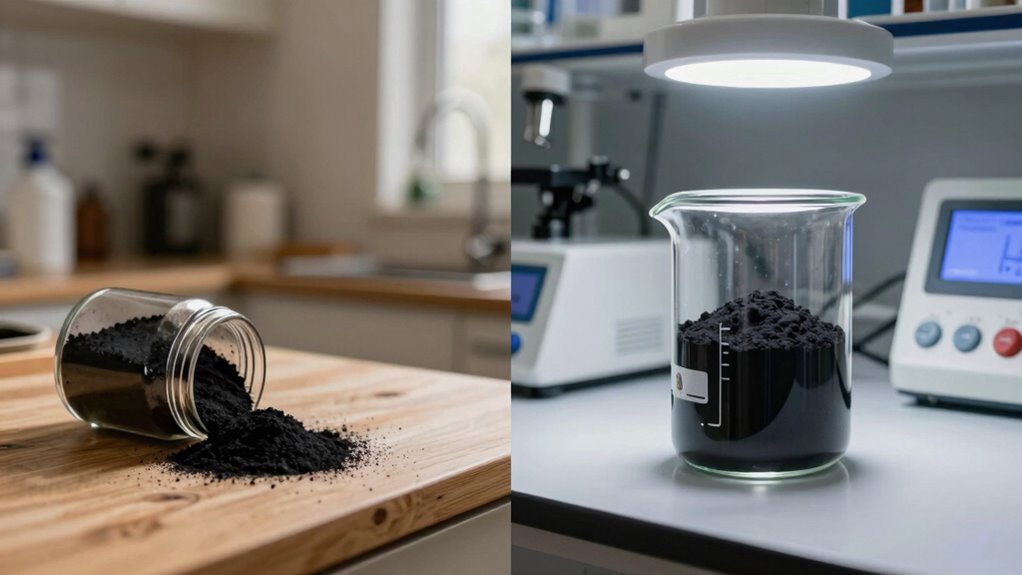
Activated carbon’s chemistry is consistent, but understanding the key differences between home use and laboratory standards can make all the difference in safety and effectiveness.
Browsing Category
Everyday Chemistry
90 posts
Desiccants Explained: How Dry Cabinets Keep Materials From Ruining
Preserving your valuables requires understanding how desiccants keep dry cabinets effective—discover the secrets to preventing damage over time.
Why Plastics Smell: Off‑Gassing Explained Without Scare Tactics
Why plastics smell and what off-gassing really means can help you understand this common phenomenon and its implications.
Bleach vs Alcohol vs Peroxide: Which Disinfectant Actually Wins When?
The tempting choice between bleach, alcohol, and peroxide depends on your cleaning needs, but which disinfectant truly wins in each scenario?
Food Preservatives: How They Prevent Spoilage
Salvaging freshness and safety, food preservatives combat spoilage—discover how they preserve your favorite foods and why it matters.
Sunscreen in Winter: UV and Albedo
Great winter sun protection requires understanding UV reflection and albedo effects to keep your skin safe year-round.
Ink Chemistry: Dyes, Pigments, and Binders
Opaque or transparent, ink chemistry combines dyes, pigments, and binders to create durable, vibrant marks—discover how these elements work together.
Paper Towels Vs Cloths: Absorbency Science
Here’s a science-backed comparison of paper towels and cloths’ absorbency that reveals which might be better for your needs.
Road Salt and Deicers: How They Work
Learn how road salt and deicers lower freezing points to melt ice, but discover what hidden effects they may have on the environment.
Candle Science: Waxes, Wicks, and Soot
Candle science hinges on selecting the right wax, wick, and fragrance; discover how these choices impact soot and candle quality.