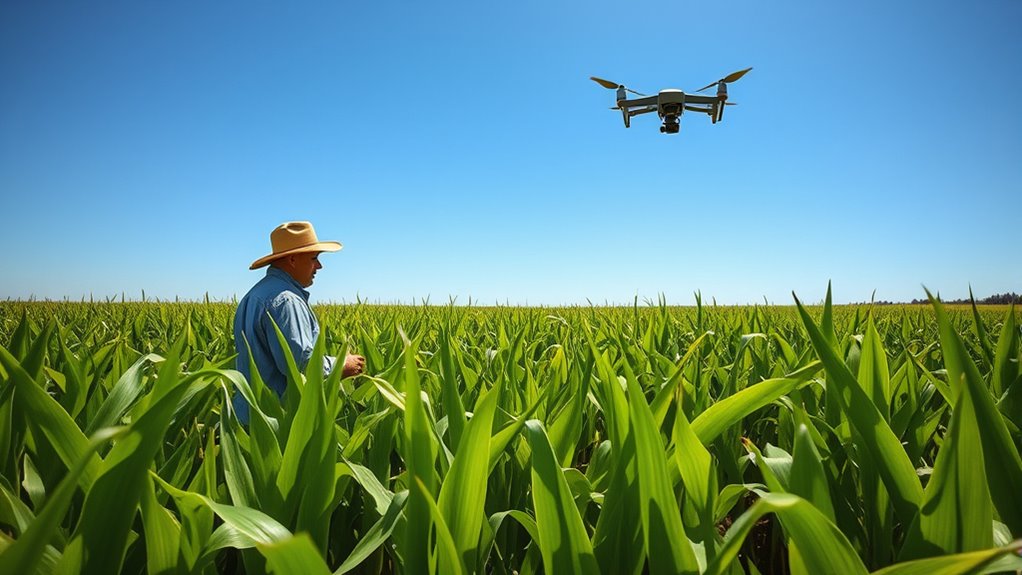

During the Green Revolution, chemical fertilizers and pesticides played a vital role in boosting crop yields and supporting a growing population. Fertilizers provided essential nutrients like nitrogen and phosphorus, while pesticides controlled pests and diseases, reducing losses. These chemicals became central to farming practices, enabling higher productivity but also raising environmental concerns. To learn about how these innovations shaped agriculture’s future and ongoing debates, explore further insights into sustainable farming methods.

Prime made for students and young adults
- Fast, free delivery for dorm and study essentials
- Prime Video and Amazon Music included
- Member-only deals
Key Takeaways
- The Green Revolution relied heavily on chemical fertilizers and pesticides to dramatically boost crop yields.
- Fertilizers supplied essential nutrients like nitrogen, phosphorus, and potassium to sustain high productivity.
- Pesticides reduced pest-related crop losses, enabling consistent agricultural output.
- Excessive chemical use led to environmental issues such as water pollution and soil degradation.
- Balancing chemical dependency with sustainable practices remains a key challenge for future food security.
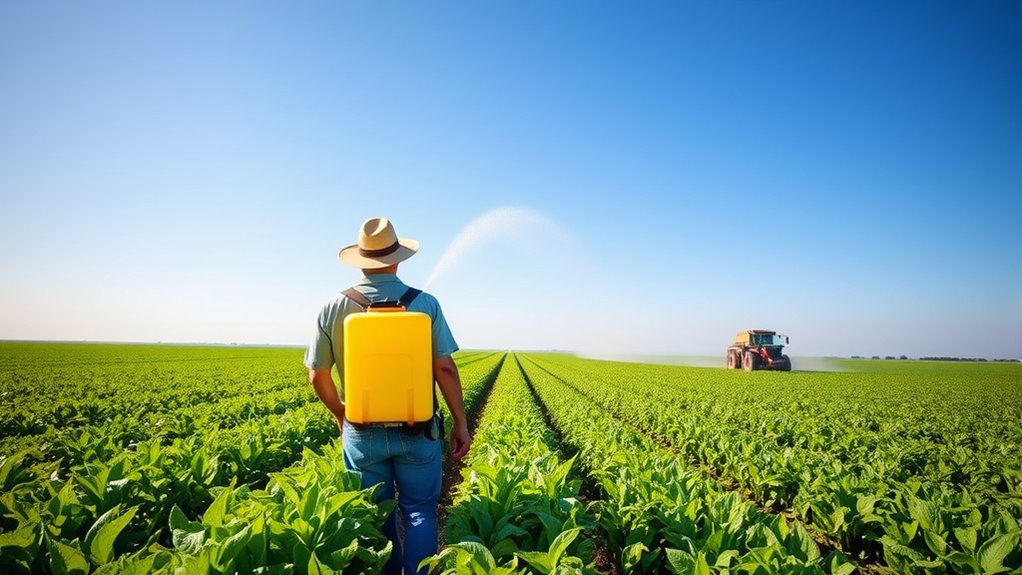
The Green Revolution transformed agriculture by introducing chemical innovations that dramatically increased crop yields. You’re likely familiar with how fertilizers and pesticides became central to modern farming, but it’s vital to understand the broader impact these chemicals have had. While they boosted food production and helped feed a growing global population, they also created new challenges, especially around sustainable practices and chemical dependencies. As you consider the history of agricultural progress, recognize that these chemical inputs became integral to farming routines, often leading farmers to rely heavily on them for consistent results.
Chemical dependencies mean that many farmers now find themselves unable to maintain high yields without these inputs. Fertilizers supply essential nutrients like nitrogen, phosphorus, and potassium, which plants need to grow robustly. Pesticides, on the other hand, help control pests and diseases that threaten crops, reducing losses and ensuring predictability in harvests. These innovations revolutionized productivity, but they also fostered a cycle where farmers felt compelled to use more chemicals to combat pests adapting to pesticides or to replace nutrients depleted from intensive farming. This cycle can make sustainable practices challenging because it emphasizes short-term gains over long-term soil health and environmental stability.
You might also notice that the widespread reliance on chemical inputs has led to environmental concerns. Runoff from fertilizers can cause water pollution, leading to algal blooms and harming aquatic ecosystems. Pesticide residues may impact non-target species, including beneficial insects, birds, and even humans. Over time, these issues have raised questions about the sustainability of current practices. Many farmers and agricultural experts now advocate for integrated pest management, organic farming, and other methods that reduce chemical dependencies. These approaches aim to maintain productivity while minimizing environmental harm and promoting soil health, aligning more closely with sustainable practices.
Despite the advances, you should be aware that the reliance on chemicals has prompted ongoing debate. Critics argue that overuse of fertilizers and pesticides can degrade land, pollute water supplies, and threaten biodiversity. Conversely, supporters highlight the necessity of these chemicals for ensuring food security in a world with a growing population. The challenge lies in balancing productivity with environmental responsibility. As you consider the future of agriculture, it’s clear that reducing chemical dependencies and adopting more sustainable practices will be essential for maintaining the gains achieved during the Green Revolution while safeguarding ecological health. Moving forward, innovation and awareness are key to developing farming methods that support both high yields and environmental sustainability. Recognizing the importance of chemical inputs is crucial for understanding the ongoing evolution of agricultural practices.
organic fertilizer for sustainable farming
As an affiliate, we earn on qualifying purchases.
As an affiliate, we earn on qualifying purchases.
Frequently Asked Questions
How Do Fertilizers Impact Soil Health Long-Term?
Fertilizers can boost crop yields initially, but long-term, they may cause soil degradation and nutrient depletion. You might notice the soil becoming less fertile over time because fertilizers often replace natural nutrients without improving soil structure. This imbalance can reduce organic matter, harm beneficial microbes, and lead to less productive land. To maintain healthy soil, it’s vital to use fertilizers wisely and incorporate practices that restore soil nutrients naturally.
What Are the Environmental Risks of Widespread Pesticide Use?
Widespread pesticide use can lead to environmental risks like chemical runoff, which contaminates water sources and harms aquatic life. You might also face pesticide resistance, where pests evolve to survive treatments, making pest control harder over time. This resistance forces you to use more chemicals, increasing environmental damage. To reduce these risks, it is crucial to adopt integrated pest management practices and use pesticides responsibly.
Can Organic Farming Match Green Revolution Yields Sustainably?
Yes, organic farming can match Green Revolution yields sustainably by focusing on practices like crop rotation and building soil carbon. These methods improve soil health, enhance nutrient availability, and reduce dependency on chemical inputs. While it may require more time and effort, organic farming supports long-term productivity and environmental health, making it a viable, sustainable alternative to traditional high-input agriculture.
How Do Chemical Inputs Affect Biodiversity in Agricultural Areas?
Chemical inputs can substantially harm biodiversity in agricultural areas by causing biodiversity loss and habitat fragmentation. When you use pesticides and fertilizers, you often kill beneficial insects, birds, and soil organisms, disrupting ecosystems. These chemicals can also break up natural habitats, making it harder for wildlife to survive and reproduce. As a result, the balance of local biodiversity deteriorates, leading to less resilient and less sustainable agricultural landscapes.
What Innovations Are Reducing Chemical Dependency in Modern Agriculture?
You can reduce chemical dependency through innovations like biological alternatives, which use natural organisms to control pests and enhance soil health. Precision farming also plays a vital role by optimizing input use, minimizing waste, and targeting specific areas that need treatment. These technologies help you grow healthier crops while protecting biodiversity, lowering environmental impact, and making your farming more sustainable and efficient.
Conclusion
You’ve seen how chemistry catalyzed crop growth, crafting fertilizers and pesticides that fueled the Green Revolution. But remember, this powerful progress also posed challenges, demanding careful consideration and constant change. As you continue to explore, stay curious about the complex chemistry behind crops and conservation. The Green Revolution’s gains grow when you grasp its gifts and guard against its gaps, guiding future growth with wisdom, work, and wonder.
Halloween Picks
halloween
As an affiliate, we earn on qualifying purchases.