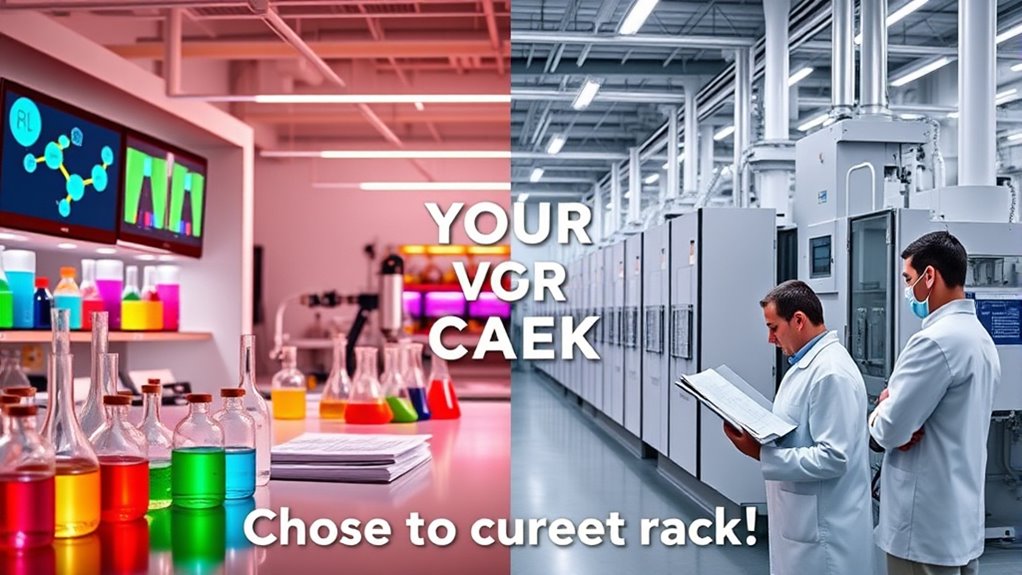

Choosing between R&D and Process Engineering depends on whether you enjoy driving innovation or optimizing manufacturing. If you’re passionate about creating new products, exploring ideas, and working on future market shifts, R&D might be your fit. On the other hand, if you prefer solving practical problems, improving processes, and ensuring efficiency, Process Engineering could be better. To find out more about each path and which aligns with your goals, keep exploring these options further.
Key Takeaways
- R&D focuses on innovation, developing new products and technologies, while Process Engineering centers on optimizing manufacturing efficiency and quality.
- R&D offers a dynamic, creative environment suited for exploring new ideas; Process Engineering involves problem-solving and practical process improvements.
- R&D influences future market offerings and requires advanced scientific expertise; Process Engineering ensures scalable, sustainable production methods.
- Choose R&D if passionate about pioneering ideas and industry transformation; opt for Process Engineering if interested in refining and streamlining existing systems.
- Consider your strengths and career goals—innovation and research versus operational efficiency and process optimization.

Research and Development (R&D) and Process Engineering are two vital but distinct functions within the innovation and manufacturing landscape. When you’re deciding between these paths, it’s important to understand how each aligns with your interests, goals, and strengths. R&D primarily focuses on creating new products, technologies, or solutions, driving innovation strategies that can reshape markets and industries. If you thrive on exploring new ideas, experimenting with concepts, and pushing the boundaries of what’s possible, R&D offers a dynamic environment where your creativity can flourish. It’s often seen as a career that emphasizes intellectual challenge and the pursuit of breakthrough innovations. On the other hand, Process Engineering is centered on optimizing existing manufacturing processes, improving efficiency, quality, and safety. If you’re someone who enjoys problem-solving, detailed analysis, and implementing practical solutions, process engineering provides a clear pathway for career development focused on operational excellence. This role demands a thorough understanding of production systems, materials, and quality controls, giving you the opportunity to make tangible impacts on a company’s bottom line.
R&D drives innovation and creativity; Process Engineering focuses on optimizing and improving manufacturing efficiency and quality.
Choosing between R&D and Process Engineering also influences your approach to innovation strategies within your organization. In R&D, your work directly influences the company’s future offerings, so your ideas can set the direction for new markets or product lines. You often work closely with marketing, design, and business teams to translate innovative concepts into viable products. Conversely, in Process Engineering, your focus is on refining and scaling these innovations efficiently, ensuring they can be produced at high quality and low cost. Your contribution ensures that innovations are not just groundbreaking but also commercially viable and sustainable.
For your career development, R&D tends to offer opportunities for specialization in scientific fields or emerging technologies, often requiring advanced degrees or specific expertise. It’s a track that can lead to roles like research scientist, product developer, or innovation manager. Process Engineering, meanwhile, often emphasizes practical skills, certifications, and experience with manufacturing systems. It can lead to roles such as process manager, quality assurance director, or operations executive. Both paths offer growth opportunities, but your choice will shape the skills you develop and the types of challenges you find most fulfilling.
Ultimately, the decision hinges on whether you’re more passionate about pioneering new ideas or perfecting existing systems. Each path complements different innovation strategies and offers unique avenues for career development. Understanding your interests and strengths will help you choose the track that aligns best with your long-term goals, enabling you to thrive in your professional journey.
Frequently Asked Questions
What Skills Are Most Important for R&D Professionals?
You need strong innovation skills to develop new ideas and solve complex problems. Collaboration abilities are equally essential, as working with diverse teams helps refine concepts and bring projects to life. Being adaptable and curious allows you to stay ahead in R&D, while effective communication ensures your ideas are understood and embraced. Focus on honing these skills to excel in R&D, driving innovation and making a meaningful impact.
How Do Career Growth Opportunities Differ Between R&D and Process Engineering?
In R&D, your career growth often follows innovation pathways, allowing you to lead cutting-edge projects and develop new products. You’ll find opportunities for leadership development as you innovate and influence company direction. In process engineering, growth tends to focus on optimizing operations, with leadership roles in process improvements and efficiency. Both tracks offer advancement, but R&D emphasizes creativity and innovation, while process engineering centers on operational excellence and process mastery.
What Industries Predominantly Hire R&D Versus Process Engineers?
Think of industries as vast oceans, each with unique currents. R&D roles often sail through biotech, pharmaceuticals, and tech sectors where innovation sparks new horizons. Process engineers navigate manufacturing, chemical, and energy industries, optimizing flow and efficiency. Both roles thrive on cross-functional collaboration, but industry-specific roles shape your journey. If you seek groundbreaking discoveries, R&D awaits; for streamlining operations, process engineering offers a steady, impactful voyage.
How Does Work-Life Balance Compare in R&D and Process Engineering Roles?
In R&D roles, you might face tight deadlines and high innovation demands, which can challenge your work-life balance and increase stress. Conversely, process engineering often offers more predictable schedules, helping you manage stress better and maintain a healthier work-life balance. Overall, you’ll find that process engineering tends to provide a steadier routine, making it easier to balance work and personal life, while R&D can require more flexibility and stress management.
What Certifications Can Enhance Prospects in Each Field?
Think of certifications as your toolkit in a bustling workshop. For R&D, obtaining a PMP or Six Sigma Green Belt boosts your innovation skills, aligned with current certification trends. In process engineering, certifications like Certified Manufacturing Engineer (CMfgE) or Lean Six Sigma Black Belt enhance your professional development. These credentials make you more competitive, signaling your commitment and expertise in evolving industry standards, and opening doors to advanced opportunities.
Conclusion
Think of R&D as exploring uncharted lands, seeking new treasures and innovations, while process engineering is like building the sturdy roads that carry those treasures to the world. Whether you’re drawn to the thrill of discovery or the satisfaction of creating reliable pathways, both paths shape the future. Choose your adventure wisely—you’re the captain steering your ship through these exciting waters. Whichever route you take, your journey will craft a legacy worth remembering.