In supramolecular chemistry, you see how molecules recognize and bind each other through non covalent interactions like hydrogen bonds, van der Waals forces, and π–π stacking. Host–guest systems are designed so one molecule fits into another like a key in a lock, allowing for reversible and selective binding. These interactions are fundamental to biological processes and the creation of smart materials. Exploring further reveals how these principles enable the design of complex, responsive molecular assemblies.
Key Takeaways
- Host–guest interactions involve non covalent forces that enable selective and reversible molecular binding.
- Host molecules are designed to complement guest shape and chemical properties for precise recognition.
- These interactions mimic biological lock-and-key mechanisms, crucial for sensing, catalysis, and delivery systems.
- Non covalent bonds such as hydrogen bonds and π–π stacking stabilize the host–guest complexes.
- Supramolecular systems leveraging these interactions enable the creation of molecular cages, capsules, and machines.
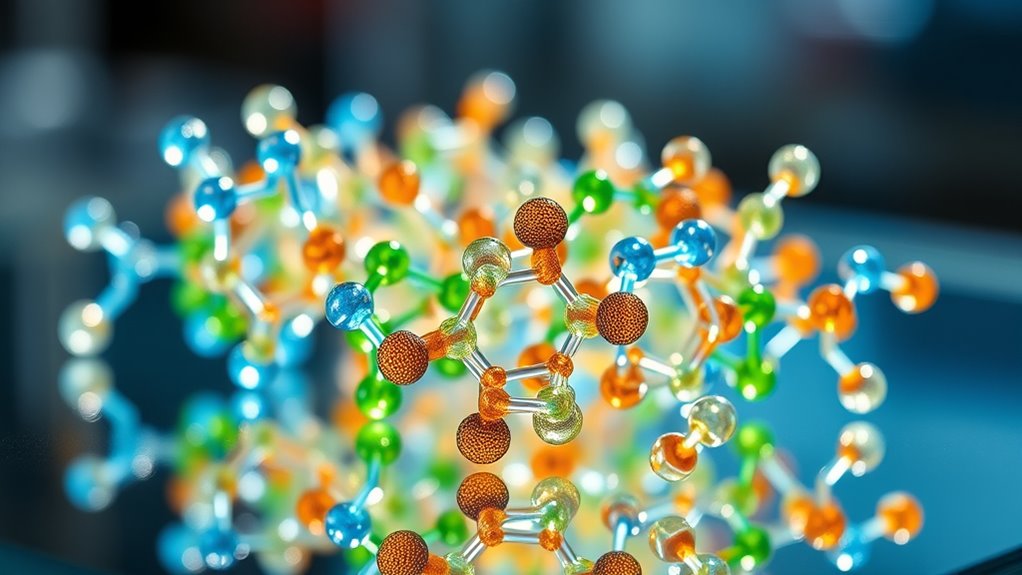
Have you ever wondered how molecules can organize themselves into complex structures without forming traditional chemical bonds? It’s a fascinating process driven by the principles of supramolecular chemistry, where molecules recognize and interact with each other through non covalent bonding. Unlike covalent bonds, which involve sharing electrons, non covalent interactions are weaker but essential for the dynamic and reversible assembly of molecules. This is where molecular recognition comes into play—an elegant mechanism that allows one molecule, the host, to selectively bind another, the guest, based on shape, size, and chemical compatibility.
Molecular recognition enables selective, reversible assembly without traditional chemical bonds in supramolecular chemistry.
In host–guest chemistry, the host molecule acts like a tailor-made container, designed with specific features that complement the guest. These features are tailored through non covalent bonding interactions such as hydrogen bonds, van der Waals forces, electrostatic attractions, and π–π stacking. Because these interactions are non covalent, they are reversible, allowing the host and guest to associate and dissociate as needed. This reversibility is vital for biological processes like enzyme activity, drug delivery, and molecular sensing, where temporary and specific interactions are essential.
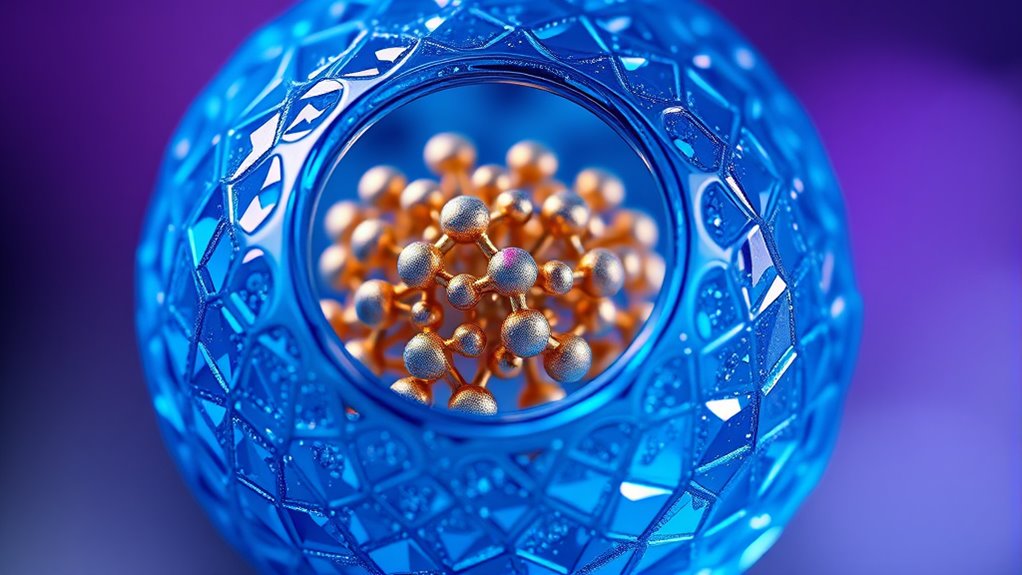
Molecular recognition hinges on the precise fit between host and guest molecules, much like a lock and key. The host’s cavity is shaped to accommodate the guest, and the interactions between them are stabilized by multiple non covalent bonds. These interactions are highly selective, allowing the host to distinguish between different guest molecules even if they are structurally similar. This selectivity arises from the subtle interplay of shape complementarity, charge distribution, and the ability to form optimal non covalent contacts. Additionally, the non covalent bonding interactions are influenced by environmental factors such as solvent and temperature, which can modulate the stability of the host–guest complex.
You might think of this process as a molecular handshake—non covalent bonds gently clasp the molecules together, holding them in a specific arrangement without permanently altering their structures. This non covalent bonding is what grants supramolecular systems their flexibility and responsiveness. It enables the formation of complex architectures like molecular cages, capsules, and even molecular machines, all built through a series of controlled host–guest interactions.
In essence, molecular recognition facilitated by non covalent bonding underpins the dynamic nature of supramolecular chemistry. It allows molecules to assemble into sophisticated structures with remarkable precision and adaptability, mimicking the intricate behaviors seen in biological systems. This understanding opens doors to designing new materials, sensors, and drug delivery platforms that leverage these subtle yet powerful interactions to achieve highly specific functions.
Frequently Asked Questions
How Do Host–Guest Interactions Influence Drug Delivery Systems?
Host–guest interactions enhance drug delivery systems by enabling molecular encapsulation, which protects drugs from degradation and improves stability. You can achieve targeted delivery by designing hosts that recognize specific biological markers, ensuring the drug reaches the intended site. This precise interaction minimizes side effects and increases efficiency, making the delivery more effective. Overall, these interactions allow you to control drug release and improve therapeutic outcomes.
What Are the Environmental Impacts of Supramolecular Assemblies?
Like a double-edged sword, supramolecular assemblies can both protect and threaten our environment. They may reduce environmental pollution by enabling targeted cleanup, but if misused, they cause ecological toxicity, harming wildlife and ecosystems. You must consider their life cycle, ensuring these structures don’t become hidden sources of pollution. Responsible design and disposal mitigate negative impacts, allowing you to harness their benefits without risking the health of our planet.
Can Host–Guest Chemistry Be Applied to Renewable Energy?
Yes, you can apply host–guest chemistry to renewable energy by enhancing solar energy capture and improving energy storage. You might develop molecular systems that efficiently trap solar energy and release it when needed, making solar power more reliable. These interactions can also facilitate the design of smart materials for energy storage, allowing you to create more sustainable, efficient solutions that harness and store renewable energy better.
How Is Selectivity Achieved in Complex Biological Environments?
You achieve selectivity in complex biological environments through molecular recognition and binding specificity. By designing host molecules that complement the shape, size, and chemical properties of target guest molecules, you enhance specific binding. This precise fit ensures the host interacts mainly with the intended analyte, even amidst competing substances. Fine-tuning these interactions allows you to develop highly selective systems for applications like sensors, drug delivery, and diagnostics in intricate biological settings.
What Are the Recent Advancements in Dynamic Supramolecular Systems?
Imagine molecular machines as tiny, adaptable puzzle solvers. Recent advancements in dynamic supramolecular systems focus on creating adaptive frameworks that respond to environmental cues, much like a chameleon changing its color. You can now design systems that assemble, disassemble, or change shape on demand, enhancing functionality. These innovations enable highly controllable, reversible interactions, pushing the boundaries of how molecular devices can perform complex tasks in real time.
Conclusion
In your exploration of host–guest interactions, you’ve uncovered a world where molecules come together like pieces of a puzzle, each fit revealing new possibilities. Just as a key open a door, these interactions open pathways to innovative materials and medicines. Remember, supramolecular chemistry is like a dance—each partner depends on the other to create harmony. Keep exploring; your understanding is the key that unfastens the endless potential of this fascinating field.