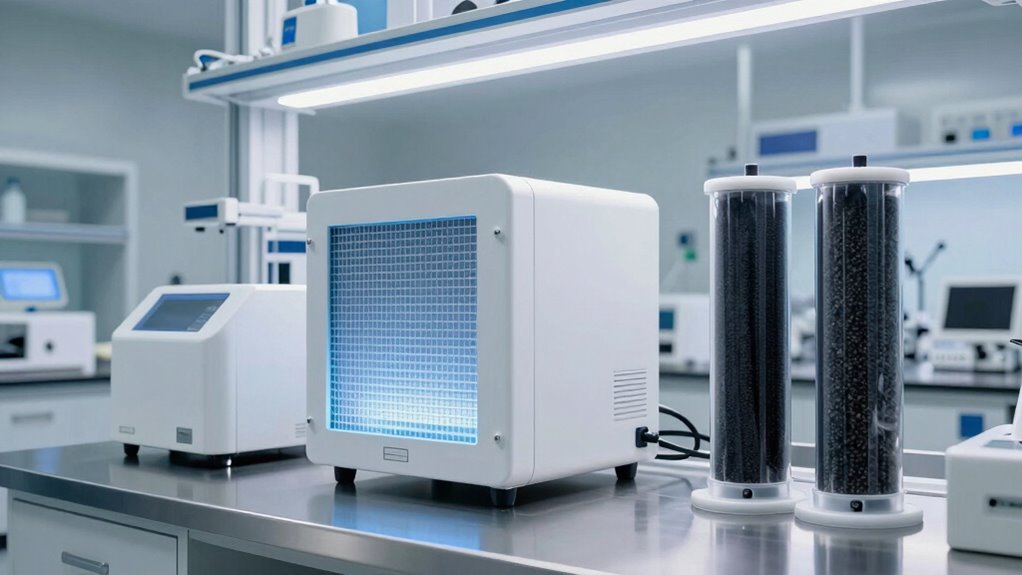
You see how HEPA filters and activated carbon transformed lab environments by drastically improving air quality. HEPA filters trap 99.97% of tiny particles like bacteria, dust, and smoke, while activated carbon adsorbs gases and odors. Together, they’ve revolutionized safety in research, healthcare, and clean rooms, reducing contamination risks. Their ongoing innovation keeps raising standards, ensuring cleaner, healthier spaces. Keep exploring to discover how these technologies continue to shape the future of safe indoor air.
Key Takeaways
- HEPA filters and activated carbon revolutionized laboratory air purification by efficiently removing particles and gaseous pollutants.
- HEPA filters trap 99.97% of tiny particles, including bacteria, pollen, and dust, greatly enhancing lab safety.
- Activated carbon adsorbs gases, VOCs, and odors that HEPA filters cannot capture, providing comprehensive air cleaning.
- The integration of these technologies improved safety, reduced contamination risks, and advanced research and healthcare environments.
- Ongoing innovations continue to enhance filter performance, setting new standards for clean, safe indoor air in labs worldwide.
Have you ever wondered how modern technology is helping to improve the air we breathe? It’s all about advances in air filtration and contaminant removal. These innovations have transformed laboratories, hospitals, and even homes by making the air safer and healthier. The journey began when scientists identified the need to filter out tiny particles and harmful gases that standard systems couldn’t catch. Today, HEPA filters and activated carbon are at the forefront of clean air technology, revolutionizing how we manage indoor air quality.
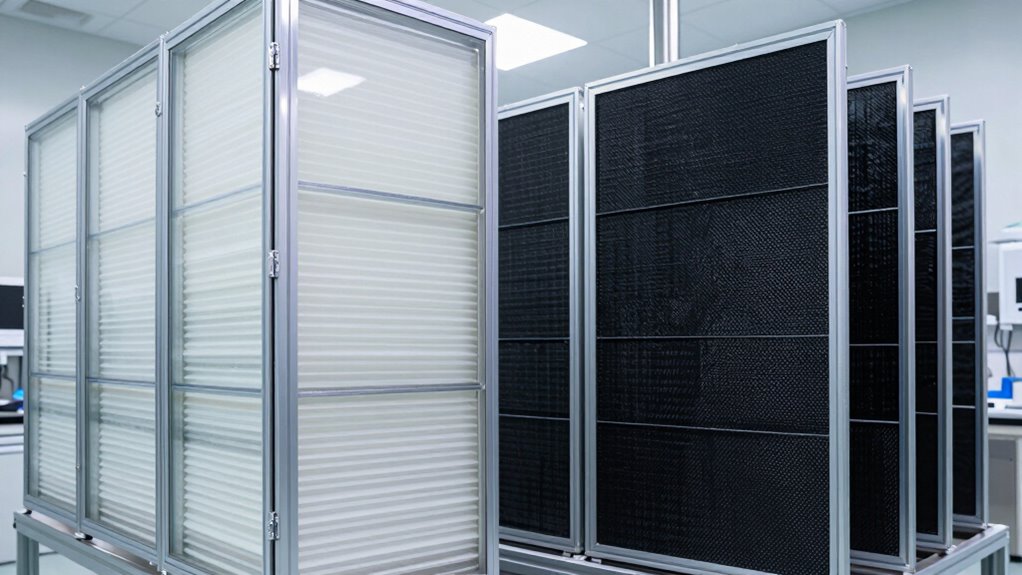
HEPA filters, or High-Efficiency Particulate Air filters, are designed to trap 99.97% of particles as small as 0.3 microns. When you think about microscopic contaminants—like bacteria, pollen, dust, and smoke—these filters are incredibly effective. They work by forcing air through dense, fibrous materials that act as a barrier, capturing contaminants before they can circulate in your environment. This process isn’t just about filtering dust; it’s about removing harmful particles that could compromise health or interfere with sensitive laboratory experiments. Because of their efficiency, HEPA filters became a staple in research labs, hospitals, and clean rooms, where controlling airborne contaminants is critical.
HEPA filters trap 99.97% of particles as small as 0.3 microns, ensuring cleaner, safer air in sensitive environments.
On the other hand, activated carbon plays a different but equally essential role in air filtration. It’s highly porous, with a vast surface area that allows it to adsorb gases, odors, and chemical vapors. When you breathe in air contaminated with volatile organic compounds (VOCs) or unpleasant smells, activated carbon traps these molecules on its surface. This makes it ideal for removing airborne gases that HEPA filters can’t catch, such as fumes from chemicals or emissions from industrial processes. In laboratories, activated carbon filters are often used alongside HEPA systems to provide extensive contaminant removal. This dual approach ensures that both particulate matter and gaseous pollutants are effectively eliminated, creating a safer environment for researchers and staff.
The combination of air filtration technologies has dramatically improved laboratory safety and efficiency. Researchers can now work with complex chemicals and biological agents with reduced risk of airborne contamination. Hospitals rely on these systems to prevent the spread of infectious agents, safeguarding both patients and staff. As technology advances, these filters continue to evolve, becoming more efficient, longer-lasting, and better suited to various environments. The story of clean air is ongoing, but it’s clear that HEPA and activated carbon have already made a profound impact—taking over labs and setting new standards for contaminant removal and air quality management.

LEVOIT Air Purifier for Home Allergies and Pets Hair Smokers in Bedroom, H13 True HEPA Filter, 24db Filtration System Cleaner Odor Eliminators, Remove 99.97% Dust Smoke Mold Pollen, Core 300, White
- Certified for Performance and Efficiency: AHAM VERIFIDE certified for reliability
- Powerful Air Cleaning: 56W motor with 143 CFM CADR
- Effective for Large Spaces: Covers up to 1073 ft²
As an affiliate, we earn on qualifying purchases.
As an affiliate, we earn on qualifying purchases.
Frequently Asked Questions
How Do HEPA Filters Compare to Other Air Purification Methods?
HEPA filters excel in air filtration efficiency, capturing 99.97% of particles as small as 0.3 microns, making them highly effective compared to other methods like ionizers or UV purifiers. You should also consider filter maintenance, as HEPA filters need regular replacement to maintain peak performance. Their proven efficiency makes them a top choice for clean air, especially when you need reliable, high-quality air purification.
Can Activated Carbon Remove All Types of Airborne Pollutants?
Activated carbon is like a sponge for air pollutants, but it can’t remove all types. Its adsorption efficiency depends on pollutant specificity, meaning it works best on gases, odors, and certain chemicals. However, it struggles with particulate matter, like dust or allergens. So, while activated carbon excels at some pollutants, you’ll need other filters, like HEPA, for complete air purification.
How Often Should HEPA and Activated Carbon Filters Be Replaced?
You should replace HEPA filters every 6 to 12 months and activated carbon filters every 3 to 6 months, depending on usage and air quality. Regular filter maintenance is essential to guarantee peak performance. Keep an eye on signs like reduced airflow or odors, which indicate it’s time for a replacement. Following the recommended replacement schedule helps maintain clean, safe air and keeps your filtration system working efficiently.
Are HEPA and Activated Carbon Filters Effective Against Viruses?
Yes, HEPA filters are highly effective against viruses because they excel at viral filtration, capturing particles as small as 0.3 microns, including many viruses. Activated carbon filters, while better at odor and chemical removal, offer limited viral filtration. Remember, filter lifespan impacts effectiveness; replace filters regularly to maintain ideal viral filtration performance. Proper maintenance ensures your air purifier continues protecting you from airborne viruses effectively.
What Are the Environmental Impacts of Disposable Air Filters?
Disposable air filters can negatively impact the environment due to recyclability concerns, as many aren’t recyclable and end up in landfills. Manufacturing emissions also contribute to their environmental footprint, releasing greenhouse gases during production. By choosing reusable filters or properly disposing of used filters, you can reduce these impacts. It is crucial to weigh their effectiveness against their environmental costs to make eco-friendly choices for cleaner air and a healthier planet.
Conclusion
Just like Pandora’s box, once you open the door to cleaner air with HEPA and activated carbon, there’s no turning back. You now hold the key to a safer, healthier lab environment—protecting your team and advancing discovery. Remember, the quest for pure air isn’t a fleeting chapter but an ongoing story. Embrace these innovations, and you become a guardian of clarity, proving that sometimes, the greatest breakthroughs start with the simplest act of purification.