
Activated carbon captures VOCs through its porous structure and surface chemistry. The tiny pores provide a vast surface area where VOC molecules adhere via physical or chemical interactions. By adjusting pore size and surface groups, manufacturers can target specific pollutants. Hydrophobic surfaces attract non-polar VOCs, while oxygen groups help trap polar compounds. Understanding these features reveals the science behind its effectiveness. Keep exploring to uncover how these properties work together for ideal VOC removal.
Key Takeaways
- Activated carbon captures VOCs through physical adsorption, relying on its extensive pore network and high surface area.
- Micropores in activated carbon provide numerous active sites for small VOC molecule adsorption.
- Surface chemistry modifications, such as adding oxygen groups, enhance affinity for polar VOCs.
- Pore size distribution and surface chemistry are tailored to optimize VOC removal efficiency.
- The combined pore structure and surface properties determine the effectiveness of activated carbon in VOC capture.
Activated carbon adsorption is a widely used method for removing impurities and pollutants from air and water. When you think about how activated carbon effectively captures volatile organic compounds (VOCs), it all goes down to its unique physical and chemical properties. Central to this process are the pore structure and surface chemistry of the carbon material. These features determine how well the activated carbon can trap and hold onto harmful molecules.
Activated carbon’s pore structure and surface chemistry are key to effective VOC removal.
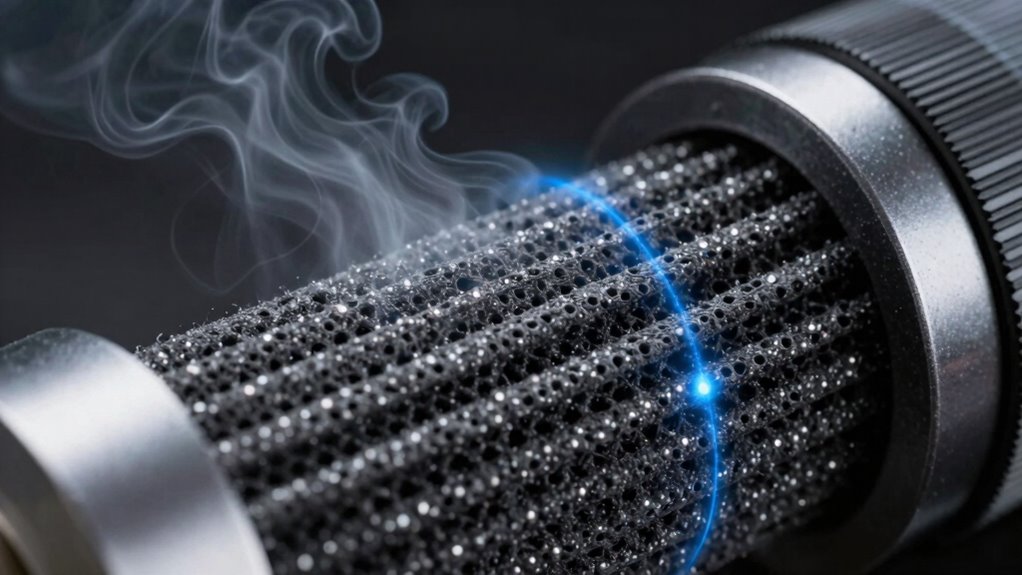
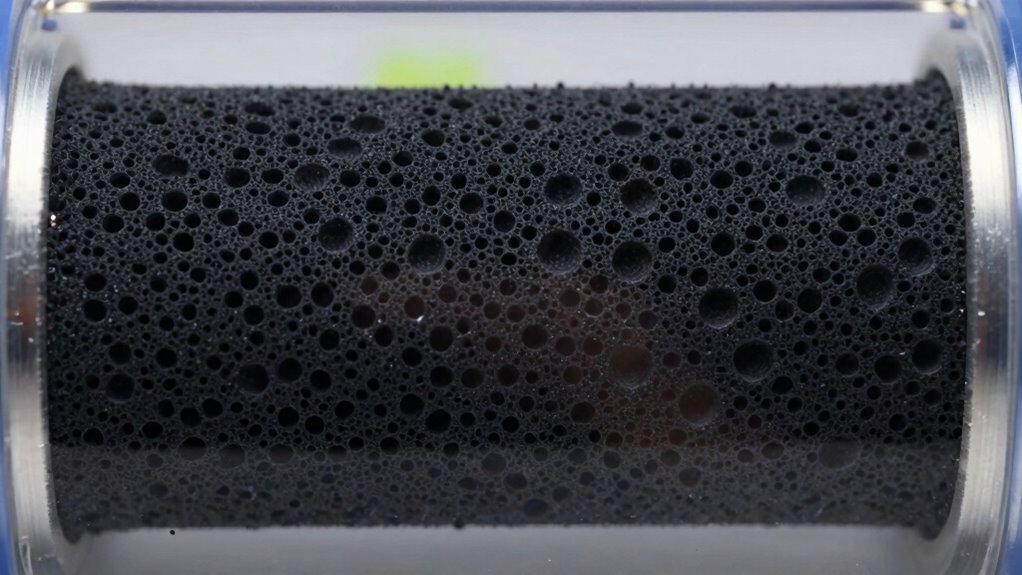
The pore structure of activated carbon is like a complex maze of tiny cavities and channels. These pores come in different sizes—micropores, mesopores, and macropores—each playing an essential role in adsorption. Micropores, which are less than 2 nanometers in diameter, provide an enormous surface area that’s critical for capturing small VOC molecules. The high surface area is indispensable because it increases the number of active sites where pollutants can adhere. When VOC molecules encounter the activated carbon, they find themselves drawn into these pores, where they can be trapped physically through van der Waals forces. The pore size distribution is carefully controlled during manufacturing, allowing you to select activated carbons optimized for specific pollutants or applications. The pore size distribution is carefully controlled during manufacturing, which helps tailor the adsorption properties to specific VOCs.
Surface chemistry also plays a significant role in the adsorption process. It refers to the chemical groups present on the carbon surface, which can influence how pollutants interact with the material. Activated carbon’s surface can be modified or treated to enhance its affinity for certain VOCs. For example, introducing oxygen-containing groups makes the surface more polar, improving adsorption of polar compounds. Conversely, non-polar VOCs tend to be better captured by carbons with a more hydrophobic surface. The surface chemistry determines whether adsorption is driven mainly by physical forces or involves some degree of chemical interaction, which can increase the overall efficiency.
When you select activated carbon for VOC removal, understanding both its pore structure and surface chemistry helps you tailor the material to your specific needs. A well-designed pore network ensures maximum contact with pollutants, while the surface chemistry enhances the interaction between the carbon and VOC molecules. As a result, you get a more effective, efficient adsorption process. This combination makes activated carbon a versatile and reliable choice for air and water purification systems. Whether you’re designing a filtration unit or optimizing existing setups, paying attention to these structural and chemical features guarantees you achieve the best possible VOC capture performance.
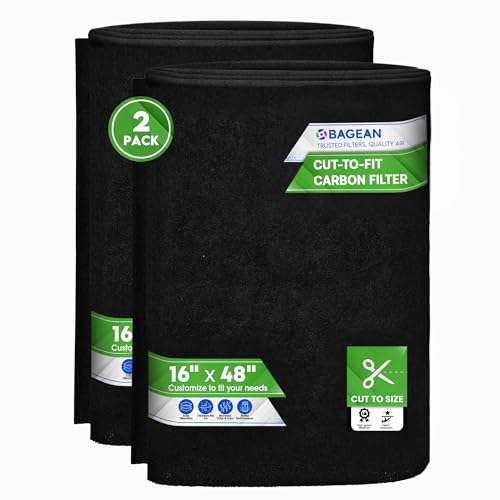
Bagean Cut to Fit Activated Carbon Filter Sheet 16” x 48” Carbon Air Filter
- Freshens Air: Removes odors for a clean environment
- Ultra Absorbent: Made from highly absorbent coconut shell carbon
- Enhanced Odor Removal: Extra carbon for superior odor elimination
As an affiliate, we earn on qualifying purchases.
As an affiliate, we earn on qualifying purchases.
Frequently Asked Questions
How Does Activated Carbon Adsorption Compare to Other VOC Removal Methods?
You’ll find activated carbon adsorption highly cost-efficient and effective due to its high adsorption capacity for VOCs. Compared to methods like chemical scrubbers or biofiltration, it’s often more affordable and easier to maintain. Activated carbon quickly captures a wide range of VOCs, making it versatile. While other methods may require ongoing chemical inputs or biological management, activated carbon offers a straightforward, reliable solution for VOC removal.
What Are the Environmental Impacts of Spent Activated Carbon?
Did you know that over 50% of spent activated carbon ends up in landfills? When you dispose of used activated carbon, it can contain environmental toxins absorbed during filtration. Improper waste disposal of spent carbon may lead to soil and water contamination, posing risks to ecosystems. Recycling or regenerating activated carbon helps reduce waste and minimizes environmental impacts, making waste disposal a critical consideration in VOC capture processes.
Can Activated Carbon Be Regenerated Multiple Times Effectively?
Yes, activated carbon can be rejuvenated multiple times effectively. You can use regeneration techniques like thermal reactivation or chemical treatment to restore its adsorption capacity. These methods help maintain cost effectiveness by extending the lifespan of the carbon, reducing the need for frequent replacements. Proper regeneration ensures you maximize VOC capture efficiency while minimizing environmental impact and overall expenses, making it a sustainable and economical choice.
How Does Humidity Affect the Adsorption Efficiency?
Humidity interference is like fog clouding your view—moisture effects can hinder adsorption efficiency. When humidity levels rise, water molecules compete with VOCs for activated carbon’s adsorption sites, reducing its effectiveness. High humidity can cause the carbon to become saturated faster, decreasing its capacity to trap harmful compounds. To maintain ideal performance, control moisture levels and avoid excessive humidity in environments where VOC capture is critical.
What Industries Most Benefit From Activated Carbon VOC Capture?
You’ll find industries like chemical manufacturing, air purification, and medical filtration benefit most from activated carbon VOC capture. In industrial applications, it effectively controls odors and toxic emissions. Medical filtration uses it to remove airborne contaminants, ensuring safer environments. Its high adsorption capacity makes it essential across sectors aiming to improve air quality and comply with environmental standards. You’ll see its importance wherever VOCs need to be efficiently removed.
Conclusion
You now hold the key to unblocking the silent guardian within activated carbon. Like a steadfast lighthouse guiding ships through darkness, it captures and neutralizes the unseen threats of VOCs, safeguarding your environment. Its porous nature acts as a gateway, symbolizing resilience and purity amid chaos. By understanding its science, you embrace the role of protector—an invisible shield that transforms chaos into calm, ensuring cleaner air and a healthier future for all.