When choosing a disinfectant, consider what you need to kill and the surface involved. Bleach is best for heavy contamination and sterilizing medical tools, while alcohol works quickly for skin and small surfaces. Peroxide offers a good balance and is eco-friendly for general disinfection and wound care. Each has strengths and limitations—if you want to understand which suits your situation best, keep going for a full comparison.
Key Takeaways
- Bleach provides broad-spectrum sterilization ideal for heavily contaminated surfaces and medical tools.
- Alcohol offers rapid, effective disinfection for skin, small surfaces, and quick cleaning tasks.
- Peroxide is environmentally friendly, suitable for surface and wound disinfection, breaking down into water and oxygen.
- Bleach requires careful handling and is corrosive; alcohol is flammable but easy to use; peroxide is safer but can damage fabrics.
- Choose bleach for sterilization, alcohol for quick personal or surface disinfection, and peroxide for environmentally conscious cleaning.
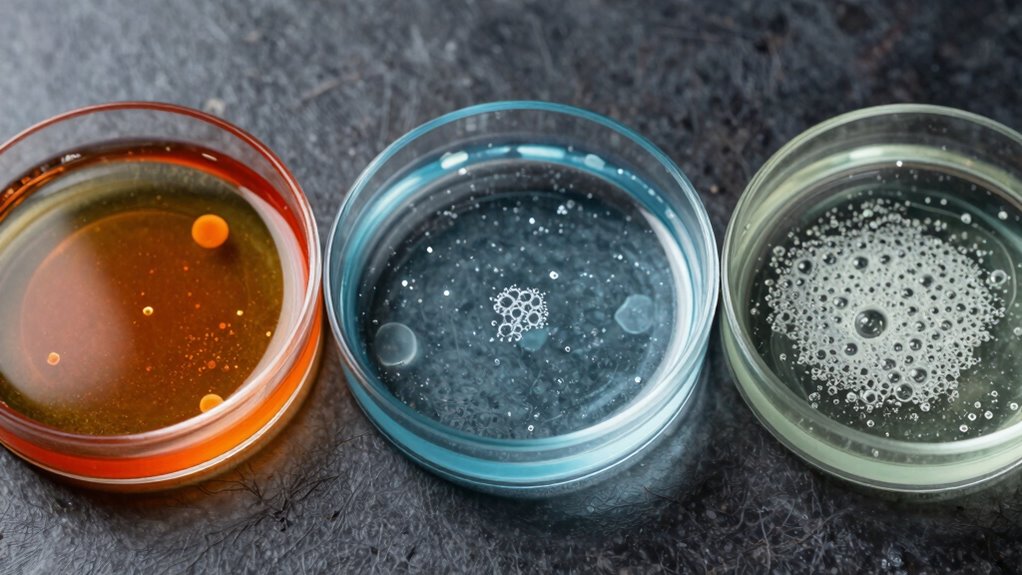
Have you ever wondered which disinfectant is the most effective for your needs? When choosing between bleach, alcohol, and peroxide, understanding their antiseptic effectiveness is vital. Each disinfectant has unique properties that make it suitable for different situations, but safety considerations should always come first. Knowing how these options compare helps you make informed decisions, whether you’re disinfecting surfaces, medical tools, or your hands.
Bleach, or sodium hypochlorite, is a powerhouse in germ eradication. Its high-level disinfectant qualities make it excellent for sterilizing surfaces in hospitals and cleaning heavily contaminated areas. Bleach kills a broad spectrum of bacteria, viruses, and fungi quickly, making it reliable for disinfecting countertops, bathrooms, and laundry. However, because it’s a strong chemical, safety considerations are essential. Bleach can cause skin and eye irritation, produce harmful fumes, and damage certain materials. Proper ventilation, gloves, and dilution are necessary to avoid accidents and ensure safe use. Its corrosive nature also means it’s not suitable for all surfaces or materials.
Bleach is highly effective but requires careful handling due to its corrosive and irritating properties.
Alcohol, typically in the form of isopropyl or ethyl alcohol, offers quick antiseptic effectiveness, especially at concentrations of 70% or higher. It’s widely used for disinfecting skin, medical tools, and small surfaces. Alcohol works rapidly by denaturing proteins, which destroys bacteria and viruses on contact. Its safety considerations are relatively straightforward: it evaporates quickly, reducing residue, but it’s highly flammable and can cause skin dryness or irritation if used excessively. Alcohol’s fast action and ease of use make it ideal for personal hand sanitizers, first aid, and quick surface disinfecting, but it’s less effective against spores and some viruses compared to bleach.
Peroxide, or hydrogen peroxide, is a versatile disinfectant with increasing popularity. It’s effective against bacteria, viruses, and fungi, and breaks down into water and oxygen, leaving fewer harmful residues. Its antiseptic effectiveness is generally comparable to alcohol for many applications, though it works well on surfaces and wounds alike. Safety considerations with peroxide include its potential to cause skin irritation and its capacity to bleach fabrics and surfaces. It’s less toxic than bleach and doesn’t produce harmful fumes, but higher concentrations require careful handling. Peroxide is especially useful in environments where chemical residues are a concern, such as food prep areas or hospitals.
Frequently Asked Questions
Which Disinfectant Is Safest for Use Around Children and Pets?
You should opt for pet-friendly disinfectants that are also safe for children when cleaning around them. Look for products labeled as child-safe cleaning and pet-friendly disinfectants, which avoid harsh chemicals like bleach or peroxide. These options minimize risks and are effective against germs. Always follow label instructions carefully, keep disinfectants out of reach, and guarantee thorough rinsing or drying to keep your kids and pets safe during cleaning.
Can Bleach, Alcohol, or Peroxide Damage Different Types of Surfaces?
Sure, your trusty disinfectants might seem invincible, but they can wreak havoc on different surfaces. Bleach can bleach or corrode fabrics and plastics; alcohol might crack or dry out delicate materials like wood or rubber; peroxide can discolor or weaken certain plastics and fabrics. Always check surface compatibility and material safety first—otherwise, you risk turning your pristine surfaces into a discolored, cracking disaster zone. Who knew disinfectants had such a mischievous side?
How Long Does Each Disinfectant Take to Kill Germs Effectively?
You’ll find that bleach typically needs about 5 minutes of dwell time to effectively kill germs, ensuring a high effectiveness rate. Alcohol disinfects in about 30 seconds to 1 minute, making it quick but less broad-spectrum. Peroxide usually takes 1 to 5 minutes, depending on the concentration and target germs. Always check product labels for specific dwell times to maximize germ elimination and maintain effectiveness.
Are There Specific Pathogens That One Disinfectant Can Handle Better Than Others?
You’ll find that bleach, alcohol, and peroxide each excel with specific pathogens. Bleach fights bacteria, viruses, and fungi effectively, especially hardy ones like Norovirus. Alcohol quickly neutralizes bacteria and many viruses but struggles with spores. Peroxide is excellent against bacteria, fungi, and certain viruses, particularly resistant organisms like C. difficile. Understanding pathogen specificity helps you choose the most effective disinfectant, maximizing disinfectant effectiveness based on the germs you need to eliminate.
What Are the Environmental Impacts of Each Disinfectant After Use?
After use, bleach can cause environmental pollution due to its chemical runoff, which harms aquatic life and ecosystems. Alcohols tend to evaporate quickly, reducing long-term pollution but can contribute to air quality issues. Peroxides break down into water and oxygen, making them more eco-friendly, but improper disposal still risks chemical runoff. You should always follow disposal guidelines to minimize environmental impacts of any disinfectant.
Conclusion
When it comes to disinfectants, each has its moment—bleach with its powerful stain-fighting punch, alcohol for quick surface wipes, and peroxide for gentle, versatile cleaning. Think of bleach as the heavyweight champion, alcohol as the nimble sprinter, and peroxide as the versatile contender. Your choice depends on what you need—strength, speed, or gentleness. Ultimately, knowing their strengths helps you pick the right ally for every mess, making cleaning both effective and satisfying.