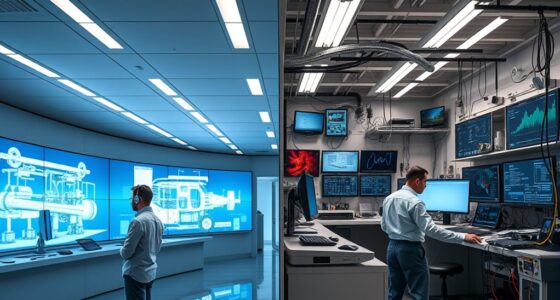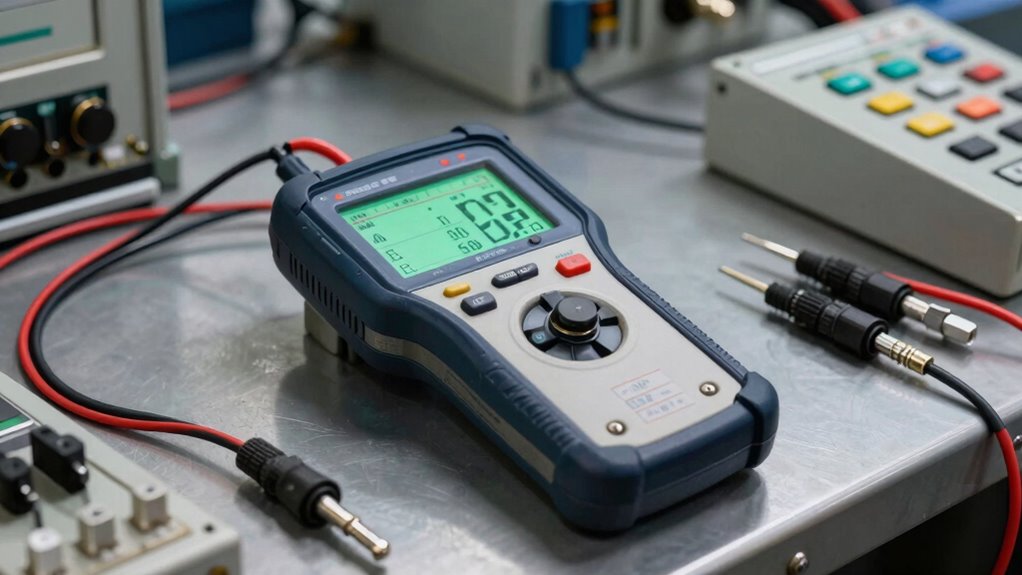

A multifunction process calibrator is your all-in-one tool that simplifies loop work by supporting various signals like 4-20 mA, voltage, resistance, thermocouples, and RTDs. It reduces the need to switch tools, making calibration and troubleshooting faster and more accurate across pressure, flow, and temperature devices. Rugged, safe, and easy to use, it boosts efficiency in tough environments. Keep exploring how this versatile device can transform your calibration tasks even further.
Key Takeaways
- Supports multiple input/output types, reducing the need for multiple tools during loop calibration tasks.
- Automates testing and data logging, streamlining complex calibration procedures.
- Designed for rugged environments, ensuring durability and safety in hazardous or challenging conditions.
- Features intuitive controls and interfaces, simplifying operation and minimizing troubleshooting time.
- Enhances efficiency by combining high accuracy, broad device compatibility, and easy workflow management.
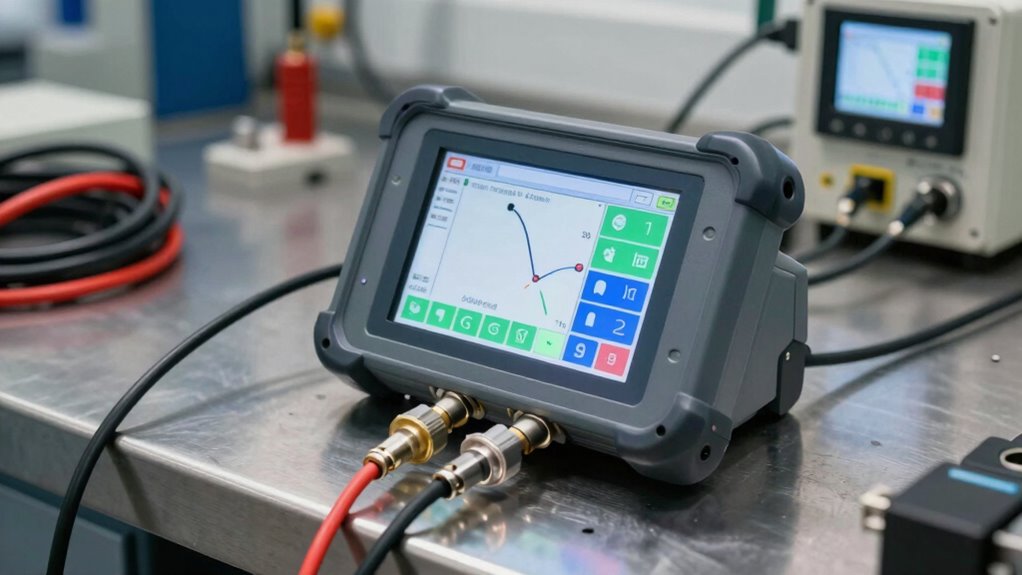
Device compatibility is another crucial aspect you should look into. Modern process calibrators are designed to work with a wide range of signals and devices, including 4-20 mA loops, voltage, resistance, thermocouples, and RTDs. A highly compatible device allows you to perform multiple calibration tasks with a single instrument, eliminating the need to switch between different tools. This versatility saves you time, reduces clutter, and enhances your ability to troubleshoot quickly. Whether you’re working on pressure transmitters, flow meters, or temperature sensors, a multifunction calibrator that supports various inputs and outputs makes your job more manageable and efficient. Additionally, choosing a calibrator with robust safety features ensures safe operation when working with hazardous chemicals and electrical systems.
Using a multifunction process calibrator also means you benefit from features like automated testing, data logging, and easy interface navigation. These capabilities help you perform complex calibration procedures with greater precision and less effort. You can set up your calibrator to run a series of tests automatically, record results for documentation, and analyze data directly on the device. This not only boosts your productivity but also ensures you comply with industry standards and quality assurance protocols. Incorporating advanced measurement capabilities can further improve calibration accuracy and reliability. Moreover, selecting a calibrator with comprehensive compatibility ensures it remains useful across various projects and industry requirements. Additionally, choosing a calibrator with intuitive controls can reduce the learning curve and improve your workflow efficiency.
Furthermore, these calibrators are built for durability and ease of use in rugged industrial environments. Their ergonomic design and intuitive controls allow you to work comfortably and confidently, even in challenging conditions. With a reliable multifunction process calibrator, you spend less time troubleshooting and more time maintaining peak system performance. Overall, investing in a device that combines calibration accuracy with broad device compatibility considerably simplifies loop work, making your calibration and troubleshooting tasks faster, more precise, and less stressful.

Fluke 725 Multifunction Process Calibrator
The Fluke 725 Multifunction Process Calibrator is a powerful, yet easy-to-use field calibrator. Use the measure and source…
As an affiliate, we earn on qualifying purchases.
As an affiliate, we earn on qualifying purchases.
Frequently Asked Questions
What Are the Main Differences Between Analog and Digital Calibrators?
You’ll find that analog calibrators work with analog signals, providing a continuous range of measurements, but may have less precision. Digital calibrators, on the other hand, offer higher digital precision with discrete values, making them more accurate for complex tasks. The main difference lies in how they handle signals—analog for smooth, continuous data, and digital for precise, quantized measurements—so choose based on your calibration needs.
How Do Multifunction Calibrators Improve Calibration Accuracy?
Ever wondered how you can boost calibration precision? Multifunction calibrators improve accuracy by offering precise, combined measurements of voltage, current, pressure, and more in one device. This integration minimizes measurement errors and guarantees consistency across tests. By reducing the need for multiple tools, they streamline calibration processes, helping you achieve reliable, repeatable results every time. Isn’t it time to upgrade your calibration approach with a multifunction calibrator?
Can These Calibrators Be Used in Hazardous Environments?
Yes, you can use multifunction process calibrators in hazardous environments, but only if they have the proper safety certifications. These certifications guarantee the calibrator meets safety standards for flammable or explosive atmospheres. Always verify the device’s certifications before use, and follow manufacturer guidelines to maintain safety. This way, you protect yourself while accurately calibrating instruments in challenging, potentially dangerous settings.
What Is the Typical Lifespan of a Multifunction Process Calibrator?
Think of your calibrator as a trusty compass; with proper calibration intervals and regular calibrator maintenance, it can serve you reliably for 5 to 10 years. Usually, these devices last about a decade if you follow manufacturer guidelines, but their lifespan depends on usage and care. Regular calibration guarantees accuracy, and timely maintenance keeps it performing like new, extending your calibrator’s effective life.
Are There Any Training Requirements to Operate These Calibrators Effectively?
You don’t need formal operator certifications to operate multifunction process calibrators, but understanding calibration standards is crucial for accuracy. Proper training ensures you know how to use the device correctly, follow calibration procedures, and interpret results. Many companies offer manufacturer or third-party training programs. Staying updated on calibration standards and gaining hands-on experience will help you operate the calibrator effectively and maintain reliable, precise measurements in your work.

LB78 Current Voltage Signal Generator, 4-20mA /0-10V/mV Signal Source Calibrator Tester, LCD Display
【High quality calibrator】LB78 functions cover most functions required for maintenance of PLC, DCS, ESD, field instrument, regulating valve…
As an affiliate, we earn on qualifying purchases.
As an affiliate, we earn on qualifying purchases.
Conclusion
So, why wrestle with multiple tools when a multifunction process calibrator can do it all? Imagine a world where you don’t need to juggle different gadgets, chase after readings, or pretend you’re a magician. With this tool, you’ll be the hero of your loop work—minus the cape and dramatic flair. Embrace the simplicity, save time, and maybe even impress your boss. After all, who knew one device could make you look this good?

REED Instruments R1620-KIT Data Logging Smart Series Sound Level Meter with Sound Level Calibrator, Precision Calibration Screwdriver and Carrying Case
Made in China
As an affiliate, we earn on qualifying purchases.
As an affiliate, we earn on qualifying purchases.

Temperature Calibrator Measurement and Simulation of RTD, Thermocouple, Output and Measurement of Voltage, Millivolt, Resistance
Super protection function: waterproof grade IP67, automatic protection against misconnection of 220V at any signal end.
As an affiliate, we earn on qualifying purchases.
As an affiliate, we earn on qualifying purchases.