
Green solvents like supercritical CO₂ and ionic liquids offer eco-friendly alternatives to traditional chemicals. Supercritical CO₂ is non-toxic, non-flammable, and easily recoverable, making it ideal for various industries. Ionic liquids are customizable salts that remain liquid at low temperatures, reducing hazardous waste. Both options help minimize environmental impact while maintaining performance. If you’re interested in how these solutions are revolutionizing sustainable chemistry, there’s much more to explore ahead.
Key Takeaways
- Green solvents are eco-friendly alternatives designed to reduce environmental impact and enhance safety in chemical processes.
- Supercritical CO₂ is a non-toxic, recoverable solvent used in industries like extraction and cleaning.
- Ionic liquids are salts in liquid form at low temperatures, customizable for diverse applications with low toxicity.
- Biodegradability assessment ensures these solvents break down naturally, preventing ecological harm.
- Advances in green solvent technology integrate chemistry, environmental science, and sustainability for better eco-friendly options.
Have you ever wondered if there’s a safer, more sustainable way to carry out chemical processes? The answer lies in green solvents, which are revolutionizing industries by offering eco-friendly alternatives to traditional chemicals. These solvents not only reduce environmental impact but also promote safer working conditions.
To develop such options, scientists focus on biodegradability assessment, ensuring that the solvents break down naturally without leaving harmful residues. This step is vital because it guarantees that the chemical won’t persist in ecosystems, causing long-term damage. When designing eco-friendly solvents, researchers aim to balance performance with environmental compatibility, creating compounds that are both effective and sustainable.
Biodegradability assessment ensures eco-friendly solvents break down naturally, preventing long-term environmental harm.
Understanding the importance of biodegradability assessment helps you appreciate why green solvents are gaining attention. It involves testing how quickly and completely a solvent can decompose under natural conditions. If a solvent degrades too slowly or produces toxic byproducts, it defeats the purpose of green chemistry. Conversely, a solvent with high biodegradability ensures that it minimizes ecological footprint after use.
Eco-friendly solvent design takes this into account, combining knowledge from chemistry, biology, and environmental science. The goal is to craft solvents that serve industrial needs without compromising the planet’s health. Additionally, advances in biodegradability testing methods help ensure that new green solvents meet strict environmental standards efficiently.
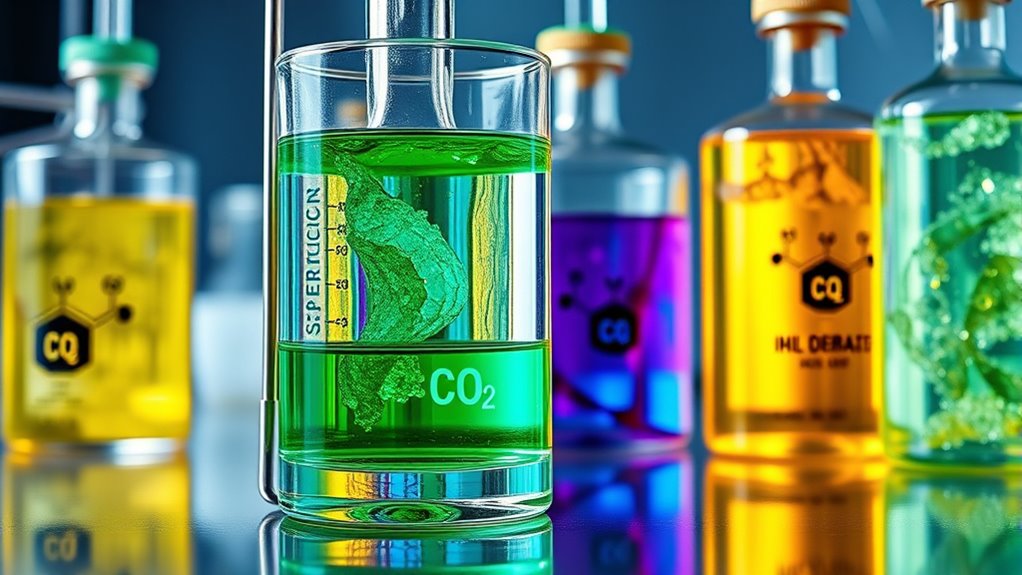
Green solvents come in many forms, each with its unique advantages. Supercritical CO₂, for example, is used widely because it’s non-toxic, non-flammable, and easily recoverable. It’s a prime example of how a green solvent can replace more hazardous options.
Ionic liquids are another innovative class; they’re salts in a liquid state at relatively low temperatures. Ionic liquids can be tailored in their chemical structure, making them highly versatile for various applications. Their design focuses heavily on eco-friendly solvent principles, aiming to minimize toxicity and enhance biodegradability.
This customization allows industries to optimize processes while adhering to sustainability goals. Additionally, understanding the role of contrast ratio in projectors helps ensure that visual outputs are clear and vibrant, which is crucial even when considering environmental impacts.
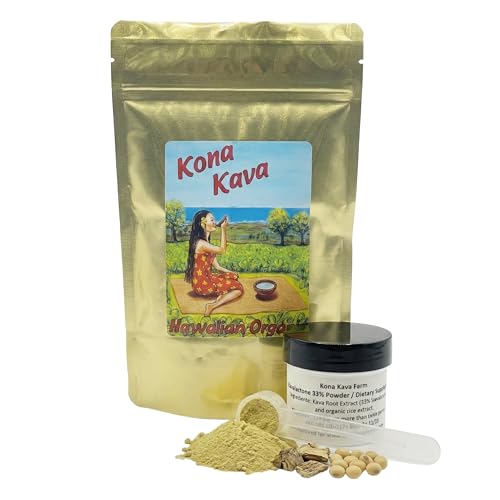
Kona Kava Farm 33% Kavalactone Extract Powder (0.5 oz) – Ultra-Potent Noble Kava Root – Supercritical CO2 Cold Extraction – Fast-Acting Liquid-Free Formula – Vegan, Non-GMO & Easy to Mix
- High Potency Concentration: 33% Kavalactones for powerful effects
- Noble Kava Variety: Pure, high-quality Noble kava root
- Supercritical CO2 Extraction: Ensures a clean, chemical-free extract
As an affiliate, we earn on qualifying purchases.
As an affiliate, we earn on qualifying purchases.
Frequently Asked Questions
How Do Green Solvents Compare in Cost to Traditional Solvents?
When comparing green solvents to traditional ones, you’ll notice that green solvents often have a higher initial cost, but this isn’t the whole story.
The cost comparison considers factors like environmental benefits and safety.
Over time, green solvents can be more economically feasible due to reduced disposal costs and regulatory compliance.
Are Green Solvents Suitable for Large-Scale Industrial Processes?
You might wonder if green solvents are suitable for large-scale industrial processes. While they offer environmental benefits, scaling challenges and supply chain issues can make implementation tricky.
You’ll need to contemplate factors like availability, production costs, and compatibility with existing infrastructure. Although they’re promising, overcoming these challenges is essential before green solvents can become a mainstream solution for large-scale applications.
What Are the Recyclability and Disposal Considerations for Green Solvents?
Imagine green solvents as the earth’s gentle whispers—yet, their recyclability and disposal demand careful thought. You must tackle biodegradability challenges, making sure they break down harmlessly, and address contamination risks that could harm ecosystems.
Proper recycling reduces waste and environmental impact. By understanding these considerations, you ensure green solvents serve their purpose without turning into environmental liabilities, making sustainability a practical part of your industrial processes.
How Do Green Solvents Impact Product Purity and Quality?
Green solvents often improve product purity and quality because they reduce solvent residue, which can contaminate products. By using environmentally friendly options, you enhance purity enhancement processes and minimize harmful residues.
This means your final products are cleaner, safer, and meet higher quality standards. Additionally, green solvents‘ compatibility with purification techniques helps maintain product integrity, ensuring your end products are of superior purity and quality.
What Are the Environmental Regulations Surrounding Green Solvent Use?
You should be aware that environmental regulations surrounding green solvent use focus on regulatory compliance, ensuring safe handling, disposal, and emissions. Policies often include incentives like tax credits or grants to promote adoption.
Staying informed about local, national, and international policies helps you meet legal standards and benefits from policy incentives, making green solvent integration both environmentally responsible and economically advantageous for your operations.
Conclusion
As you explore green solvents, remember that choosing the right one is like finding the missing piece of a puzzle—each option, from supercritical CO₂ to ionic liquids, offers a greener path forward. Just as the phoenix rises from ashes, these innovative solvents transform our approach to chemistry, reducing environmental harm. Embrace these advancements with confidence, knowing you’re part of a movement that seeks a cleaner, brighter future—because, like the dawn after night, change is within your reach.