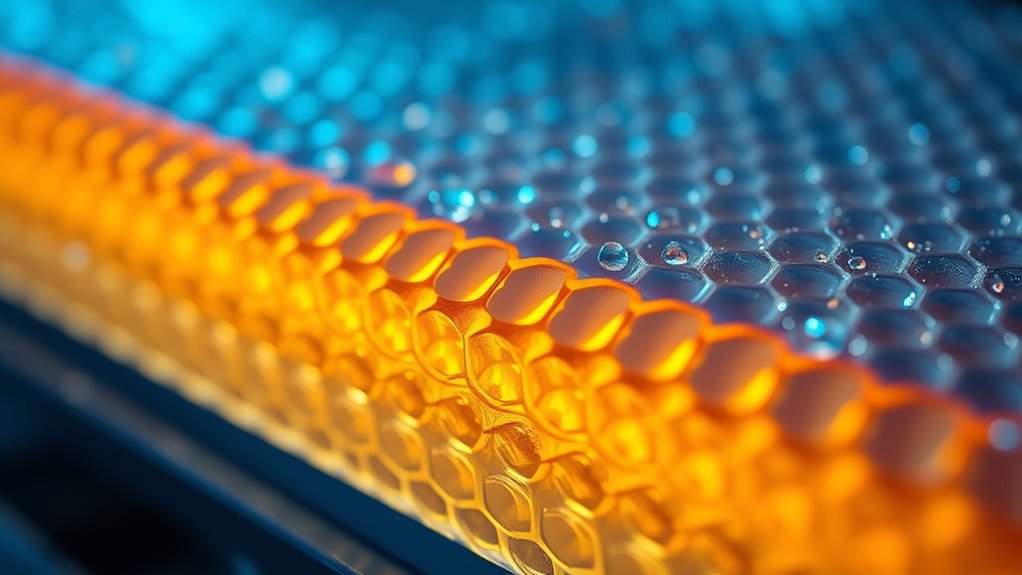

Ion-exchange membranes play a key role in energy and water applications by enabling efficient ion separation and purity. They allow specific ions to pass while blocking others, which helps in water desalination and energy storage systems like fuel cells. Their selectivity and fouling resistance are vital for long-term performance and efficiency. By optimizing these membranes, you can improve process sustainability and reduce maintenance needs. Continue exploring to discover how advances enhance their capabilities and benefits.
Key Takeaways
- Ion-exchange membranes enable efficient desalination and water purification by selective ion removal.
- They are essential in energy applications like fuel cells and redox flow batteries for ion transport.
- Membrane selectivity minimizes unwanted ion crossover, improving process purity and efficiency.
- Fouling prevention strategies enhance membrane lifespan and maintain performance in water and energy systems.
- Advancements such as surface modifications increase durability and resistance to fouling, supporting sustainable operations.
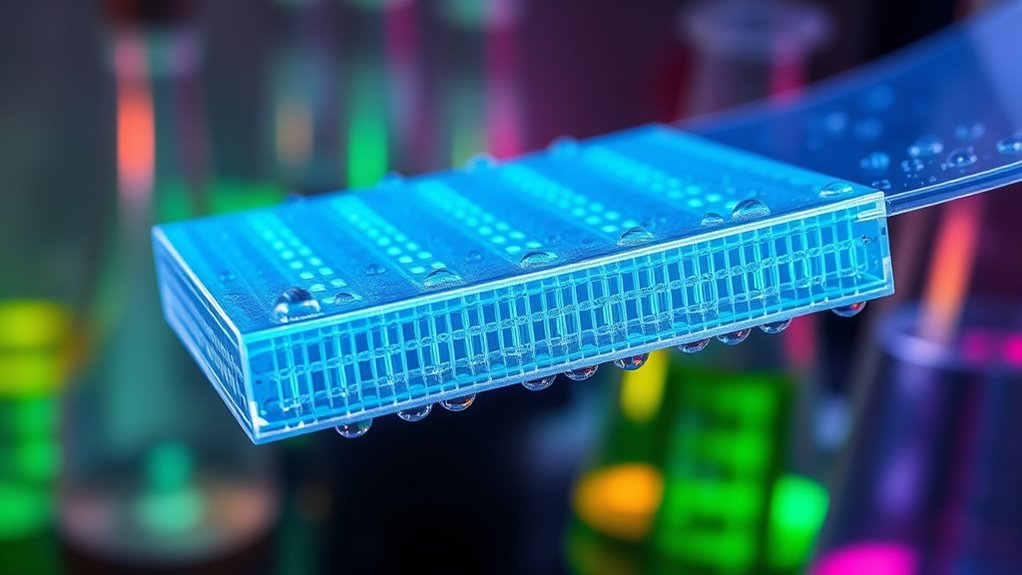
Have you ever wondered how ion-exchange membranes enable efficient separation and purification processes? These specialized membranes play a essential role in a variety of applications, from water desalination to energy generation. Their effectiveness largely depends on membrane selectivity—the ability to distinguish and allow specific ions to pass while blocking others. This selectivity is fundamental because it ensures that only targeted ions are exchanged, leading to high purity outputs and energy efficiency. When designing these membranes, manufacturers focus on optimizing their selectivity, which involves careful control of pore size, charge distribution, and material composition. A membrane with high selectivity minimizes unwanted ion crossover, which can otherwise reduce process efficiency and increase operational costs.
Fouling prevention is another key aspect that influences membrane performance. Fouling occurs when particles, microorganisms, or organic compounds accumulate on or within the membrane surface, leading to decreased permeability and increased energy consumption. Preventing fouling involves multiple strategies, such as selecting appropriate membrane materials, implementing pre-treatment steps for feed water, and designing membranes with anti-fouling properties. Many modern ion-exchange membranes incorporate surface modifications or coatings that resist biofouling and organic buildup. This not only extends the lifespan of the membranes but also reduces maintenance costs and downtime. By proactively addressing fouling, you ensure consistent operation and maintain the high efficiency of your separation or purification process.
Furthermore, membrane selectivity and fouling prevention are interconnected. When a membrane is highly selective, it minimizes the passage of unwanted ions, which can reduce the likelihood of fouling caused by ion imbalance or organic accumulation. Conversely, effective fouling prevention techniques help preserve the membrane’s selectivity over time, ensuring the system remains efficient and reliable. This synergy is especially important in energy applications like fuel cells or redox flow batteries, where ion transport efficiency directly impacts performance. In water treatment, preventing fouling extends membrane lifespan, reducing replacement frequency and environmental impact. Additionally, advancements in surface modification techniques are continuously improving membrane durability and functionality, making them more effective in demanding conditions.
Frequently Asked Questions
How Do Ion-Exchange Membranes Impact Overall Energy Efficiency?
Ion-exchange membranes boost your system’s energy efficiency by reducing energy consumption during processes like desalination and electrolysis. They enable energy savings by selectively allowing ions to pass, which minimizes wasted power. This targeted ion transfer also promotes system optimization, making operations more effective and less energy-intensive. By integrating these membranes, you can lower operational costs while improving overall performance, ensuring your energy use is more sustainable and efficient.
What Are the Main Challenges in Scaling up Membrane Production?
You face challenges in scaling up membrane production mainly due to manufacturing scalability and material sustainability issues. As you increase output, maintaining consistent quality across larger batches becomes tough, and sourcing sustainable, cost-effective materials adds complexity. You need innovative manufacturing processes and eco-friendly materials to meet demand without compromising performance or environmental goals. Overcoming these hurdles is vital to making ion-exchange membranes widely accessible for energy and water applications.
How Do Membrane Fouling and Degradation Affect Long-Term Performance?
Imagine a filter clogging with debris; membrane fouling and degradation mechanisms work the same way, gradually reducing efficiency. Over time, fouling blocks flow paths, and degradation weakens the membrane’s structure, causing performance decline. This results in increased energy consumption and maintenance costs. Without proper management, long-term performance suffers, making it essential to develop cleaning protocols and durable materials to combat these effects and extend membrane lifespan.
Are There Environmentally Friendly Alternatives to Traditional Ion-Exchange Membranes?
Yes, you can explore environmentally friendly alternatives like biodegradable polymers and natural membranes. These options break down more easily and reduce environmental impact compared to traditional ion-exchange membranes. By choosing natural membranes made from sustainable materials, you support eco-friendly practices and reduce waste. While they may have some limitations, ongoing research aims to improve their performance, making them a promising choice for greener energy and water applications.
What Are the Latest Innovations in Membrane Material Development?
Recent innovations focus on nanomaterial enhancements and polymer innovations to improve membrane performance. You’ll find that incorporating nanomaterials boosts conductivity and durability, while new polymers increase selectivity and reduce fouling. These advancements make membranes more efficient and eco-friendly, enabling better energy and water applications. By adopting these innovations, you can benefit from higher efficiency, longer lifespan, and environmentally conscious solutions in membrane technology.
Conclusion
You now see how ion-exchange membranes are game-changers for energy and water solutions. They can make a real difference in efficiency and sustainability, helping you stay ahead in this evolving field. Don’t throw in the towel just yet; innovation is ongoing. By understanding these membranes, you’re better equipped to embrace the future of clean energy and water management. Keep your eyes on the prize—you’re on the right track to making a meaningful impact.