Smart windows with electrochromic and thermochromic films automatically adjust transparency to improve your indoor comfort and energy efficiency. They darken to block heat and glare during hot, sunny days, and become more transparent on cooler days to let in natural light. These films are durable, resistant to environmental factors, and operate silently without maintenance. They help reduce heating, cooling costs, and reliance on artificial lighting—discover how they can transform your space as you explore further.
Key Takeaways
- Smart windows use electrochromic and thermochromic films to automatically adjust transparency based on sunlight and temperature.
- These films enhance energy efficiency by controlling indoor heat and light transmission, reducing heating and cooling costs.
- Designed for durability, they resist environmental factors, fading, and scratches, ensuring long-term performance.
- They operate silently and require minimal maintenance, providing reliable, automatic indoor environment regulation.
- Smart window films contribute to sustainability by decreasing reliance on artificial lighting and climate control systems.
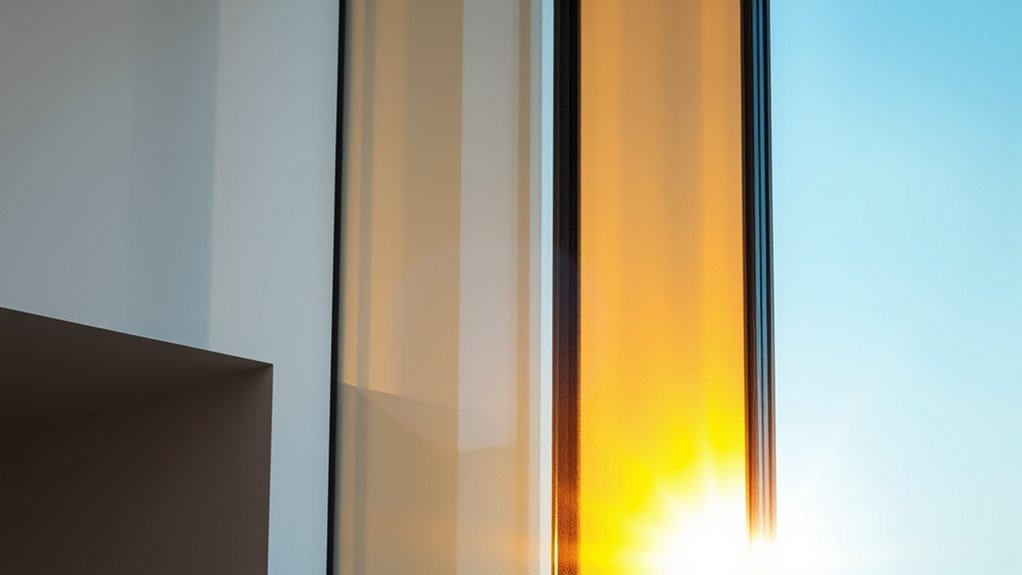
Have you ever wished your windows could adapt to changing weather or lighting conditions? With smart windows, that wish can become reality. These innovative glass panels utilize electrochromic and thermochromic films to automatically adjust their transparency, giving you greater control over indoor lighting and temperature. This adaptability not only enhances comfort but also markedly boosts energy efficiency, helping you reduce heating and cooling costs. When the sun is intense, smart windows can darken to block unwanted heat and glare, while on cooler days, they can become more transparent to allow maximum sunlight in. This dynamic response minimizes the reliance on artificial lighting and climate control systems, leading to lower energy bills and a smaller carbon footprint.
Smart windows automatically adjust transparency to boost comfort and energy efficiency.
One major advantage of smart windows is their material durability. The films used in electrochromic and thermochromic windows are designed to withstand prolonged exposure to sunlight, temperature fluctuations, and environmental pollutants without degrading. This resilience ensures that your investment remains functional and effective over many years, reducing the need for frequent replacements. Unlike traditional windows that require manual shading devices or blinds, smart windows operate seamlessly and silently, maintaining their performance without regular maintenance. Their durability also means they resist scratches, fading, and other common issues that can compromise the longevity of standard glass. Additionally, the integration of lifetime durability in smart windows ensures long-term value and performance.
Energy efficiency is at the core of smart window technology. By dynamically controlling the amount of light and heat passing through, these windows help maintain comfortable indoor temperatures more consistently. During hot summer days, they can reflect or absorb sunlight, preventing the space from overheating. In winter, they can trap heat inside, reducing the workload on your heating system. The ability to switch between states with minimal energy input makes them an environmentally friendly choice. Plus, many smart window systems incorporate energy-saving features like low power consumption and automatic sensors, ensuring they operate only when needed.
Another key benefit is their contribution to a healthier indoor environment. By reducing the need for artificial lighting and climate control, smart windows help create a more sustainable living or working space. They also protect interior furnishings from harmful UV rays, which can cause fading and deterioration over time. Overall, integrating smart windows into your building not only offers immediate comfort and cost savings but also supports long-term sustainability goals.
Frequently Asked Questions
What Is the Lifespan of Electrochromic and Thermochromic Films?
Electrochromic and thermochromic films typically last between 10 to 20 years, depending on usage and environmental factors. You’ll find their film durability varies based on quality and maintenance requirements; proper care can extend their lifespan. Regular cleaning and avoiding harsh chemicals help maintain performance. While these films are designed for longevity, expect some gradual fading or reduced responsiveness over time, but overall, they offer a durable, low-maintenance solution for smart windows.
How Do Smart Windows Impact Energy Efficiency in Buildings?
Smart windows improve your building’s energy efficiency by controlling solar gain and optimizing natural lighting. They automatically tint or clear based on sunlight, reducing the need for artificial cooling and heating. This means you save on energy costs and create a more comfortable indoor environment. By managing solar heat and maximizing daylight, smart windows help lower your carbon footprint while maintaining visibility and aesthetic appeal.
Are Smart Windows Cost-Effective Compared to Traditional Windows?
Smart windows are like a high-performance athlete—cost-effective in the long run. While the initial installation costs may seem steep, the savings on energy bills make a compelling case. When you compare the cost comparison, smart windows often pay for themselves over time through reduced heating, cooling, and lighting expenses. So, yes, they’re a smart investment, turning upfront costs into ongoing savings and comfort.
Can Smart Windows Be Integrated With Smart Home Systems?
Yes, you can integrate smart windows with your smart home system easily. They offer various integration options, including compatibility with popular automation platforms like Alexa, Google Home, or Apple HomeKit. This allows you to control your windows remotely or set automated schedules based on sunlight, temperature, or time of day. With these automation options, you can enhance comfort, energy efficiency, and convenience, seamlessly connecting your smart windows to your existing smart home setup.
What Are the Environmental Impacts of Manufacturing These Films?
Manufacturing electrochromic and thermochromic films impacts the environment, with a life cycle assessment revealing significant energy use and material extraction. About 40% of the environmental footprint stems from raw material sourcing. To improve material sustainability, manufacturers are exploring eco-friendly alternatives and recycling methods. You can reduce your impact by supporting companies committed to sustainable practices, ensuring these innovative windows benefit both your home and the planet.
Conclusion
So, here you are, marveling at smart windows that magically adapt to your needs—saving energy and boosting comfort. Ironically, these clever films might be the reason your home becomes a fortress of endless comfort, making traditional windows seem ancient. You’ll wonder how you ever managed without them, all while pondering if you’re now secretly part of a high-tech sci-fi scene. Truly, the future of windows is so smart, it practically reads your mind—almost.