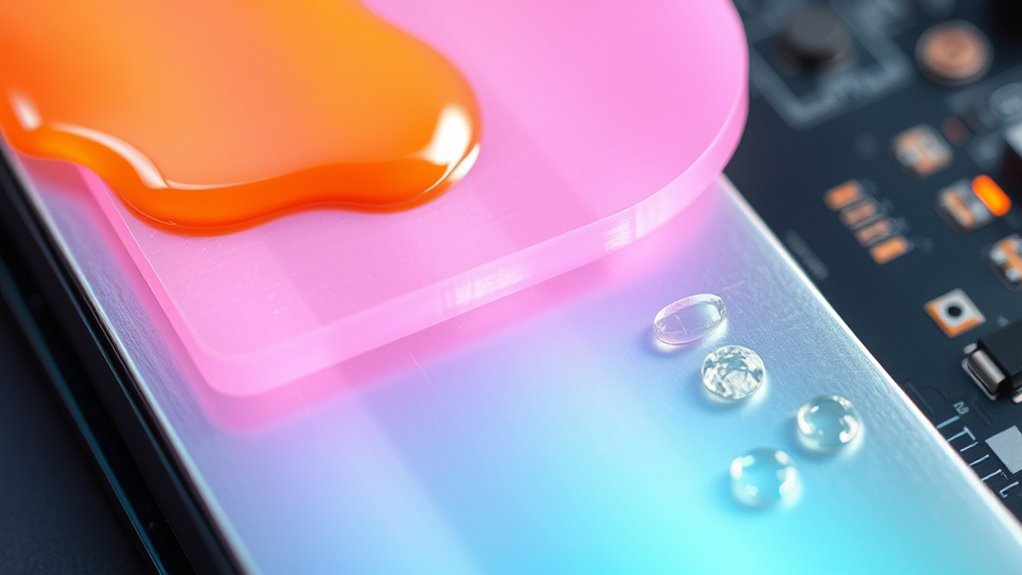

Thermal interface materials like greases, pads, and phase-change compounds help you transfer heat efficiently from electronic components to heat sinks, preventing overheating. Greases fill microscopic gaps with their flexible nature, while pads offer easy application and better conform to surfaces. Phase-change materials adapt by melting at specific temperatures, creating a tighter contact for enhanced heat transfer. To optimize your device’s cooling performance, understanding these options will guide you toward the best choice for your needs.
Key Takeaways
- TIMs bridge heat-generating components and heat sinks to ensure efficient heat transfer and device reliability.
- Greases fill microscopic gaps for optimal conduction, while pads offer ease of application and conformability.
- Phase-change materials improve contact by melting at specific temperatures, reducing air gaps for enhanced thermal performance.
- Material selection depends on thermal conductivity, ease of use, and operating temperature requirements.
- Proper TIM choice is essential for effective thermal management and long-term device operation.

Have you ever wondered how electronic devices stay cool under intense use? The secret lies in thermal interface materials (TIMs), which bridge the gap between heat-generating components and heat sinks. These materials facilitate efficient heat transfer, preventing overheating and ensuring your devices run smoothly. One of the key factors in choosing the right TIM is understanding heat conduction, which determines how effectively heat moves through the material. Different TIMs excel at conducting heat at various levels, and selecting the proper type hinges on this property. Material selection is critical because it directly impacts thermal performance, longevity, and ease of application. For instance, if you’re dealing with high-power electronics, you want a TIM with high thermal conductivity to rapidly transfer heat away from sensitive components.
When it comes to heat conduction, the core principle is that materials with higher thermal conductivity allow heat to pass through them more quickly. Metals like copper and aluminum are excellent conductors but are often impractical as TIMs themselves because of their rigidity and potential electrical conductivity. That’s where specialized thermal greases, pads, and phase-change materials come into play. Thermal greases are designed to fill microscopic gaps between surfaces, reducing air pockets that act as insulators. Their effectiveness depends largely on the material’s composition, which impacts heat conduction efficiency. Pads, on the other hand, are solid or semi-solid materials that can be easily applied and conform to the surfaces. They’re often made from silicone or other polymers infused with thermally conductive fillers, balancing ease of use with effective heat transfer.
Phase-change materials (PCMs) add an intriguing dimension to thermal management. These materials change phase—typically from solid to liquid—at specific temperatures, creating a more intimate contact between surfaces as they melt. This phase transition improves heat conduction by eliminating microscopic air gaps and ensuring a uniform interface. The material selection here is essential; you need a PCM with a melting point that matches the operating temperature of your device. Properly chosen, PCMs can substantially enhance thermal performance and provide adaptive cooling solutions.
Frequently Asked Questions
How Do I Choose the Best Thermal Interface Material for My Application?
To select the most suitable thermal interface material for your application, consider material compatibility and application-specific requirements. You need a material that matches your device’s thermal conductivity needs, adheres properly, and withstands operating conditions like temperature and pressure. Think about whether you need a grease, pad, or phase-change material based on your assembly process. Matching these factors guarantees ideal heat transfer and long-term reliability in your device.
What Are the Long-Term Reliability Concerns With Different TIM Types?
While subtle shifts can occur over time, your choice of TIM impacts long-term reliability. Greases may experience material degradation, reducing thermal performance, while pads often provide better mechanical stability, ensuring consistent contact. Phase-change materials balance these factors but can face wear issues. Regular inspection helps identify early signs of degradation, ensuring your system maintains ideal thermal performance and avoiding unexpected failures down the line.
How Does Environmental Exposure Affect the Performance of TIMS?
Environmental exposure can substantially impact your TIMs by causing corrosion and moisture buildup, which degrade thermal conductivity. You should guarantee your TIMs have good corrosion resistance to withstand harsh conditions. Moisture impacts their performance by increasing electrical conductivity or causing delamination. Regular inspection and choosing materials designed for environmental resilience help maintain ideal heat transfer and extend the lifespan of your thermal interface materials.
Can Thermal Interface Materials Be Recycled or Reused?
You might think TIMs can’t be recycled or reused, but some recycling methods, like cleaning and reconditioning pads or reapplying greases, do exist. While reuse potential varies—phase-change materials are less reusable than greases or pads—you can extend their life with proper handling. Recycling helps reduce waste and environmental impact, so explore options like reapplication or specialized recycling programs to make the most of your TIMs.
What Are the Cost Differences Between Greases, Pads, and Phase-Change Materials?
You’ll find that greases generally have the lowest initial material pricing, making them cost-effective for many applications. Pads tend to be more expensive upfront but offer easier installation and reuse, which can lower long-term costs. Phase-change materials usually have the highest initial cost due to specialized properties, but their efficiency can reduce cooling system expenses over time. The cost comparison depends on your specific needs and long-term maintenance considerations.
Conclusion
You now know that thermal interface materials like greases, pads, and phase-change options play a vital role in heat management. Did you know that proper TIM selection can improve heat transfer efficiency by up to 50%? By understanding their differences and applications, you can optimize device performance and longevity. Don’t overlook these materials—they’re the silent heroes behind your electronics’ smooth operation and cooler, more reliable devices.