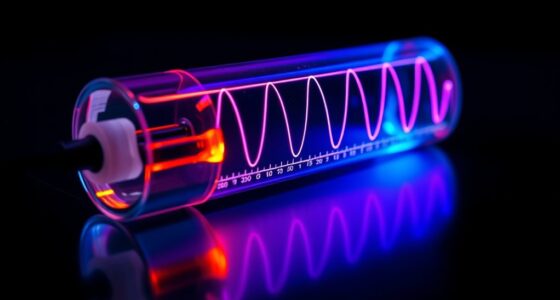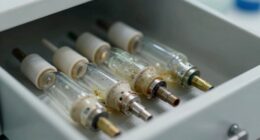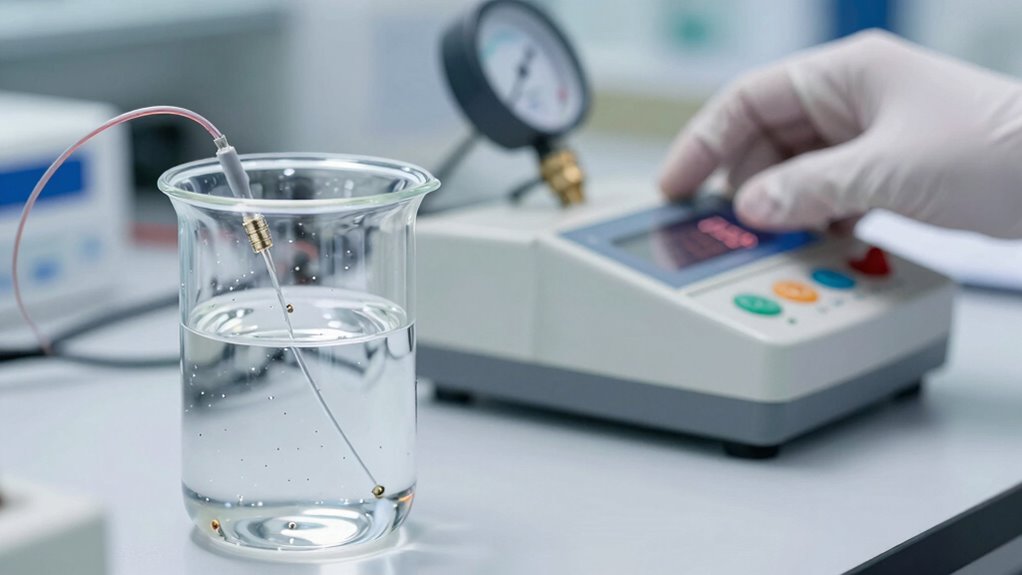
Temperature compensation adjusts your conductivity measurements by using data from an integrated sensor that detects the solution’s temperature. It then applies a correction factor based on how conductivity varies with temperature, usually referencing 25°C as a standard. This process guarantees your readings remain accurate despite temperature fluctuations. To do this effectively, you need proper calibration and filtering. If you’re curious about the detailed workings, there’s more to discover below.
Key Takeaways
- Temperature compensation adjusts conductivity readings based on real-time temperature data to standardize results to a reference temperature, usually 25°C.
- Accurate sensors and calibration ensure the temperature-dependent correction accurately reflects the solution’s true conductivity.
- The compensation algorithm applies a temperature coefficient, often derived from calibration, to modify the raw conductivity measurement.
- Proper signal filtering ensures temperature measurements are stable and free from noise, improving correction accuracy.
- Reliable temperature compensation depends on integrated calibration, filtering, and sensor accuracy for precise, comparable conductivity data.
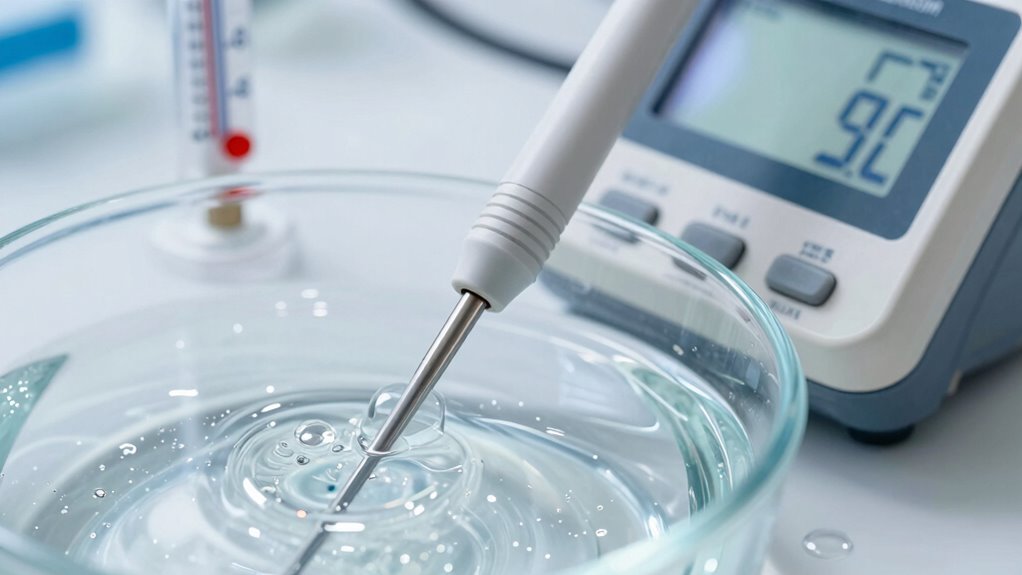
Conductivity measurement is a pivotal process used to determine how well a solution can conduct electric current. When you’re working with conductivity sensors, ensuring accurate readings depends on proper electrode calibration. Electrode calibration involves comparing your sensor’s response to a standard solution with a known conductivity value. You’ll want to regularly calibrate your electrodes to account for any drift or contamination that could skew results. This process helps maintain measurement precision, especially when dealing with fluctuating sample compositions or prolonged use. Proper calibration also ensures that the electrode’s response remains linear across the measurement range, providing more reliable data.
In addition to calibration, signal filtering plays an essential role in obtaining accurate conductivity measurements. Your sensor’s signal can be affected by noise from electrical interference, temperature variations, or fleeting environmental changes. Signal filtering helps eliminate these unwanted fluctuations, allowing you to focus on the true conductivity signal. Techniques such as low-pass filters or digital filtering algorithms are often employed to smooth out the data. This step is especially important when you’re working with low-conductivity solutions where minor disturbances can considerably impact readings. By filtering the signal, you prevent transient noise from causing inaccurate results and improve the overall stability of your measurements. Additionally, understanding measurement accuracy is crucial to ensure that your data reflects true solution properties, especially when multiple factors influence the readings.
Temperature compensation is another key aspect that ties into conductivity measurement. Since conductivity varies with temperature, you must account for this effect to compare readings accurately. To do this, most modern conductivity meters integrate temperature sensors that provide real-time data. When your device measures solution conductivity, it automatically adjusts the value based on the current temperature, often referencing a standard temperature like 25°C. This automatic adjustment relies heavily on correct electrode calibration and consistent signal filtering because any inaccuracies in calibration or noise suppression can distort the temperature compensation process. If your calibration isn’t precise or your signal filtering isn’t essential, the temperature compensation may not be as effective, leading to errors in the final reading.
Frequently Asked Questions
How Do Different Probe Materials Affect Temperature Compensation Accuracy?
Your choice of probe material critically impacts temperature compensation accuracy because different materials respond differently to temperature changes. For example, stainless steel probes offer reliable readings, but their thermal expansion can affect calibration. Using proper calibration techniques, like temperature correction algorithms tailored to your probe material, helps guarantee accurate conductivity measurements across varying temperatures. Always select probe materials suited for your specific application and regularly calibrate them to maintain precision.
Can Conductivity Sensors Be Calibrated Without Temperature Compensation?
Yes, you can calibrate conductivity sensors without temperature compensation, but it may affect measurement accuracy. Calibration guarantees your sensor provides precise readings at a specific temperature, usually 25°C. However, without temperature compensation, measurements can fluctuate considerably with temperature changes, reducing overall accuracy. For ideal results, include temperature compensation during calibration to maintain measurement precision across different environments and ensure reliable conductivity readings.
What Are the Common Errors in Temperature Compensation Methods?
You should watch out for errors like incorrect calibration procedures, which can skew your sensor response, leading to inaccurate measurements. Temperature compensation methods often assume a linear relationship that doesn’t always hold, causing your results to drift. Additionally, failing to regularly verify calibration or using sensors outside their specified temperature range can introduce significant errors, making your data unreliable. Always follow proper procedures for consistent, accurate conductivity readings.
How Does High Ionic Strength Impact Temperature Compensation Reliability?
High ionic strength can challenge temperature compensation reliability because it affects measurement stability. When ionic strength is elevated, the conductivity response to temperature changes becomes less predictable, causing compensation algorithms to falter. You might notice inconsistent readings or drift, making it harder to get accurate results. To maintain reliability, you should calibrate your instrument carefully for high ionic conditions and consider specialized compensation techniques that account for these effects.
Are There Industry Standards for Conductivity Temperature Compensation?
Yes, industry standards for conductivity temperature compensation exist. You should regularly calibrate your probe according to these standards, guaranteeing accurate readings. Pay attention to sensor materials, as they influence how well the device compensates for temperature changes. Proper calibration helps maintain reliability, especially in varying conditions. Following these standards ensures consistent, precise conductivity measurements, and prolongs your sensor’s lifespan.
Conclusion
Remember, understanding how temperature compensation truly works helps you get more accurate conductivity measurements. While it might seem like a small detail, neglecting it can subtly influence your results. By paying attention to temperature effects, you’re gently guiding your measurements toward greater reliability. Think of it as fine-tuning your approach—sometimes, the smallest adjustments make the biggest difference. Embrace this knowledge, and you’ll find your readings becoming even more precise, quietly boosting your confidence in every test you perform.