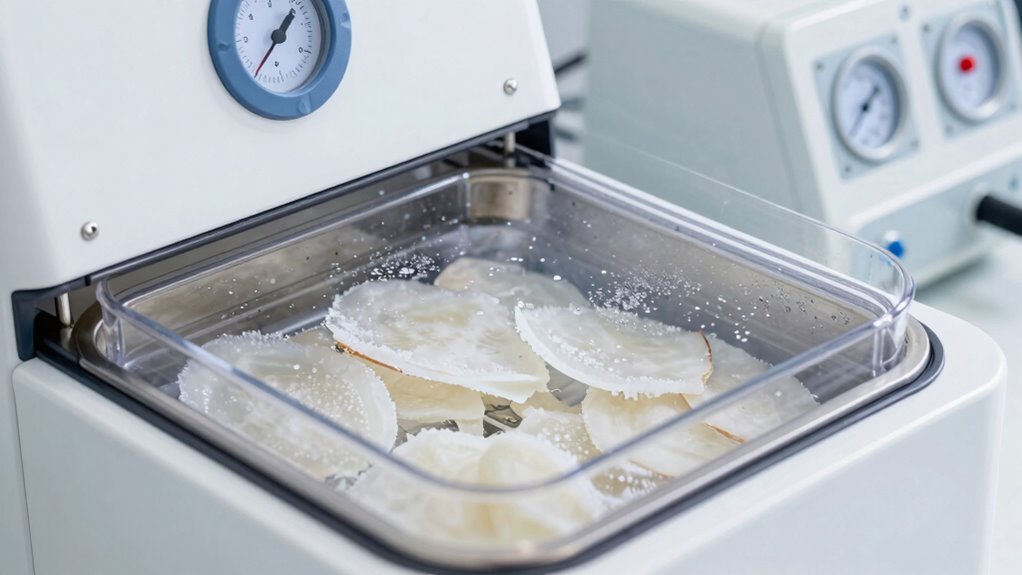

Freeze drying removes water by first freezing your product and then using a vacuum to let ice turn directly into vapor, called sublimation. To prevent collapse, you need to carefully control the vacuum pressure and shelf temperature—keeping them steady and within safe limits. If these parameters aren’t managed well, your product can shrink or become uneven. Want to understand how to keep your freeze drying successful? Keep exploring for helpful tips.
Key Takeaways
- Sublimation is the process where ice turns directly into vapor during freeze drying, removing moisture without melting.
- Maintaining low vacuum pressure is essential to enable sublimation and prevent slow or incomplete drying.
- Proper shelf temperature, below the material’s collapse point, ensures structure preservation and prevents product collapse.
- Gradually increasing temperature during drying helps remove residual moisture while avoiding structural damage.
- Monitoring and adjusting vacuum and temperature parameters prevent collapse and ensure high-quality, fully dried products.
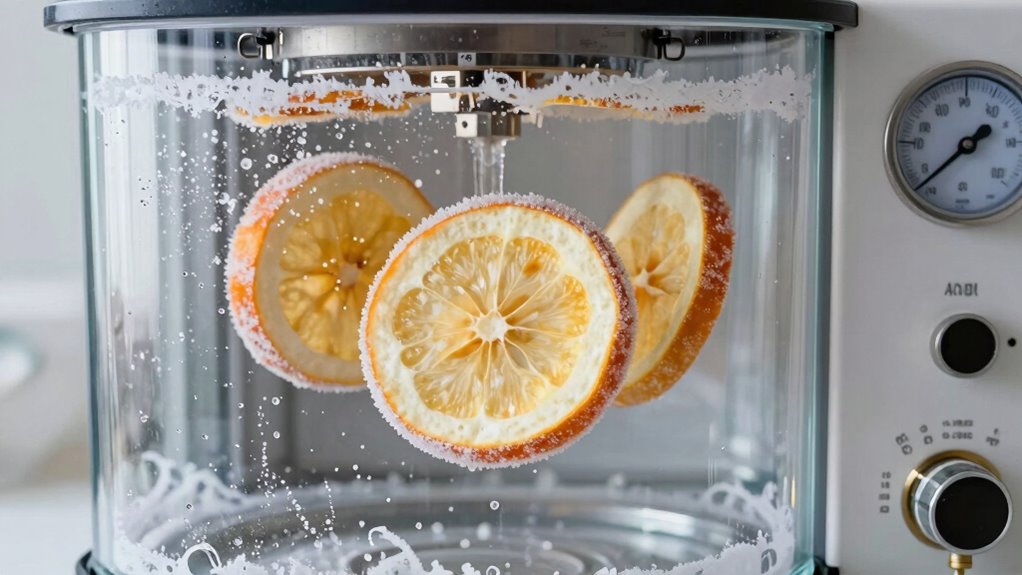
Freeze drying is a process that removes moisture from food or other materials by freezing them and then reducing the surrounding pressure to allow the ice to turn directly into vapor. This method, known as sublimation, is highly effective at preserving the structure, flavor, and nutrients of the material. As you navigate this process, understanding the importance of vacuum pressure and shelf temperature becomes essential for success. Maintaining the correct vacuum pressure ensures that the ice sublimates efficiently without melting prematurely or causing damage to the product. Typically, the vacuum pump lowers the pressure inside the chamber to a level where ice can transition directly into vapor at low temperatures. If the vacuum pressure is too high, sublimation slows down or stalls; if it’s too low, it can cause excessive outgassing or even collapse of the dried material.
Shelf temperature plays an equally critical role. During the freeze-drying cycle, you set the shelves to a carefully controlled temperature that is usually below the material’s critical collapse temperature. This temperature must be high enough to facilitate sublimation but low enough to prevent the product from melting or collapsing. If the shelf temperature is too high during the primary drying phase, you risk collapse, which occurs when the structure of the material can’t support itself as moisture is removed. Conversely, if it’s too low, sublimation rates slow down, prolonging the process and risking incomplete drying. To prevent collapse, you need to monitor both the vacuum pressure and shelf temperature closely, adjusting them as needed throughout the cycle.
Additionally, understanding the interaction of parameters is vital, as fluctuations can lead to uneven drying or structural issues. As sublimation progresses, the removal of water causes the material to become more fragile, making it more susceptible to collapse if conditions aren’t carefully maintained. You should regularly check the chamber gauges and temperature controls, ensuring that the vacuum pressure remains steady and that the shelf temperature stays within the ideal range. Often, a gradual increase in shelf temperature during the second drying phase helps to remove any residual moisture without compromising the product’s structure.
Frequently Asked Questions
Can Freeze Drying Be Used for All Types of Food?
Freeze drying isn’t suitable for all types of food, as some items aren’t food compatible with the process. You’ll find that foods with high fat or moisture content, like certain cheeses or raw meats, may not preserve their texture well or could spoil. However, fruits, vegetables, and herbs typically benefit from freeze drying because it maintains their flavor and texture better than other methods, making them ideal choices for this preservation technique.
How Long Does the Freeze Drying Process Typically Take?
The freeze drying process usually takes between 20 to 48 hours, but processing duration varies depending on factors like food type, size, and moisture content. You might find that thicker or wetter foods require more time, while smaller or drier items process faster. Keep in mind, variable factors such as machine efficiency and desired dryness level also influence how long the process takes.
Is Freeze Dried Food Healthier Than Fresh or Frozen Options?
Freeze-dried food’s freshness and flavor often outperform frozen options, but its health benefits hinge on the nutritional comparison. You might find that freeze drying preserves more nutrients and natural flavors, thanks to its preservative effects, with minimal additives or preservatives. While fresh food remains the healthiest choice, freeze-dried options are convenient, retaining essential nutrients while offering a long-lasting, lightweight, and portable alternative that’s nearly as nutritious.
What Equipment Is Necessary for Home Freeze Drying?
To start freeze drying at home, you’ll need a dedicated freeze dryer, which involves a significant equipment cost. Make sure you understand freeze dryer maintenance, like cleaning and checking seals regularly, to keep it running efficiently. While initial investment is high, proper upkeep helps extend your machine’s lifespan. You may also need compatible vacuum pumps and trays, so factor these into your budget for a complete setup.
How Should I Store Freeze Dried Products to Maximize Shelf Life?
To maximize your freeze-dried product’s shelf life, store it in airtight containers to prevent moisture exposure. Keep these containers in a cool, dark environment, as heat and light can degrade the quality. make certain the containers are sealed tightly after each use, and consider adding desiccants for extra protection. Regularly check for any signs of moisture or spoilage, so your freeze-dried foods stay fresh longer.
Conclusion
Now that you understand freeze drying, think of it as a delicate dance where each step matters. By controlling sublimation and preventing collapse, you keep your precious items safe and intact. Remember, a small mistake can cause your process to fall apart like a house of cards. With careful attention and proper techniques, you’ll master the art of freeze drying, turning moisture into vapor and preserving your treasures perfectly—like turning a rough sketch into a masterpiece.