
When you add more cooling to a jacketed reactor, you might think it’ll remove heat faster, but that’s not always true. Excessive cooling can lower the jacket temperature too much, reducing the temperature gradient that drives heat transfer. This decreases efficiency and can cause uneven temperatures or thermal stress in the reactor walls. To optimize cooling, it’s vital to balance jacket temperature with process needs. Keep exploring to understand how maintaining the right gradient improves reactor performance.
Key Takeaways
- Excessive cooling can reduce the temperature gradient, decreasing heat transfer efficiency despite more coolant flow.
- Lowering jacket temperature may cause thermal resistance, hindering heat exchange rather than improving it.
- Overcooling can induce thermal stresses, leading to mechanical issues and compromised reactor integrity.
- Maintaining an optimal temperature gradient is essential; too much cooling can paradoxically lessen heat removal.
- Proper temperature control ensures effective heat transfer, avoiding inefficiencies caused by excessive cooling.
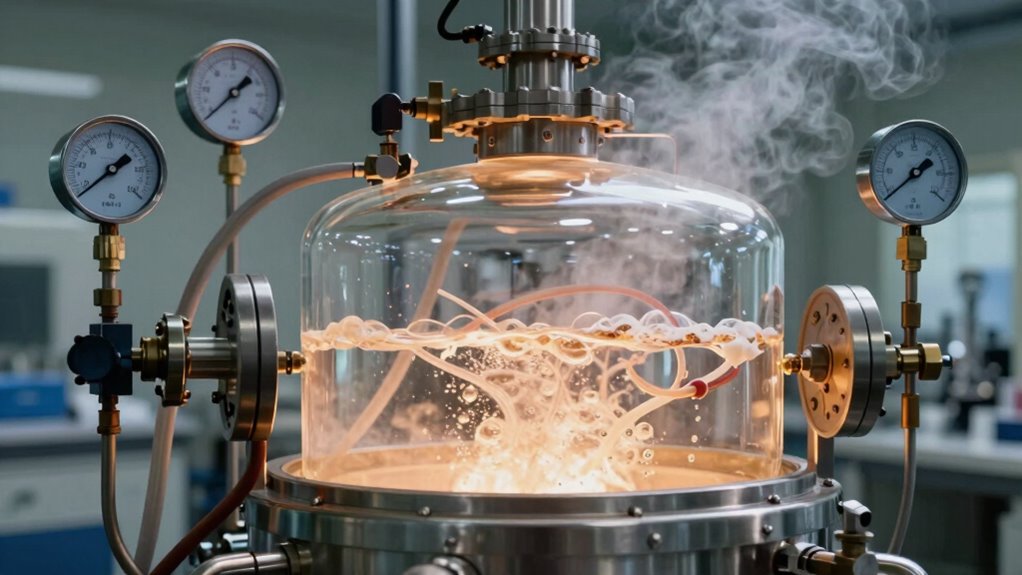
Have you ever wondered how heat is efficiently transferred in chemical reactors? When managing heat transfer in a jacketed reactor, understanding the role of temperature gradients is vital. A temperature gradient is the difference in temperature between the hot fluid inside the jacket and the substance inside the vessel. This difference drives heat transfer, with heat flowing from the warmer to the cooler region. The key to maximizing heat exchange efficiency is maintaining an ideal temperature gradient. If the gradient is too small, heat transfer slows down, and your reactor might not cool or heat as intended. Conversely, if it’s too large, it can cause uneven temperature distribution, which could lead to hot spots or inefficient operation.
Many operators think that increasing the cooling rate by adding more coolant or lowering the jacket temperature will always improve heat removal. While it might seem intuitive, this isn’t always the case. When you introduce more cooling, you might reduce the temperature of the jacket considerably. However, if the process inside the reactor remains hot, the temperature gradient between the jacket and the core process decreases. This reduced gradient means less efficient heat transfer because the driving force—the difference in temperature—is diminished. Paradoxically, pouring in more coolant or making the jacket colder can sometimes result in less overall heat removal if the process temperature drops closer to the jacket temperature, flattening the gradient.
In addition, excessive cooling can lead to thermal stresses within the reactor walls and the process material. These stresses can cause mechanical issues or compromise the integrity of the reactor over time. It’s also worth noting that the heat exchange efficiency isn’t solely about how cold you make the coolant; it depends on maintaining an appropriate balance. If the coolant is too cold, the thermal resistance at the heat transfer surface increases, further hampering heat exchange. Ideal heat transfer is achieved not by maximum cooling but by managing the temperature gradients carefully to sustain a steady, effective heat flow.
Ultimately, more cooling doesn’t necessarily mean better cooling. Instead, it’s about finding the right temperature gradient that ensures maximum heat exchange efficiency without risking thermal imbalance or mechanical stress. By monitoring and adjusting the jacket temperature thoughtfully, you can optimize the heat transfer process, keeping your reactor safe, efficient, and well-controlled. Remember, in heat transfer, sometimes less is more, especially when it comes to maintaining the right temperature gradients.
Understanding energy-efficient heat transfer principles can help operators design better temperature control strategies, leading to safer and more sustainable reactor operations.
Frequently Asked Questions
How Does Agitation Affect Heat Transfer in Jacketed Reactors?
Agitation improves heat transfer in jacketed reactors by enhancing mixing efficiency, which distributes heat evenly and prevents hot spots. When you increase agitation, it creates turbulence that boosts the contact between the cooling medium and the reactant mixture. However, excessive agitation can cause air entrainment or foam, reducing mixing efficiency and potentially decreasing heat transfer effectiveness. So, ideal agitation balances turbulence with smooth mixing for maximum cooling performance.
What Materials Are Best for Jacketed Reactor Construction?
Think of your reactor’s materials as the armor protecting a knight. Stainless steel is your best choice because of its high durability and corrosion resistance, ensuring long-term performance. It might cost more upfront, but it saves money over time with less maintenance. If budget is tight, consider materials like carbon steel, but remember, durability and corrosion resistance are key to keeping your reactor running smoothly.
Can External Cooling Methods Improve Heat Transfer Efficiency?
Yes, external cooling methods can improve heat transfer efficiency if you choose materials with high thermal conductivity and guarantee good contact for heat flow. Proper insulation effectiveness prevents heat loss, maximizing cooling impact. By optimizing these factors, you’ll transfer heat more effectively, preventing temperature gradients that reduce efficiency. This approach ensures your reactor maintains desired temperatures, improves process control, and enhances overall system performance.
How Does Scale Buildup Impact Heat Transfer Performance?
Imagine your reactor’s heat transfer as a smooth river; scale formation is like a clogging dam. When scale builds up, it reduces heat conductivity, much like the dam blocks water flow. This buildup hampers heat transfer efficiency, causing your cooling efforts to become less effective. Over time, the scale acts as an insulator, trapping heat and preventing proper cooling, much like a dam obstructing the river’s natural flow.
What Safety Considerations Are Essential During Temperature Regulation?
You should prioritize safety protocols and emergency procedures during temperature regulation to prevent accidents. Always monitor temperature and pressure closely, guaranteeing alarms are functional. Use proper personal protective equipment and follow lockout/tagout procedures when necessary. Be prepared to shut down the system quickly if unsafe conditions arise, and communicate clearly with your team. Staying vigilant and adhering to safety standards minimizes risks and ensures safe, efficient operation.
Conclusion
Understanding jacketed reactor heat transfer shows that more cooling isn’t always better—you need the right balance. Pushing too hard can backfire and actually reduce efficiency. Remember, sometimes less is more, and finding that sweet spot makes all the difference. Don’t put all your eggs in one basket; instead, fine-tune your approach to get the best results. Keep experimenting and stay flexible—after all, the devil’s in the details when it comes to effective cooling.