
In polymer physics, your understanding of Tg, Tm, and viscoelasticity helps you predict how materials behave under heat and stress. Tg marks where chain segments start to move, changing the material from brittle to flexible. Tm is where crystalline regions melt, increasing chain mobility and flow. These progressions influence how polymers deform, absorb impact, or stretch. Exploring these concepts further reveals how molecular dynamics shape the properties you rely on in everyday applications.
Key Takeaways
- Tg is the temperature where polymer chains transition from immobile to mobile, changing from a glassy to a rubbery state.
- Tm marks the melting of crystalline regions, enabling chain flow and transitioning the polymer to a ductile, viscoelastic state.
- Molecular mobility and chain dynamics increase significantly near Tg and Tm, affecting a polymer’s flexibility and processability.
- Viscoelasticity describes how polymers combine elastic (solid-like) and viscous (liquid-like) behaviors, especially near Tm.
- Understanding Tg, Tm, and chain mobility helps optimize manufacturing processes and tailor polymer properties for specific applications.
Polymer physics is the branch of science that explores how long, chain-like molecules behave and interact. When you explore this field, you quickly realize that understanding molecular mobility is key to grasping how polymers respond under different conditions. Molecular mobility refers to how freely the polymer chains can move and rearrange themselves, which directly influences properties like flexibility, toughness, and melting behavior. Chain dynamics, on the other hand, describe how these molecules wiggle, slide, and entangle at the microscopic level. Both concepts are essential because they determine whether a polymer is rigid or rubbery at a given temperature, impacting everything from manufacturing to end-use performance.
Understanding molecular mobility and chain dynamics is key to predicting polymer behavior and performance.
As temperatures change, the mobility of your polymer chains shifts markedly. Below the glass transition temperature (Tg), chain segments are relatively immobile, and the material behaves like a brittle solid. Here, restricted chain dynamics mean that only small molecular motions occur, making the polymer hard and glassy. Once you cross Tg, molecular mobility increases dramatically. The chains gain enough energy to move more freely, which transforms the material into a softer, more flexible state. This transition isn’t abrupt but gradual, and it’s important to understand because it affects how polymers absorb impact, bend, or stretch. The flexibility you experience in a plastic bag or the rigidity in a glassy plastic bottle stems from these changes in chain dynamics and molecular mobility around Tg.
Further heating leads to the melting point (Tm), where the crystalline regions within semi-crystalline polymers break down. At Tm, chain mobility reaches a peak because the ordered structures that held chains in fixed positions melt away, allowing chains to flow past each other. This melting process is essential in manufacturing, as it defines the temperature window where a polymer can be molded or extruded. Between Tg and Tm, you see a transition from a rigid, glassy state to a rubbery, more ductile one, driven by enhanced chain dynamics. In this range, the polymer’s viscoelasticity becomes prominent, meaning it exhibits both viscous and elastic behavior. Understanding these transitions allows you to predict how a polymer will perform under stress, heat, or deformation.
In essence, the interplay between molecular mobility, chain dynamics, Tg, and Tm forms the backbone of polymer physics. Recognizing how these factors influence each other helps you design materials with specific properties, whether you need a durable plastic, a flexible elastomer, or a processable resin. Mastering this knowledge guarantees you can optimize manufacturing processes and end-use applications, making polymers versatile and reliable for countless uses.
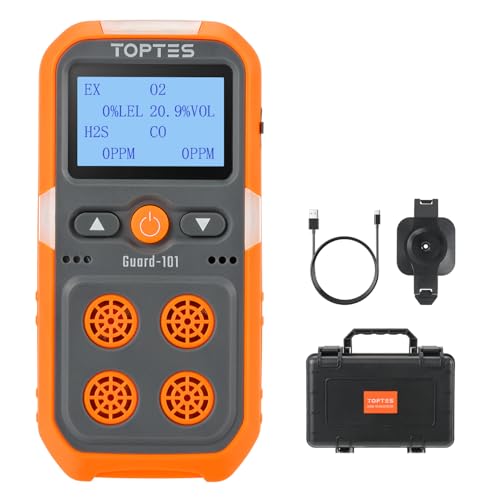
TopTes Guard-101 Gas Detector, 4 Gas Monitor for H2S, CO, LEL and O2, with Vibration, Visual and Audible Alarms, 14h Long Battery Life, Safety Explosion-Proof, for Work, Home - Orange
Quick Detection, Safety First: Guard-101 4 gas monitor multi gas detector is designed for rapid detection of 4...
As an affiliate, we earn on qualifying purchases.
Frequently Asked Questions
How Does Molecular Weight Influence Tg and Tm?
Your molecular weight notably influences Tg and Tm. As your molecular weight increases, the glass transition temperature (Tg) tends to rise because longer polymer chains restrict molecular mobility, making it harder for the material to soften. Conversely, your melting temperature (Tm) may stabilize or slightly increase with higher molecular weight, as larger chains require more energy to break apart. So, molecular weight directly impacts the thermal behavior of your polymer, affecting its performance and processing.
What Role Do Additives Play in Viscoelastic Behavior?
Additives markedly influence viscoelastic behavior by acting as plasticizers and altering filler interactions. Plasticizers reduce intermolecular forces, making the polymer more flexible and improving its damping capacity. Fillers can reinforce the material, affecting its stiffness and energy dissipation. You’ll notice these additives change how the polymer responds under stress, either making it more ductile or more rigid, depending on their nature and concentration.
How Is Tg Measured in Amorphous Polymers?
You measure Tg in amorphous polymers using differential scanning calorimetry (DSC) or modulated calorimetry. During the test, you heat the sample at a controlled rate, and the heat flow change indicates the glass transition temperature. DSC detects a step change in heat capacity, while modulated calorimetry offers more precise measurements by separating reversible and non-reversible heat flow, giving you accurate Tg data.
Can Tg Be Altered by Processing Conditions?
Yes, you can alter Tg through processing effects because it’s sensitive to temperature dependence. When you process polymers at different temperatures, shear, or cooling rates, these conditions influence the polymer’s microstructure, affecting Tg. Faster cooling may raise Tg by trapping more rigid structures, while slower cooling allows relaxation, lowering Tg. So, your processing choices directly impact the polymer’s changeover temperature, making it adaptable based on your specific application needs.
What Are the Implications of Viscoelasticity for Polymer Recycling?
Viscoelasticity substantially impacts polymer recycling by creating recycling challenges, as polymers exhibit both elastic and viscous behaviors that complicate processing. You need to account for how this dual nature affects deformation and flow during recycling. Using viscoelastic modeling helps predict how polymers will behave under different conditions, enabling better process design. Understanding these implications ensures you optimize recycling methods, reduce waste, and improve the quality of recycled materials.

Natural Gas Detector, TopTes PT177 Gas Leak Detector with Audible & Visual Alarm, Portable Gas Sniffer to Locate Combustible Leak Sources Like Methane, Propane for Home (Includes Battery x2)-Orange
Combustible Gas Leak Detector: PT177 is a useful little tool that helps every household with gas appliances to...
As an affiliate, we earn on qualifying purchases.
Conclusion
Understanding Tg, Tm, and viscoelasticity helps you grasp how polymers behave under different conditions. Did you know that over 30 million tons of plastics are produced worldwide each year? This highlights their significance in everyday life. By mastering these concepts, you can better predict a polymer’s performance and tailor materials for specific uses, from flexible electronics to durable packaging. Keep exploring these properties to open innovative applications and sustainable solutions in polymer science.

Klein Tools ET120 Gas Leak Detector, Combustible Gas Leak Tester with 18-Inch Gooseneck Has Range 50-10,000 ppm, Includes Pouch, Batteries
WIDE DETECTION RANGE: Detect gas concentrations from approximately 50 to 10,000 ppm* (*based on Methane) for versatile gas...
As an affiliate, we earn on qualifying purchases.

TopTes PT210S Gas Leak Detector, Natural Gas Detector with 4-inch Probe, Propane Leak Detector Locating Combustible Gases Like Natural Gas, Methane for Home, Measures%LEL (Incl. Batteries) - Orange
Portable and Probe Design: The TopTes PT210S Gas Leak Detector features a convenient four inch probe and a...
As an affiliate, we earn on qualifying purchases.