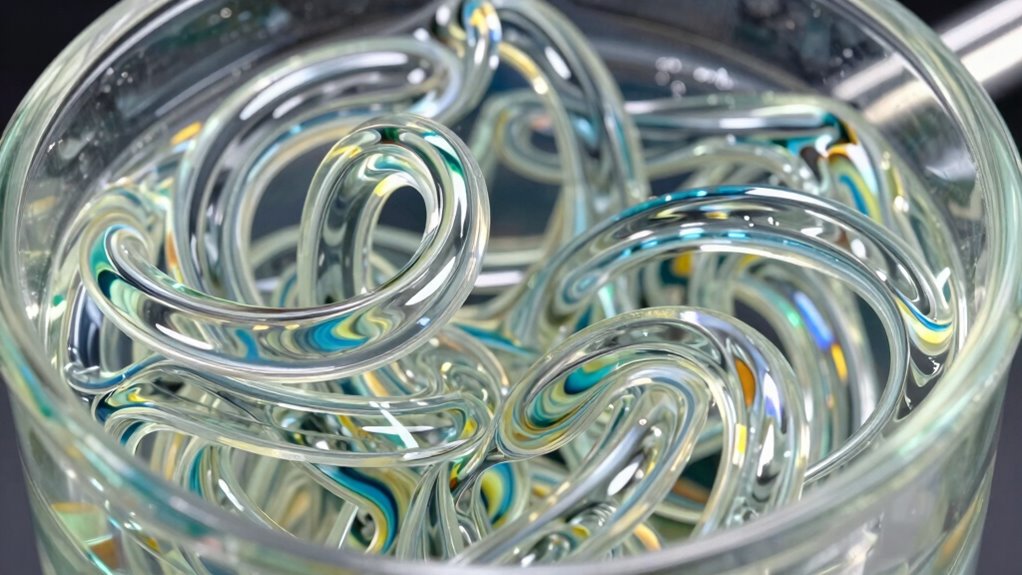

Static mixers blend fluids by using carefully designed internal shapes that create turbulence and promote mixing. As the fluid flows through elements with sharp angles or helical shapes, it splits, swirls, and recombines, disrupting concentration gradients. This turbulence accelerates blending and guarantees uniformity without any moving parts. By understanding how geometry influences flow patterns, you’ll see how static mixers achieve efficient, consistent mixing—continue exploring, and you’ll uncover more about how they work.
Key Takeaways
- Static mixers use specially designed elements to split, swirl, and recombine fluids, creating turbulence that enhances mixing.
- The internal geometry of mixer elements controls flow patterns and turbulence, ensuring thorough blending.
- Turbulence generated solely by flow interactions disperses additives evenly without external energy.
- Proper design minimizes pressure drops and optimizes turbulence for efficient, uniform mixing.
- Flow patterns evolve through successive sections, continuously breaking down concentration gradients for rapid blending.
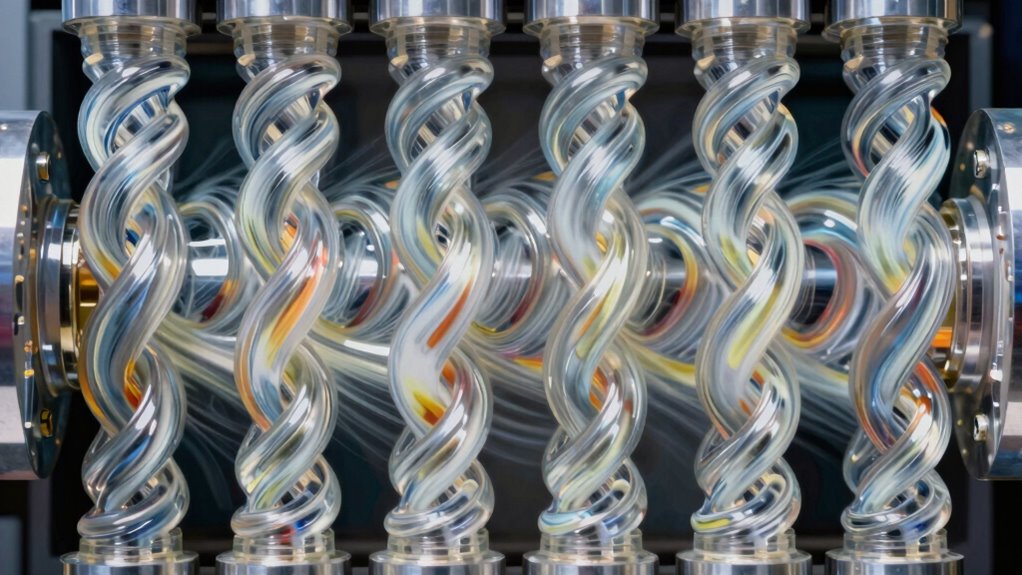
Have you ever wondered how industries efficiently blend liquids without moving parts? The secret lies in static mixers, which rely on clever design and flow patterns to achieve thorough mixing. Unlike traditional mixers that use blades or paddles, static mixers are installed directly into pipelines, making them a cost-effective and low-maintenance solution. Their effectiveness depends heavily on the interplay between flow patterns and mixer design, which work together to create the turbulence needed for mixing. When liquids pass through a static mixer, they encounter a series of carefully engineered elements that split, swirl, and recombine the streams. These elements are arranged to manipulate the flow patterns, ensuring that the fluids are constantly broken apart and rejoined, promoting rapid and uniform blending. The design of these elements isn’t random; each is tailored to generate specific flow behaviors that enhance mixing efficiency. For example, some designs focus on generating chaotic turbulence, while others optimize laminar flow to minimize pressure drops and energy consumption. The geometry of the mixer elements is vital—sharp angles, helical shapes, and nested chambers all influence how fluids interact within the device. By carefully shaping these components, engineers can control the flow patterns, ensuring that the liquids are thoroughly mixed regardless of their viscosities or flow rates. The turbulence created by the geometry accelerates the mixing process, reducing the need for external agitators or additional equipment. As the fluids pass through successive sections of the static mixer, the flow patterns continually evolve, breaking down concentration gradients and dispersing additives evenly. This process is highly efficient because it relies solely on the internal geometry to generate turbulence, making static mixers ideal for continuous processes where consistent quality and minimal maintenance are priorities. Flow patterns and mixer design play a crucial role in optimizing mixing performance and energy efficiency. The versatility of static mixer design allows for customization based on the specific application—whether you’re blending chemicals, pharmaceuticals, or food ingredients. Properly designed flow patterns within the mixer ensure that the fluids reach a uniform composition quickly, improving product quality and process reliability. The significance of mixer design cannot be overstated; it determines how well the device performs, how much energy it consumes, and how long it lasts under demanding conditions. Fundamentally, static mixers turn the challenge of fluid blending into a precise science of flow patterns and geometry, eliminating moving parts and reducing operational costs. When you understand how flow patterns and mixer design work together, it becomes clear why static mixers are a cornerstone of modern industrial processes. They leverage the power of turbulence and intelligent geometry to deliver efficient, reliable, and maintenance-free mixing, transforming complex fluid blending into a streamlined operation.
Frequently Asked Questions
What Are the Main Materials Used to Manufacture Static Mixers?
You’ll find that static mixers are mainly made from materials like stainless steel, plastic, and sometimes rubber, depending on your application. Material selection is vital because it influences durability, chemical resistance, and cost. Manufacturing processes such as extrusion, molding, or welding are used to shape these materials into the mixer’s geometry. Choose the right materials and processes to guarantee your static mixer performs efficiently under your specific operating conditions.
How Do Static Mixers Compare to Traditional Mechanical Mixers?
Think of static mixers like a finely-tuned orchestra, quietly controlling turbulence and optimizing flow. Unlike traditional mechanical mixers, they have no moving parts, reducing maintenance and energy use. Static mixers excel at turbulence control and flow optimization, providing consistent mixing without the noise or wear of mechanical devices. They’re ideal for continuous processes, offering reliable performance and easier installation, making them a smarter choice for many industrial applications.
Can Static Mixers Handle Highly Viscous or Abrasive Fluids?
Yes, static mixers can handle highly viscous fluids and abrasive resistance effectively when designed properly. You’ll find they excel in viscous fluid handling because their turbulence promotes thorough mixing without moving parts. For abrasive fluids, choose mixers with durable, wear-resistant materials like stainless steel or specialized coatings. This way, you guarantee longevity and peak performance, even with challenging, viscous, or abrasive substances.
What Maintenance Is Required for Static Mixer Systems?
You need to regularly perform cleaning protocols and wear inspections on your static mixer systems. Clean the mixer thoroughly to prevent buildup that can impair performance, especially after handling viscous or abrasive fluids. Conduct wear inspections to identify any signs of damage or deterioration in the geometry. Address issues promptly to maintain peak mixing efficiency and extend the system’s lifespan, ensuring reliable operation and consistent product quality.
Are Static Mixers Suitable for Pharmaceutical or Food-Grade Applications?
Think of static mixers as the heart of your clean processes—they’re suitable for pharmaceutical and food-grade applications. You’ll need to guarantee they meet strict sanitary standards and are made from compatible materials like stainless steel or food-grade plastics. By choosing the right design and materials, you keep contamination at bay and maintain product safety, making static mixers a reliable, hygienic choice for your sensitive formulations.
Conclusion
So, next time you see a static mixer in action, remember it’s not just about turbulence but how its clever geometry keeps everything uniformly blended. You might think turbulence alone does the job, but static mixers optimize mixing without moving parts, saving you time and maintenance. Don’t underestimate their efficiency—once you understand how they work, you’ll see why they’re essential for consistent, high-quality results in countless industries.