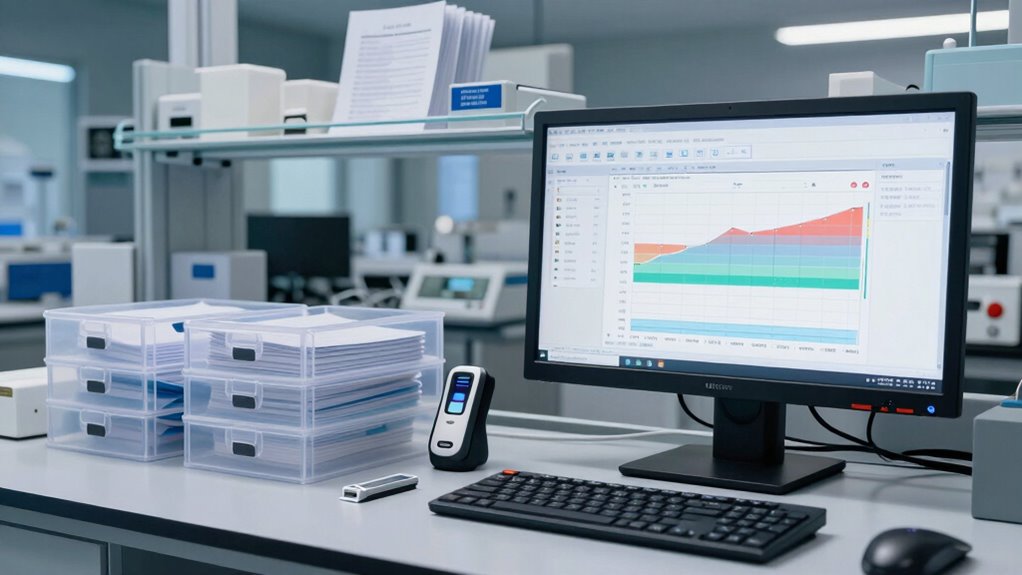

To make your instrument files audit-proof, you should implement strong data integrity measures. Encrypt files to protect against tampering, set strict access controls to restrict permissions, and keep detailed logs of all activities. Regularly review permissions and audit trails to catch irregularities early. Educate your team on secure handling and password best practices. By combining these steps, you’ll strengthen your data security and guarantee your results remain trustworthy—discover how to enhance your process even further.
Key Takeaways
- Implement robust encryption to protect instrument files from unauthorized access and tampering.
- Set strict access controls and permissions based on roles to restrict who can view or modify data.
- Maintain detailed audit trails logging all file activity, changes, and transfers for traceability.
- Regularly review and update security policies, permissions, and monitoring procedures for ongoing integrity.
- Educate staff on secure handling, password best practices, and recognizing potential security threats.
Ensuring data integrity for instrument files is essential to maintain accurate and reliable measurement results. When you’re working with critical data, safeguarding it from unauthorized access or tampering becomes a top priority. One effective way to do this is through file encryption, which transforms your instrument files into a secure format that only authorized users can access. Encryption acts as a barrier, preventing malicious actors or accidental breaches from compromising your data. By encrypting files, you ensure that even if someone gains access, the information remains unintelligible without the correct decryption key, preserving its integrity and confidentiality.
Encrypt instrument files to protect data integrity and prevent unauthorized access.
In addition to encryption, implementing robust access controls is crucial. Access controls restrict who can view, modify, or delete instrument files, allowing you to set permissions based on roles or individual users. This layered approach helps prevent unauthorized modifications that could compromise data accuracy. For instance, you might restrict editing privileges to senior technicians or calibration specialists, while providing read-only access to other team members. Regularly reviewing and updating these controls ensures they stay aligned with your operational needs and security policies. Combining access controls with encryption creates a comprehensive security framework that minimizes risks and maintains data integrity.
You also need to establish strict procedures for handling instrument files. This includes maintaining detailed audit trails that log every access, change, or transfer of data. These logs serve as a vital record, making it easier to trace any discrepancies back to their source and verify that all modifications are legitimate. Implementing automated checks and alerts can further enhance this process by flagging irregular activities or unauthorized attempts to access files. Additionally, media literacy can help team members recognize potential security threats and avoid common pitfalls. Together, these practices help you build a transparent environment where data integrity is continuously monitored and preserved.
Furthermore, educating your team about the importance of data security and integrity can’t be overlooked. Training staff on proper handling procedures, secure password practices, and recognizing potential security threats ensures everyone plays a role in maintaining the integrity of instrument files. Combining technological safeguards like encryption and access controls with a well-informed team creates a resilient defense against data breaches or accidental errors that could undermine measurement results.
Frequently Asked Questions
How Often Should Instrument File Audits Be Conducted?
You should conduct instrument file audits regularly, at least quarterly, to guarantee data integrity. Incorporate backup strategies into your audit frequency to prevent data loss and verify that all files are accurate and complete. Regular audits help catch discrepancies early, maintaining audit-proof results. Adjust the frequency based on your instrument usage and regulatory requirements, but consistent review is key to keeping your data trustworthy and compliant.
What Are Common Causes of Data Corruption in Instrument Files?
You should be aware that common causes of data corruption in instrument files include file corruption and hardware failures. File corruption can happen due to improper shutdowns, software bugs, or malware, while hardware failures—like disk crashes or memory issues—also threaten data integrity. Regular backups and hardware maintenance help prevent these issues, ensuring your instrument files remain accurate and audit-proof. Always monitor system health and follow best practices to minimize risks.
Can Cloud Storage Improve Data Integrity for Instrument Files?
Yes, cloud storage can improve data integrity for instrument files if you prioritize cloud security and data encryption. By using reputable providers with strong security measures, you guarantee your files are protected against unauthorized access and tampering. Data encryption adds an extra layer of protection, making it harder for hackers to compromise your data. Regular backups and version control further enhance the reliability and auditability of your instrument results.
What Training Is Recommended for Staff Handling Instrument Data?
You should guarantee your staff undergo exhaustive training in data handling and instrument management. Focus on topics like proper data entry, secure storage, and audit trail maintenance. Regular refresher courses help reinforce best practices, keeping your team updated on compliance standards. Well-trained staff understand the importance of data integrity, reducing errors, and making your results more audit-proof. Prioritize hands-on training and clear documentation to support consistent, accurate data handling.
How Do Regulatory Standards Differ Across Industries Regarding Data Integrity?
You should know that industry compliance and regulatory differences considerably impact data integrity standards. In healthcare, FDA regulations emphasize rigorous audit trails and validation, while manufacturing industries focus on process controls and data security. You must tailor your data management practices to meet specific regulatory differences, ensuring consistent documentation, secure storage, and validation procedures. Staying updated on industry-specific compliance requirements helps you maintain audit-proof results and avoid regulatory issues.
Conclusion
So, next time you think cutting corners won’t matter, remember that maintaining data integrity isn’t just a box to tick. It’s the foundation that makes your results audit-proof—unless you enjoy endless questions and doubts. Ironically, neglecting proper measures might seem easier now, but it’ll cost you more in the long run. Stay vigilant, follow best practices, and keep your instrument files pristine—because chaos is a lot less fun when audits come knocking.