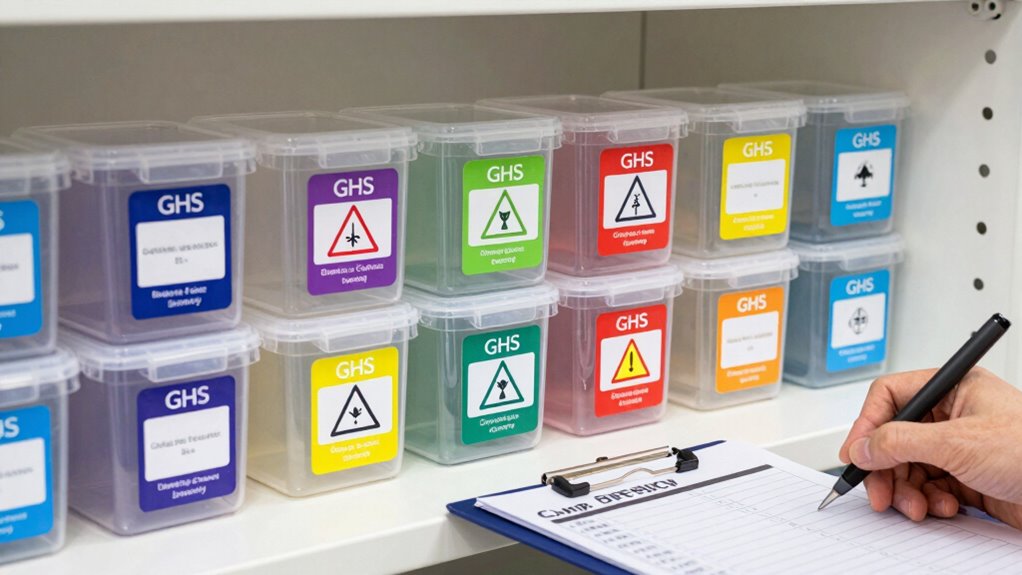
To guarantee your GHS labels pass inspection smoothly, focus on selecting labels that resist chemicals and environmental factors, clearly indicating chemical compatibility. Regularly train your team on GHS symbol meanings, hazard statements, and safety protocols, and keep detailed records of all training activities. Conduct routine checks to verify labels remain legible and intact, replacing damaged ones promptly. By following these steps and maintaining clear, durable labels, you’ll create a safer workplace—keep going to discover more essential tips.
Key Takeaways
- Ensure labels are made of durable, chemical-resistant materials that remain legible and intact over time.
- Clearly display all GHS elements: hazard pictograms, signal words, hazard statements, and precautionary measures.
- Regularly inspect labels for damage or fading; replace or repair immediately to maintain compliance.
- Train employees thoroughly on GHS label interpretation and proper hazard communication protocols.
- Keep detailed records of training and inspection activities to demonstrate ongoing compliance during audits.
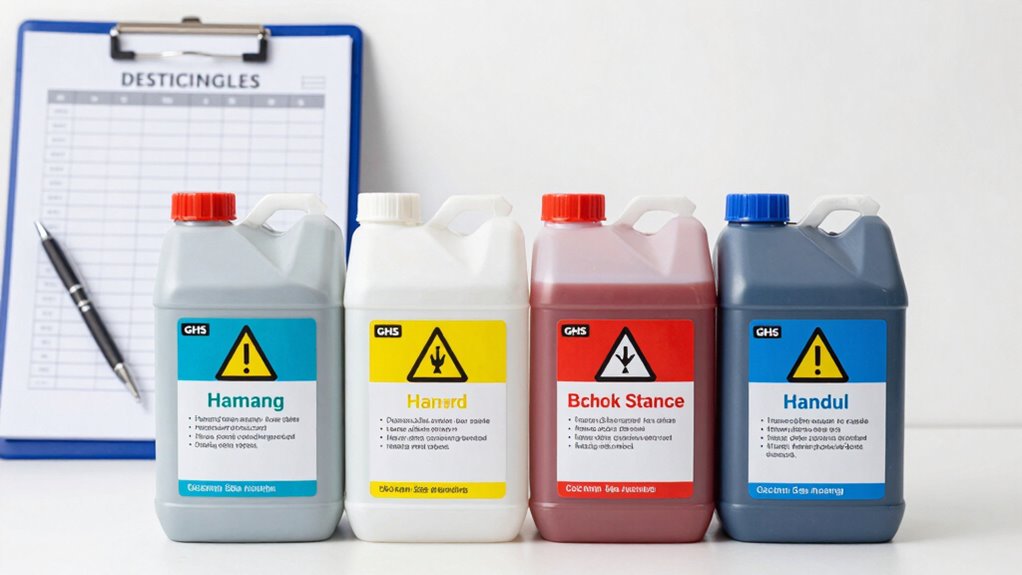
Creating accurate GHS labels is essential for ensuring safe handling and compliance with regulations. When you’re preparing labels, one of your top priorities should be emphasizing chemical compatibility. This means carefully selecting labels that can withstand exposure to various chemicals and environmental conditions without deteriorating or causing miscommunication. Properly indicating chemical compatibility helps prevent accidents, such as reactions between incompatible substances, which can lead to dangerous situations. As you design labels, double-check that the materials you use won’t react adversely with the chemicals stored or transported. This attention to chemical compatibility guarantees the labels remain legible and effective over time, reducing the risk of misinterpretation or oversight during handling. Regularly reviewing and updating labels based on chemical compatibility information ensures ongoing safety and compliance.
Prioritize chemical compatibility to ensure labels stay legible and effective, preventing miscommunication and safety hazards over time.
Equally important is employee training. No matter how well-designed your labels are, they won’t be effective if your team isn’t trained to understand and interpret them correctly. You need to guarantee that every employee handling hazardous materials knows how to read GHS labels, recognize hazards, and take appropriate precautions. Training sessions should cover the meaning of different symbols, signal words, hazard statements, and precautionary measures. When your team is well-trained, they’re more likely to follow safety protocols consistently and respond appropriately in emergency situations. Regular refresher courses reinforce knowledge and help keep safety at the forefront of daily operations.
In your efforts to pass inspection, it’s crucial to maintain meticulous records of employee training activities. Inspection authorities will want proof that your staff understands GHS labeling requirements and can apply them practically. Keep logs of training dates, attendance, and the specific content covered. This documentation demonstrates your commitment to compliance and helps identify areas where additional training might be necessary.
Additionally, creating accurate labels involves more than just choosing the right materials and training your staff. You should also develop a routine for checking labels regularly to guarantee they remain legible and intact. Damaged or outdated labels can cause confusion and compromise safety. Incorporate routine audits into your safety procedures, and make sure all labels conform to the latest GHS standards.
Frequently Asked Questions
How Often Should GHS Labels Be Audited for Compliance?
You should audit your GHS labels annually to guarantee compliance. Regular labeling frequency checks help catch any errors or updates needed. Incorporate routine audit procedures, like reviewing labels against current regulations and verifying accuracy, at least once a year. This proactive approach keeps your labeling consistent, minimizes inspection issues, and maintains safety standards. Staying diligent with your audits ensures your GHS labels always pass inspection without stress or surprises.
What Are Common Reasons GHS Labels Fail Inspection?
Think of GHS labels like a safety net—when they fail, accidents happen. Common reasons for failure include missing or unclear hazard symbols, expired or damaged labels, and poor label durability in harsh environments. If labels aren’t affixed properly or don’t meet durability standards, they can fall off or become unreadable, risking safety violations. Regular audits catch these issues early, ensuring your labels stay compliant and your team remains protected.
Are Digital GHS Labels Acceptable for Compliance?
Digital GHS labels are acceptable for compliance if they meet digital compliance standards and facilitate label verification. You should verify the labels are clear, durable, and easily accessible during inspections. Properly verifying digital labels helps avoid mistakes and confirms they contain all necessary information. By keeping digital labels updated and verified regularly, you maintain compliance and streamline your inspection process without drama.
How to Handle Labeling Errors Discovered During Inspection?
If you find labeling errors during inspection, act swiftly by reviewing the mistake’s impact on compliance. Investigate whether color coding or label durability issues compromise safety or clarity. Correct errors promptly, ensuring labels are durable and clearly visible, then re-label and document the correction. This proactive approach minimizes risks, maintains regulatory adherence, and demonstrates your commitment to safety, reinforcing that accurate labeling is essential to effective hazard communication.
What Training Is Recommended for Proper GHS Labeling?
You should pursue thorough safety certification and employee training to guarantee proper GHS labeling. This training covers label components, hazard communication standards, and proper formatting. It helps you understand regulatory requirements, recognize labels’ critical elements, and avoid common mistakes. Obtaining safety certification further validates your expertise, ensuring consistent, compliant labeling practices. Regular refresher courses are also recommended to stay current with evolving standards and maintain inspection readiness.
Conclusion
By following this no-drama GHS labeling checklist, you guarantee your inspections go smoothly and your labels meet all standards. Staying organized and thorough keeps surprises at bay and your compliance on point. Are you ready to confidently pass your next inspection and demonstrate your commitment to safety? With a clear plan in place, you can handle GHS labeling with ease—just keep the checklist handy and stay proactive. Safety and compliance have never been more within reach.