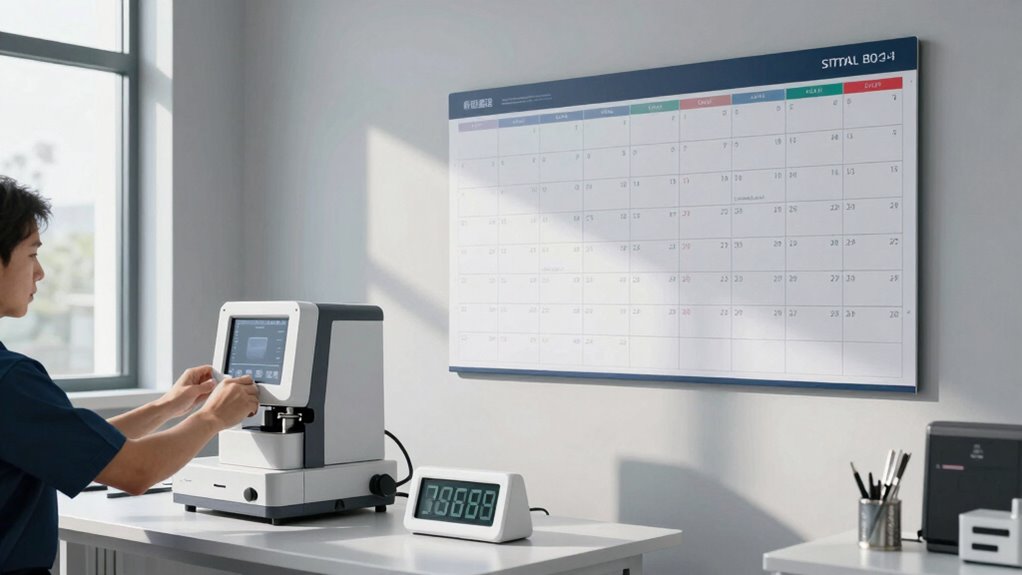

To set calibration intervals without guessing, base your schedule on actual data, manufacturer recommendations, and environment conditions. Review your sensors’ history to identify drift patterns and adjust intervals accordingly, considering factors like temperature, humidity, or usage demands. Automate reminders and record-keeping to stay compliant and maintain accuracy. By using a data-driven approach, you’ll optimize calibration timing and prevent errors—learn more about fine-tuning your calibration schedule to ensure reliability.
Key Takeaways
- Base calibration intervals on actual sensor performance data and manufacturer recommendations to ensure accuracy.
- Regularly review calibration history and drift patterns to adjust intervals proactively.
- Consider environmental factors and usage conditions that may accelerate or slow sensor degradation.
- Use calibration management software to automate scheduling, reminders, and record-keeping.
- Balance compliance, resource efficiency, and measurement reliability when defining calibration intervals.
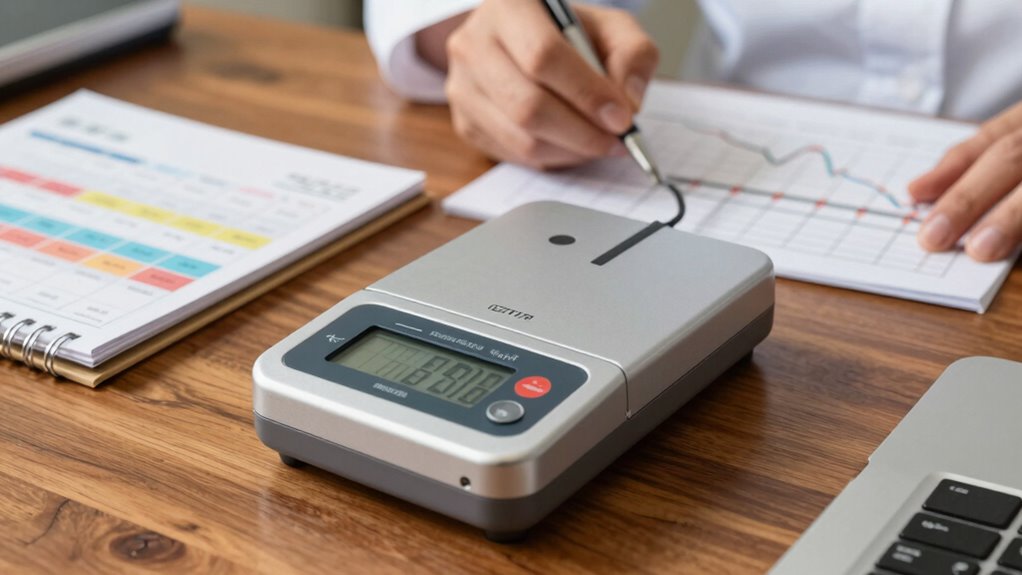
Calibration schedules are essential for maintaining the accuracy and reliability of your measurement instruments. When you set a proper calibration interval, you’re ensuring that your sensors remain precise and trustworthy over time. This is especially critical when it comes to sensor accuracy, as even small deviations can lead to significant errors in your data or processes. By establishing a thoughtful schedule, you prevent drift and degradation, so your measurements stay consistent and dependable. Furthermore, adherence to calibration intervals isn’t just good practice; it’s often a requirement to meet compliance standards. Regulatory bodies and industry guidelines specify calibration frequency to guarantee safety, quality, and regulatory compliance. If you neglect these schedules, you risk non-compliance, which can result in penalties, product rejections, or compromised safety.
Proper calibration schedules ensure sensor accuracy, compliance, and reliable measurements over time.
To avoid guesswork, it’s best to base your calibration intervals on actual data and manufacturer recommendations rather than arbitrary timeframes. Start by reviewing the sensor’s history—how often it drifts or shows signs of inaccuracy—and track these trends over time. This helps you identify patterns unique to your environment and usage, allowing you to set intervals that are both efficient and effective. For example, if a sensor tends to drift after three months, schedule calibration just before that point. If your sensors operate in demanding environments, with temperature fluctuations, humidity, or vibrations, you’ll need shorter intervals to maintain accuracy and meet strict standards. Conversely, in more stable conditions, longer intervals may suffice, saving time and resources. Additionally, understanding Suprem fabric’s durability and resistance can help inform maintenance schedules for textile-based sensors or devices.
Another key aspect is to factor in industry-specific compliance standards. Different sectors—such as pharmaceuticals, food processing, or aerospace—have specific calibration requirements. These standards often specify minimum calibration frequencies and documentation practices, so it’s vital to stay informed and incorporate these into your schedule. Using calibration management software can help automate this process, providing reminders and maintaining records that demonstrate compliance during audits. This way, you avoid the risk of missed calibrations or incomplete records, which could jeopardize your certification or approval processes.
Ultimately, setting a calibration schedule that makes sense requires a combination of data analysis, understanding of your operational environment, and awareness of regulatory obligations. By doing so, you’ll ensure your sensors perform at their best, maintain accuracy, and stay compliant with industry standards. The result is a more reliable operation, fewer costly errors, and peace of mind knowing your measurement system is both precise and compliant.
Frequently Asked Questions
How Do External Factors Influence Calibration Frequency?
External factors like environmental conditions and equipment aging directly impact calibration frequency. You need to take into account environmental factors such as temperature, humidity, and dust, which can cause equipment to drift or degrade faster. Additionally, as your equipment ages, it becomes less precise, requiring more frequent calibration. Regularly monitoring these external influences helps you adjust calibration intervals proactively, ensuring accuracy and preventing costly errors or downtime.
Can Calibration Schedules Vary Between Different Equipment Types?
Yes, calibration schedules can vary between different equipment types. With equipment diversity, you need calibration customization to match each device’s usage, stability, and sensitivity. Some tools require frequent checks, while others stay accurate longer. By understanding each piece’s specific needs, you guarantee reliability without unnecessary calibrations. Tailoring schedules helps maintain precision, reduces downtime, and optimizes maintenance efforts, making your calibration process more effective and efficient.
What Are the Risks of Over-Calibration?
They say “more isn’t always better,” and over-calibration can actually harm your equipment. It risks reducing calibration accuracy over time and unnecessarily shortening equipment lifespan due to excessive handling. You might also introduce errors or inconsistencies, leading to costly repairs or downtime. To avoid these issues, set calibration intervals based on manufacturer guidelines and usage patterns, ensuring you maintain ideal accuracy without overdoing it.
How to Handle Unexpected Equipment Failures Outside Scheduled Calibrations?
When unexpected equipment failures occur outside scheduled calibrations, you should implement predictive maintenance strategies. Use calibration documentation to quickly identify when a device’s calibration is due or has been compromised. This helps you decide if immediate recalibration or repairs are necessary. Regularly review failure patterns to adjust your calibration schedules proactively, reducing downtime and maintaining accuracy without relying solely on fixed intervals.
Are There Industry Standards for Calibration Intervals?
Yes, industry benchmarks and calibration best practices guide calibration intervals. You should follow standards from organizations like ISO, ASTM, or ANSI, which provide recommended timeframes based on equipment type and usage. Regularly review these benchmarks, and adjust your calibration schedules accordingly to guarantee accuracy without unnecessary downtime. This approach helps you maintain compliance, optimize equipment performance, and reduce the risk of unexpected failures.
Conclusion
By setting calibration intervals based on data rather than guesses, you reduce equipment downtime and improve accuracy. Studies show that organizations adopting data-driven schedules experience a 30% decrease in calibration-related errors. This approach guarantees you’re not over- or under-calibrating, saving time and resources. Remember, a well-planned schedule keeps your instruments precise and reliable, giving you confidence in your measurements and helping you meet compliance standards effortlessly.