

To build a lab notebook that stands up in audits, you should use a digital system that organizes data clearly and securely. Follow standardized procedures for documenting experiments, including timestamps, version histories, and supporting files like images or protocols. Guarantee your records are unalterable and include audit trails to prove data integrity. Choosing the right tools and maintaining consistent practices will make your documentation reliable and audit-ready. Continuing to explore these strategies will help you master compliant record-keeping.
Key Takeaways
- Implement standardized SOPs for consistent, accurate data entry and documentation practices across all experiments.
- Use secure digital tools with audit trails, timestamps, and version control to ensure data integrity.
- Organize records systematically by project, date, and experiment type, attaching relevant supporting documents.
- Regularly train staff on documentation protocols and compliance requirements to maintain record quality.
- Maintain comprehensive, organized records that clearly demonstrate traceability, transparency, and regulatory adherence.
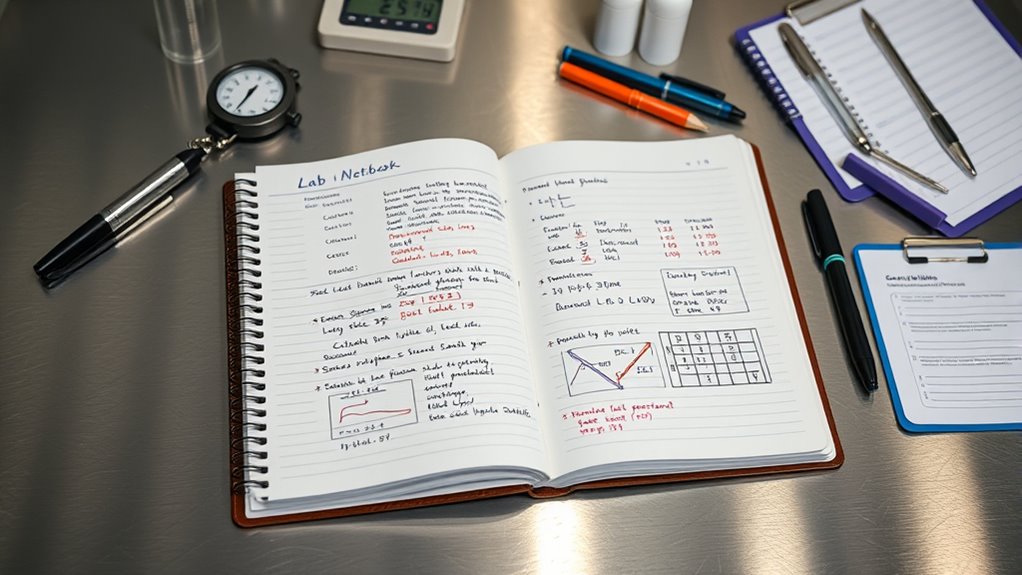
Have you ever wondered how scientists keep track of their experiments and guarantee their work is reproducible? The key lies in building a lab notebook that’s meticulous, organized, and compliant with regulations. Digital documentation plays a pivotal role here, transforming traditional paper records into easily accessible, secure electronic files. Using digital tools ensures your data is protected against loss, damage, or unauthorized access. It also makes searching for specific entries faster, saving you time during audits or reviews. When you digitize your lab notebook, you can incorporate timestamps, version histories, and audit trails that record every change made. This transparency is essential for regulatory compliance, as it provides a clear, unalterable record of your experimental process. By maintaining a digital documentation system, you demonstrate adherence to strict standards required by agencies like the FDA or EPA. These agencies often require detailed, traceable records to verify the integrity of your work, so investing in a compliant digital system helps streamline inspections and reduces the risk of non-compliance penalties.
To guarantee your digital documentation meets regulatory standards, you need to choose the right software that offers secure storage, user access controls, and data backup options. Many platforms are designed specifically for laboratory environments, allowing you to organize data by project, date, or experiment type. This level of organization simplifies record retrieval and audit preparation. Additionally, digital notebooks enable you to attach supporting documents like images, spreadsheets, or protocols directly to entries, creating a comprehensive record of each step in your research. This integration minimizes the chance of losing critical information and helps establish a clear trail of evidence for audits. Implementing color-coded categorization can further improve data organization, making it easier to locate specific experiments or results quickly.
Another important aspect is implementing standard operating procedures (SOPs) for data entry and management. Consistency is essential—your team should follow uniform practices for documenting experiments, recording observations, and updating digital records. This consistency boosts the credibility of your data and ensures compliance with regulatory expectations. Furthermore, regular training on digital documentation protocols keeps everyone aligned and minimizes errors that could jeopardize audit readiness. Remember, regulators look for well-maintained, verifiable records; a robust digital documentation system underscores your commitment to transparency and accuracy.
Frequently Asked Questions
How Should I Handle Digital Lab Notebooks for Audits?
You should guarantee your digital lab notebooks are secure by implementing strong digital security measures like encryption and access controls. Regularly back up your data to prevent loss and maintain an audit trail. Keep detailed records of all modifications and access logs, and store backups in a secure, off-site location. These steps help demonstrate data integrity, compliance, and readiness for audits, making your digital lab notebooks trustworthy and audit-ready.
What Are the Key Legal Requirements for Lab Notebook Documentation?
Ever wondered what legal standards your lab notebook must meet? You need to guarantee proper lab notebook organization and follow documentation best practices. Clearly date, sign, and initial each entry, making notes legible and detailed. Correct any errors properly, and avoid blank spaces. Maintain a consistent format, and store notebooks securely. These practices help demonstrate your work’s authenticity and compliance with legal requirements during audits.
How Often Should Lab Notebooks Be Reviewed for Compliance?
You should review your lab notebooks regularly, ideally monthly, to guarantee record preservation and staff accountability. Frequent checks help identify any missing or incomplete entries early, maintaining compliance with legal and regulatory standards. By establishing a routine review schedule, you reinforce accurate documentation practices, catch errors promptly, and demonstrate ongoing oversight—key factors that strengthen your lab’s audit readiness and uphold the integrity of your records.
Can Electronic Signatures Replace Handwritten Signatures in Notebooks?
Think of electronic signatures as a sturdy bridge rather than a simple handshake; they can effectively replace handwritten validation if you guarantee robust digital security measures are in place. You should verify that your electronic signatures comply with regulatory standards, like 21 CFR Part 11, to stand up during audits. When properly secured and validated, digital signatures offer a reliable, efficient alternative to handwritten ones, maintaining the integrity of your lab notebook.
What Training Is Necessary for Staff on Proper Lab Notebook Practices?
You need to train your staff on proper lab notebook practices by emphasizing note organization and record accuracy. Show them how to clearly document procedures, results, and dates, ensuring entries are complete and legible. Teach them to follow standardized formats and double-check their work. Regular training sessions and audits help reinforce these habits, ensuring notebooks are reliable and compliant, which is essential during audits.
Conclusion
By adopting meticulous habits and maintaining a well-organized lab notebook, you’ll foster a reputation for reliability and professionalism. Your thorough records subtly demonstrate your commitment to quality, making audits a smoother process. When your documentation reflects consistent diligence, it speaks volumes about your integrity and expertise. In the end, a thoughtfully maintained notebook not only supports your scientific endeavors but also elevates your standing in the eyes of evaluators, quietly underscoring your dedication to excellence.