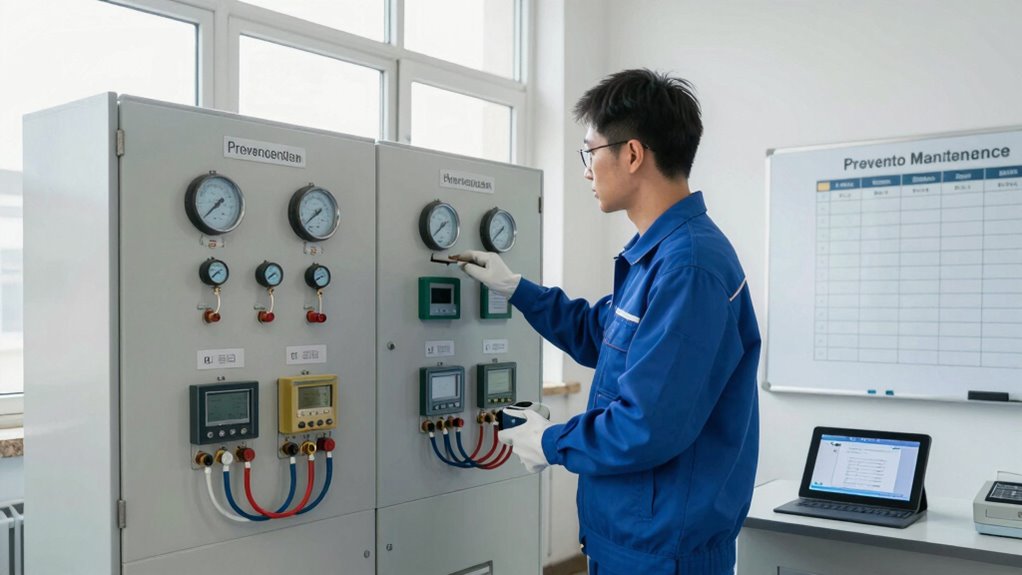

Implementing a simple preventive maintenance program helps you keep your instruments accurate and reliable by scheduling regular inspections, calibrations, and cleanings. By addressing potential issues early, you prevent costly breakdowns and extend the lifespan of your equipment. Using automation tools or reminders guarantees maintenance tasks aren’t overlooked, saving time and money. Keeping detailed records allows you to fine-tune your approach. Stay with us to discover how to build an effective maintenance system that truly works.
Key Takeaways
- Implement regular sensor calibration to ensure measurement accuracy and prevent faulty readings.
- Develop a structured maintenance schedule based on manufacturer recommendations and operational data.
- Use automation tools and reminders to ensure timely inspections, cleaning, and parts replacement.
- Document all maintenance activities to analyze trends and optimize future maintenance routines.
- Adopt a proactive approach to identify and address potential issues early, reducing equipment downtime and costs.
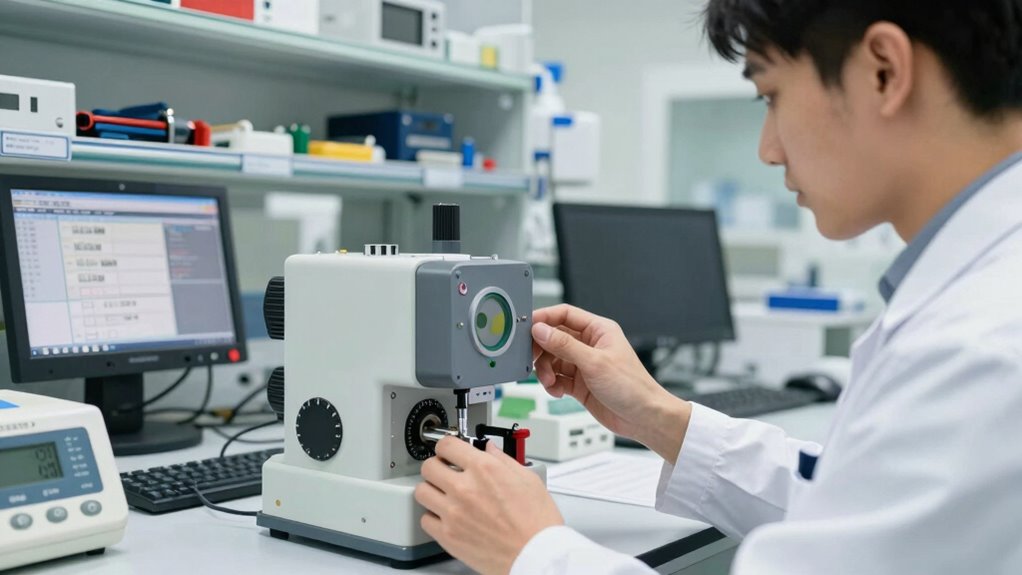
Have you ever wondered how to keep your equipment running smoothly and avoid costly breakdowns? The key often lies in implementing an effective preventive maintenance program. This proactive approach helps identify potential issues before they escalate, saving you money and minimizing downtime. A fundamental part of this system is sensor calibration, which ensures your instruments provide accurate readings. Over time, sensors can drift out of calibration due to environmental factors or wear and tear. Regular sensor calibration maintains measurement precision, preventing errors that could lead to faulty processes or equipment damage. Incorporating scheduled calibration checks into your maintenance plan guarantees that your instruments stay reliable, avoiding surprises that disrupt operations. Additionally, understanding cultural norms around maintenance practices can improve how your team adopts new routines, ensuring smoother implementation and compliance. Another essential element is maintenance scheduling. Creating a detailed schedule helps you stay organized and consistent in your maintenance tasks. By mapping out routine inspections, cleaning, part replacements, and calibrations, you avoid neglecting critical activities. Well-planned scheduling also allows you to allocate resources effectively, ensuring that personnel and parts are available when needed. This prevents last-minute rushes or overlooked maintenance, which can cause equipment failures. When developing your maintenance schedule, consider manufacturer recommendations, operational hours, and historical performance data. This tailored approach ensures you’re performing the right maintenance at the right time, and not wasting effort on unnecessary procedures. A good preventive maintenance program isn’t just about performing tasks; it’s about establishing a systematic process that integrates sensor calibration and maintenance scheduling seamlessly. Set reminders or use software tools to automate alerts for upcoming calibration and inspection dates. This consistency helps catch small issues before they grow into major problems, extending the lifespan of your instruments and equipment. Furthermore, documenting each maintenance activity provides a record for future analysis, helping you refine your schedule and calibration routines over time. This data-driven approach enables continuous improvement, making your program more effective and efficient.
Frequently Asked Questions
How Often Should Preventive Maintenance Be Scheduled?
You should schedule preventive maintenance based on your equipment’s usage and manufacturer recommendations. Typically, the maintenance interval varies from monthly to quarterly, ensuring peak performance. Regularly review your scheduling frequency to catch issues early and prevent costly repairs. Adjust the maintenance interval as needed, especially when equipment usage increases or conditions change. Staying proactive helps extend your instruments’ lifespan and maintains accuracy, saving you time and money in the long run.
What Tools Are Essential for Effective Preventive Maintenance?
You need essential tools like calibration procedures, spare parts, and basic hand tools to perform effective preventive maintenance. Calibration procedures guarantee your instruments stay accurate, while spare parts help you quickly replace worn or faulty components. Always keep a well-organized toolkit, including screwdrivers, wrenches, and diagnostic testers, to streamline your maintenance tasks. Regularly updating your tools and procedures assures your instruments remain reliable and minimize downtime.
How to Prioritize Instruments for Maintenance?
You should prioritize instruments based on their critical role, usage frequency, and calibration needs. Start by identifying equipment that impacts safety or process quality, then develop a maintenance schedule that includes regular calibration checks. Use data to track performance and schedule maintenance proactively, ensuring instruments remain accurate and reliable. This approach minimizes downtime and extends instrument lifespan, making maintenance efficient and effective.
Can Preventive Maintenance Reduce Overall Equipment Costs?
Absolutely, preventive maintenance acts like a well-oiled machine—cost reduction and equipment longevity go hand in hand. By regularly servicing your instruments, you catch issues early, preventing costly breakdowns and repairs. This proactive approach extends equipment lifespan, reduces downtime, and saves money over time. Investing in a preventive maintenance program is like planting seeds for long-term savings, ensuring your instruments perform reliably and efficiently.
What Training Is Necessary for Maintenance Personnel?
You need to guarantee maintenance personnel receive proper training and certification to perform effective preventive maintenance. Focus on skill development through hands-on workshops, technical courses, and ongoing education to keep their knowledge current. Certified training programs boost their confidence and competence, helping them identify issues early and perform repairs efficiently. Continual skill development is essential for maintaining instruments, reducing downtime, and extending equipment lifespan, ultimately saving costs.
Conclusion
By implementing a preventive maintenance program, you can extend your instruments’ lifespan and avoid costly repairs. Regular checks and timely upkeep keep your equipment running smoothly and efficiently. Remember, a stitch in time saves nine—taking proactive steps today prevents bigger problems tomorrow. Don’t wait for a breakdown; stay ahead with simple, consistent maintenance. Your instruments will thank you with reliable performance, giving you peace of mind and saving you time and money in the long run.