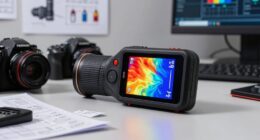
To trust wireless temperature sensors, you need to regularly validate their accuracy using traceable calibration standards. Make sure they undergo routine calibration checks and performance monitoring to catch deviations early. Confirm wireless connectivity and data integrity through audits and automated alerts. Keep detailed records of calibration activities to assure compliance and accountability. Continuing with validation best practices will help you confidently rely on your wireless sensors for precise temperature monitoring.
Key Takeaways
- Regularly calibrate wireless sensors using traceable standards to ensure measurement accuracy.
- Validate sensor readings periodically against trusted reference temperatures to confirm data reliability.
- Verify wireless communication stability and data transmission integrity during validation procedures.
- Maintain detailed calibration and validation records for audit compliance and troubleshooting.
- Utilize sensors with built-in calibration verification features to streamline ongoing validation and trust.
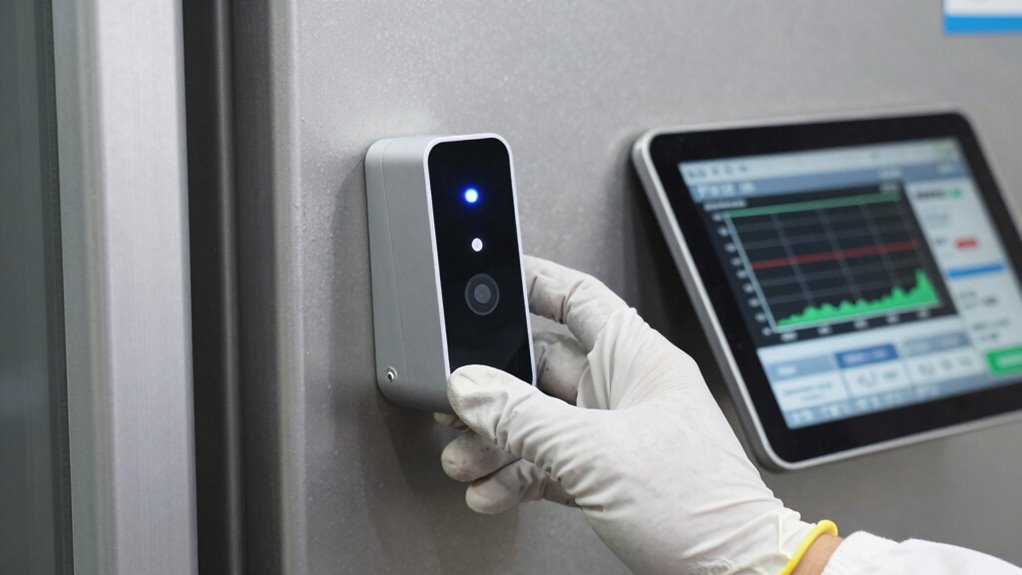
Effective temperature monitoring validation is essential to guarantee your storage and processing environments maintain consistent and accurate conditions. When you’re relying on wireless sensors, ensuring their calibration and data accuracy becomes a critical part of maintaining quality and compliance. Sensor calibration is the process of adjusting your sensors to match a known standard, which helps eliminate errors and ensures that the readings you get truly reflect the temperature of your environment. If your sensors aren’t properly calibrated, the data they produce can be misleading, leading to potentially costly mistakes, such as spoilage or non-compliance with industry regulations. Regular calibration checks are crucial to confirm that your wireless sensors continue to deliver reliable data over time, especially because environmental factors and sensor aging can drift readings away from true values. Maintaining vetted standards in calibration practices can further enhance the credibility and reliability of your temperature data.
Regular calibration checks ensure wireless sensors provide accurate, reliable temperature data over time.
Data accuracy is at the heart of effective temperature monitoring validation. You need confidence that the data your wireless sensors collect is precise and consistent. To achieve this, it’s important to establish a routine validation process that compares sensor readings against a trusted reference standard. This process involves placing sensors in controlled conditions, verifying their readings, and documenting any discrepancies. When discrepancies are found, recalibration or sensor replacement might be necessary to restore accuracy. Ensuring high data accuracy not only helps maintain product integrity but also simplifies your compliance reporting, as regulatory bodies demand reliable and traceable temperature data.
Wireless sensors offer convenience and flexibility, but their validation requires a deliberate approach. You should implement a validation plan that specifies calibration intervals and procedures, ensuring sensors remain accurate over their lifespan. This plan might include periodic calibration with traceable standards, continuous monitoring of sensor performance, and routine audits. Additionally, you should verify the wireless communication integrity, as signal interference or connectivity issues can compromise data integrity. By routinely validating both sensor calibration and data accuracy, you minimize the risk of false readings, which could lead to improper storage conditions or regulatory violations.
Furthermore, maintaining detailed records of calibration activities and validation results is essential. These records serve as proof of compliance during audits and help troubleshoot issues if inaccuracies arise. Investing in quality wireless sensors with built-in calibration verification features can streamline this process, providing automated alerts when calibration is due or when data anomalies are detected. Ultimately, your commitment to sensor calibration and data accuracy ensures that your temperature monitoring system remains trustworthy, giving you peace of mind that your environments stay within safe parameters. This diligence safeguards your products, your reputation, and your compliance standing, making validated wireless temperature sensors a reliable component of your overall quality management system.
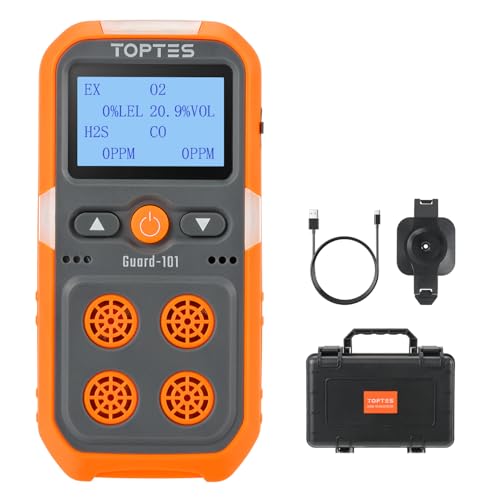
TopTes Guard-101 Gas Detector, 4 Gas Monitor for H2S, CO, LEL and O2, with Vibration, Visual and Audible Alarms, 14h Long Battery Life, Safety Explosion-Proof, for Work, Home - Orange
Quick Detection, Safety First: Guard-101 4 gas monitor multi gas detector is designed for rapid detection of 4...
As an affiliate, we earn on qualifying purchases.
Frequently Asked Questions
How Do Wireless Sensors Compare to Wired Temperature Monitoring Systems?
Wireless sensors often match wired systems in data accuracy when properly calibrated, making them reliable for temperature monitoring. You can trust their sensor calibration processes to ensure precise readings, and they offer the added benefit of easy installation and real-time data access. While wired systems might seem more stable, wireless sensors are increasingly dependable for accurate temperature tracking, especially when regular calibration and validation procedures are followed.
What Are Common Challenges in Validating Wireless Temperature Sensors?
Like Icarus flying too close to the sun, you face challenges in validating wireless sensors. You must guarantee sensor accuracy and data reliability amid interference, signal loss, and environmental factors. Common issues include establishing calibration, maintaining consistent performance, and verifying data transmission integrity. Overcoming these hurdles requires thorough validation protocols, regular testing, and robust security measures, helping you confidently trust your wireless temperature sensors in critical applications.
How Often Should Wireless Sensors Be Recalibrated?
You should recalibrate wireless sensors at least quarterly to guarantee accuracy and account for any accuracy drift. Regular sensor calibration helps maintain reliable readings, especially as sensors age or experience environmental changes. Keep an eye on performance data; if you notice discrepancies or drift, recalibrate sooner. Consistent calibration schedules help prevent errors, ensuring your temperature monitoring remains trustworthy and compliant with validation protocols.
Are Wireless Sensors Compliant With Industry Regulatory Standards?
Wireless sensors are generally compliant with industry standards and regulatory requirements, but you need to verify specific certifications for your application. You should check if they meet standards like FDA, HACCP, or ISO, depending on your industry. Always choose sensors from reputable manufacturers who conduct regular compliance testing. This ensures your wireless sensors adhere to regulations, giving you confidence in their accuracy and reliability for critical temperature monitoring.
What Cybersecurity Measures Protect Wireless Temperature Data?
Sure, your wireless temperature data is as safe as a secret recipe—thanks to robust encryption protocols and strict access controls. You’re protected from cyber villains trying to snoop or tamper, ensuring your data stays private and unaltered. By implementing advanced encryption and limiting access to authorized personnel, you create a digital fortress that keeps your temperature readings secure, no matter how cunning the cyber threat landscape gets.

16 in 1 Air Quality Monitor Indoor 7" Large Display 9 AQI+7 Alerts, CO2 Monitor Air Quality Tester for CO2, TVOC, PM2.5 PM1.0 PM10, HCHO Temperature Humidity AQI & Time Air Quality Meter for Home
【16-in-1 Air Quality Monitor Indoor】Experience the ultimate indoor air quality monitoring with our 16-in-1 Air Quality Monitor, offering...
As an affiliate, we earn on qualifying purchases.
Conclusion
Think of wireless sensors as the lighthouse guiding your ship through uncertain waters. Just as a lighthouse needs regular checks to ensure it shines bright and stays reliable, your sensors require validation to trust their readings. By validating your wireless temperature monitors, you’re steering safely through the fog of uncertainty. With confidence in their accuracy, you can navigate your operations smoothly, knowing you’ve got a steady guiding light illuminating the way to dependable temperature data.

BREATHE Airmonitor Plus: Smart Air Quality Monitor Indoor - 8-in-1 CO2 Meter, Formaldehyde Detector, VOC Meter, PM1/2.5/10, Temperature & Humidity - Air Quality Tester for Home with App
PROFESSIONAL INDOOR AIR QUALITY MONITORING: Accurately track CO₂, PM1, PM2.5, PM10, TVOC, Formaldehyde (HCHO), Temperature and Humidity in...
As an affiliate, we earn on qualifying purchases.

TopTes 4 Gas Monitor for H₂S, CO, LEL, and O₂, with TFT Color Screen, Upgraded O₂ Sensor (5-Year Lifespan), USB Data Export, 18h Battery Life, Reliable for Work & Home
Guard-863Pro 4 gas monitor detects four critical gases—H₂S, CO, LEL, and O₂—with a fast 0.5-second response time. It...
As an affiliate, we earn on qualifying purchases.