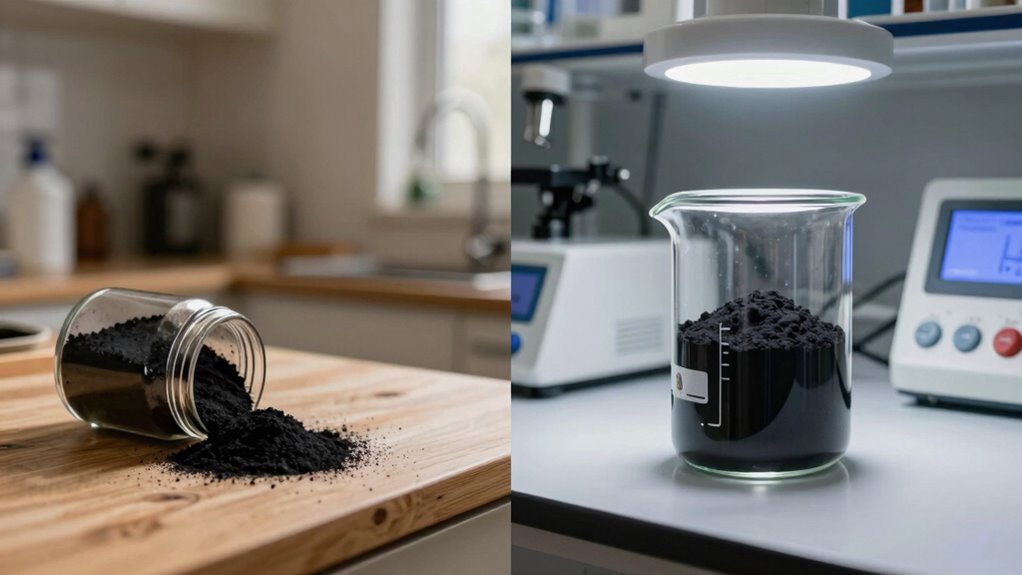
Although activated carbon’s chemistry remains the same whether you use it at home or in a laboratory, the stakes are quite different. At home, the focus is mainly on safe water and air purification, with less strict quality standards. In labs, stricter purity levels and safety protocols are critical to prevent contamination and ensure accurate results. Understanding these differences can help you decide how and when to use activated carbon properly. Keep exploring to learn more about applying it effectively.
Key Takeaways
- The fundamental adsorption chemistry of activated carbon remains consistent in both home and laboratory settings.
- Purity standards are higher in labs, affecting the safety, effectiveness, and contamination risks of the activated carbon used.
- Handling protocols are more rigorous in laboratories to prevent hazards and ensure experimental integrity.
- Contamination risks are lower at home but can compromise safety and filtration efficiency if quality standards are not met.
- The core chemistry is the same; differences in stakes involve safety, purity, and the intended application environment.
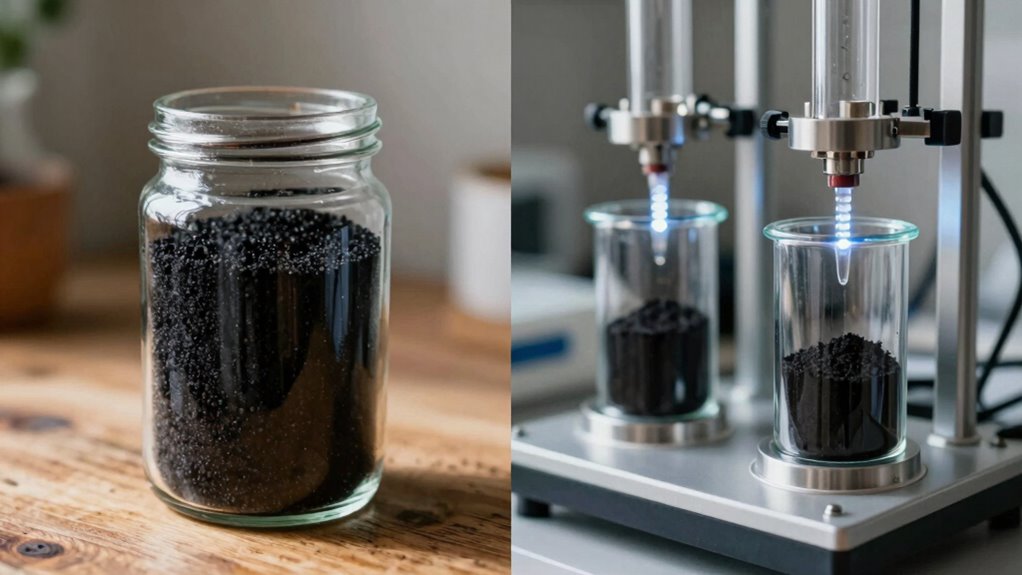
Activated carbon plays a crucial role in filtering and purification processes, whether you’re working at home or in a laboratory. Its ability to adsorb impurities makes it indispensable for maintaining clean air, water, and chemical substances. However, the stakes differ considerably depending on your setting. When working at home, your main concerns revolve around guaranteeing the product is safe for personal use, such as in water filters or air purifiers. At this level, you need to pay close attention to purity standards, especially when using activated carbon to treat drinking water or freshen indoor air. While purity is important, the risk of contamination or improper handling is generally lower. Nonetheless, adhering to proper safety protocols—like avoiding inhalation of dust or ingestion—is still essential to prevent health issues.
In a laboratory environment, the importance of purity standards and safety protocols becomes even more paramount. You’re likely handling activated carbon to purify chemicals, prepare samples, or eliminate contaminants from sensitive experiments. Here, the quality of the activated carbon must meet strict standards to guarantee it doesn’t introduce impurities that could compromise your results. Failing to follow proper safety protocols can lead to hazardous exposure, especially if the activated carbon contains residual chemicals or contaminants. Lab-grade activated carbon undergoes rigorous testing to confirm its purity, ensuring it’s suitable for precise scientific applications. You must also handle it with care—using gloves, masks, and proper ventilation—to prevent inhaling fine particles or accidentally ingesting dust. Additionally, understanding the adsorption process helps you evaluate the effectiveness of activated carbon in different contexts.
Frequently Asked Questions
Can Homemade Activated Carbon Effectively Remove Toxins From Drinking Water?
You can use homemade activated carbon for DIY filtration, but its effectiveness in removing toxins from drinking water depends on carbon purity. While DIY methods may improve water clarity, they often lack the consistency and quality control found in lab-grade activated carbon. For safe, toxin-free drinking water, it’s better to rely on professionally produced activated carbon, which guarantees proper pore structure and purity needed for effective filtration.
What Safety Precautions Are Necessary When Handling Laboratory-Grade Activated Carbon?
When handling laboratory-grade activated carbon, you should wear gloves and a mask to prevent inhalation or skin contact. Use handling precautions like working in a well-ventilated area and avoiding creating dust. Follow storage guidelines by keeping it in a sealed container, away from heat and moisture. Always wash your hands afterward and dispose of waste properly to guarantee safety during use.
How Does Particle Size Affect Adsorption Capacity in Different Settings?
Sure, tiny particles pack a punch because smaller particle size increases surface area, boosting adsorption capacity. In labs, you get microscopic wonders that trap more molecules, while at home, your larger chunks might just sit there, pretending to work. So, if you want maximum efficiency, go for the fine stuff—just be careful handling those tiny particles; they love to become airborne and cause chaos!
Are There Environmental Concerns With Disposing of Used Activated Carbon?
You should be aware that disposing of used activated carbon can create environmental concerns due to potential carbon waste containing contaminants. To minimize impact, opt for proper disposal methods like regeneration or secure landfilling. Avoid dumping it in water or soil, as this can release pollutants. Proper disposal guarantees safety and environmental protection, helping prevent contamination and reducing harmful carbon waste in ecosystems.
What Are the Cost Differences Between DIY and Lab-Grade Activated Carbon?
The cost comparison shows that DIY activated carbon is generally cheaper upfront, as you avoid lab-grade prices and extensive equipment expenses. However, investing in proper equipment can increase initial costs but guarantees higher purity and safety. Lab-grade activated carbon costs more but assures consistent quality. You should weigh equipment expenses against your needs, considering that DIY options save money initially but may require more maintenance or reprocessing over time.
Conclusion
Whether you’re making activated carbon at home or in a lab, the chemistry remains the same, but the stakes differ. Did you know that lab-produced activated carbon can have a surface area of over 3,000 square meters per gram? That’s like spreading a football field’s worth of surface inside a tiny gram! So, while DIY methods are accessible, understanding the science behind high-quality activated carbon can make all the difference in your filtration or purification projects.