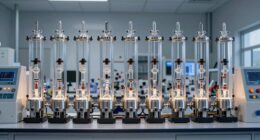
The hidden chemistry behind your morning coffee involves complex reactions during brewing, where water extracts flavors, acids, and caffeine from the grounds. Once ingested, caffeine is quickly absorbed and metabolized in your liver, with individual factors affecting how long its effects last. The chemistry of your brew, including temperature and grind size, influences caffeine strength and body response. If you want to uncover more about this fascinating process, keep exploring how chemistry shapes your favorite morning ritual.
Key Takeaways
- Brewing coffee involves complex chemical reactions that extract flavor compounds and caffeine depending on water temperature, grind size, and brewing time.
- Caffeine absorption begins immediately in the small intestine, with liver enzymes metabolizing it into active compounds like paraxanthine.
- Individual genetic and health factors cause variability in caffeine metabolism, affecting how long and intensely you feel its effects.
- The chemical composition of coffee, including antioxidants and acids, influences its impact on your nervous and digestive systems.
- Advances in coffee production, such as automation, improve consistency and quality, highlighting the biochemical complexity behind each cup.

Every morning, as you brew and sip your coffee, you’re experiencing more than just a comforting routine—you’re engaging with a complex chemical process. From the moment hot water touches the coffee grounds, a series of chemical reactions unfold, transforming raw beans into the rich, aromatic brew you enjoy. During coffee brewing, compounds like chlorogenic acids, lipids, and sugars dissolve into the water, creating the unique flavor profile of your drink.
But beyond taste, these chemical interactions influence how caffeine, the primary stimulant, enters your bloodstream and how your body processes it.
Caffeine metabolism begins almost immediately after your first sip. Once ingested, caffeine passes through your stomach and into your small intestine, where it’s rapidly absorbed into your bloodstream. From there, it travels to your liver, which plays a central role in breaking down caffeine through enzymes like cytochrome P450. Metabolic pathways determine the rate at which caffeine is processed, affecting how long its effects last.
This metabolic process produces various metabolites, primarily paraxanthine, theobromine, and theophylline, each exerting subtle effects on your body. The speed of caffeine metabolism varies widely from person to person, influenced by genetics, age, liver health, and even your habitual caffeine intake.
Some people metabolize caffeine quickly, feeling alert and energized for hours, while others process it more slowly, experiencing prolonged stimulation or jitters.
Understanding caffeine metabolism helps explain why your morning coffee impacts you differently than someone else’s. For instance, if you’re a slow metabolizer, your body takes longer to clear caffeine, which can lead to lingering sleep disturbances or heightened anxiety.
Conversely, fast metabolizers might need multiple cups to achieve the same alertness. This variability also influences your body’s response to other compounds in coffee, like antioxidants and acids, which interact with your nervous system and digestive tract in subtle, yet meaningful ways.
Additionally, the chemistry of coffee brewing itself influences how much caffeine ends up in your cup. Factors like water temperature, brewing time, and grind size determine extraction efficiency, altering caffeine concentration.
A longer brew or finer grind often results in higher caffeine levels, making your coffee not just a matter of taste but also a reflection of chemical extraction dynamics.
Recent advancements in automation and robotics are further optimizing coffee production processes, ensuring consistency and quality in every cup.
In essence, each time you enjoy your morning coffee, you’re participating in a chemical dance—one that begins with coffee brewing, continues with caffeine absorption, and unfolds through your body’s unique metabolic pathways.
Recognizing this hidden chemistry enriches your appreciation, highlighting that your daily ritual is more than a simple pleasure; it’s a complex biochemical event shaping your alertness, mood, and overall well-being.
Frequently Asked Questions
How Does Water Temperature Affect Coffee’S Chemical Composition?
Water temperature profoundly impacts coffee’s chemical composition through temperature extraction and solubility dynamics. Higher temperatures accelerate extraction, pulling out more compounds like acids, oils, and flavors, resulting in a richer, more complex brew.
Lower temperatures slow down solubility, leading to a lighter, more delicate taste. You’ll notice that adjusting water temperature allows you to control the balance of flavors, ensuring a customized coffee experience aligned with your preferences.
What Role Do Different Coffee Bean Varieties Play in Chemical Makeup?
Think of coffee beans as different musical instruments, each contributing unique notes to the symphony of flavor. Your choice of bean variety directly influences the chemical makeup, shaping flavor complexity and aroma.
Bean origin plays a pivotal role, as climate and soil imbue each variety with distinctive compounds. By selecting different coffee bean varieties, you access a diverse palette of tastes, revealing how variety and origin craft the rich tapestry of your brew.
Can Brewing Methods Alter the Chemical Profile of Coffee?
Yes, brewing methods can change the chemical profile of your coffee. When you choose a brewing style, it influences flavor extraction and aroma development, shaping the taste and scent you experience.
For example, a French press extracts more oils, enhancing richness and aroma, while drip brewing produces a cleaner, brighter flavor. Adjusting grind size, temperature, and brewing time allows you to tailor the chemical makeup to your preference.
How Do Additives Like Sugar or Milk Change Coffee’S Chemistry?
Oh, the thrill of adding sugar or milk—because who doesn’t love a science experiment in their cup? These additives interact with your coffee’s flavor compounds and alter its pH balance, transforming the taste and chemical profile.
Sugar masks bitterness, while milk introduces proteins that bind with flavor molecules, softening acidity. So, your morning brew isn’t just coffee; it’s a complex chemical cocktail, carefully crafted with every splash.
What Chemical Changes Occur During Coffee Roasting?
During coffee roasting, you trigger chemical changes like Maillard reactions and caramelization processes. These reactions develop the coffee’s flavor, aroma, and color.
As heat intensifies, sugars caramelize, turning brown and adding sweetness, while amino acids react in Maillard reactions, creating complex compounds.
You’ll notice these changes as the beans darken and release rich aromas, transforming raw green beans into the flavorful, aromatic coffee you enjoy each morning.
Conclusion
So, next time you sip your morning coffee, remember you’re tasting a symphony of hidden chemistry—each molecule playing its part in awakening your senses. It’s more than just a drink; it’s a complex dance of reactions, a secret alchemy brewed in your mug. With every warm sip, you’re immersed in a living, breathing masterpiece, a liquid tapestry woven with science’s silent artistry, turning a simple morning ritual into a daily marvel of nature’s hidden treasures.