Desiccants work by absorbing moisture from the air inside dry cabinets, keeping the environment dry and preventing materials from rotting, warping, or corroding. By controlling humidity levels, they create a protective barrier around your valuables like jewelry, electronics, or documents. Using the right desiccant and maintaining it guarantees items stay safe over time. Keep listening to discover more about how these moisture-absorbing tools help preserve your belongings effectively.
Key Takeaways
- Dry cabinets use desiccants to absorb moisture, maintaining a dry environment that prevents damage to sensitive items.
- Desiccants in dry cabinets attract and hold water molecules, reducing humidity levels inside the storage space.
- Proper placement and regular monitoring of desiccants ensure they effectively keep materials dry and prevent deterioration.
- Different desiccants like silica gel or activated clay are chosen based on the items’ sensitivity and storage duration.
- Regenerating or replacing saturated desiccants in dry cabinets maintains optimal moisture control and preserves valuables.
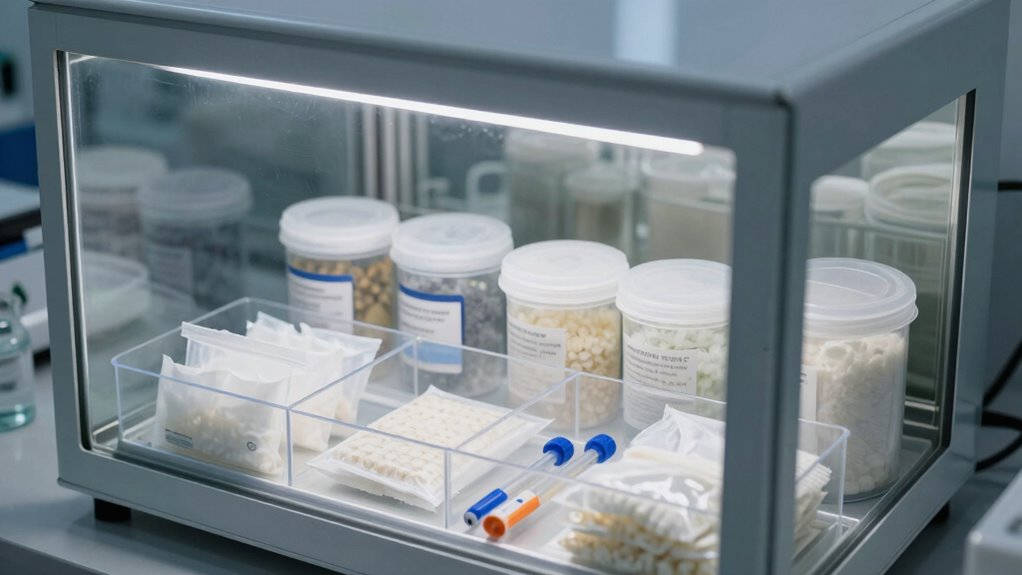
Have you ever wondered how to keep your belongings dry and prevent damage from moisture? It’s a common concern, especially when storing sensitive items like electronics, jewelry, or important documents. The key to protecting these valuables lies in understanding moisture absorption and the role of desiccant types. Desiccants are materials designed to absorb moisture from their surroundings, maintaining a dry environment inside storage containers or cabinets. By choosing the right desiccant type, you can effectively prevent mold, corrosion, and other moisture-related issues that can ruin your possessions.
Moisture absorption is the core function of desiccants. These substances attract and hold water molecules, reducing humidity levels inside sealed spaces. They work by creating an environment where moisture can’t settle on surfaces or seep into materials. This process is essential for safeguarding items that are highly sensitive to humidity, like photographic film or antique furniture. When selecting a desiccant, it’s important to consider the specific desiccant types available. Common options include silica gel, activated clay, calcium chloride, and molecular sieves. Silica gel is perhaps the most well-known, thanks to its high moisture absorption capacity and reusability. It often comes in small packets that are placed alongside the items you want to protect. Activated clay is another effective desiccant, especially for longer-term storage, as it can hold more moisture and can sometimes be regenerated with heat. Calcium chloride is highly hygroscopic and absorbs large amounts of moisture quickly, making it ideal for industrial applications but less common for small-scale storage. Molecular sieves, with their uniform pore size, provide precise moisture control and are commonly used in high-tech or laboratory environments.
Choosing the right desiccant type depends on your specific needs. For instance, if you’re storing jewelry or electronics, silica gel packets are usually sufficient and easy to handle. If you’re dealing with larger quantities or items that need extended protection, desiccants like activated clay or molecular sieves might be better suited. It’s also important to monitor the moisture levels inside your dry cabinet or storage container regularly. Many desiccants change color when saturated, providing a visual cue that it’s time to replace or regenerate them. Proper placement of the desiccant is essential—ensure it’s spread evenly and not in direct contact with delicate items unless the desiccant is contained in a breathable pouch. Regularly checking moisture levels inside your storage space can help maintain optimal dryness and protect your valuables. By understanding moisture absorption and selecting the appropriate desiccant types, you can keep your valuables dry, protected, and in perfect condition for years to come.
Frequently Asked Questions
How Long Do Desiccants Typically Last Before Replacing?
The lifespan of desiccants varies, but you can generally expect to replace them every 3 to 6 months, depending on usage and humidity levels. Regularly check their condition; if they become saturated or clump, it’s time for replacement. Proper maintenance guarantees maximum moisture absorption, extending your desiccant’s effectiveness and reducing the need for frequent replacements. Keep an eye on your dry cabinet’s environment for best results.
Are All Desiccants Safe for Sensitive Materials?
You’ll be glad to know that not all desiccants are safe for sensitive materials; about 80% of commonly used types are chemically safe when used properly. When choosing a desiccant, consider chemical safety and material compatibility to prevent damage or contamination. Always check manufacturer guidelines to ensure the desiccant won’t react adversely with your specific materials, guaranteeing preservation without risking harm or compromise.
Can Desiccants Be Reused After Saturation?
Yes, you can reuse desiccants after saturation by recycling options like oven-drying or reactivation, which often involves heating to eliminate absorbed moisture. This process reduces waste and minimizes environmental impact, making it a sustainable choice. However, always check the specific desiccant type and manufacturer recommendations to guarantee safe reuse. Reusing desiccants helps maintain dry conditions efficiently while supporting eco-friendly practices.
What Are the Signs That a Desiccant Needs Replacement?
If your desiccant displays a color change or a moisture indicator, it’s time to replace it. Brightly colored desiccants show they’re still active, but dull or faded hues signal saturation. When moisture indicators turn, it’s a clear sign that your desiccant has soaked up all it can, and replacing it prevents moisture buildup. Keep an eye on these signs to protect your materials from damage and deterioration.
How Do Different Humidity Levels Affect Desiccant Performance?
Different humidity levels markedly impact desiccant performance, as higher humidity demands more effective humidity control. When humidity rises, silica gel or other desiccant types absorb moisture faster, reducing their efficiency. If you experience fluctuating humidity, consider using specialized desiccants designed for high or low humidity environments. Regularly monitor your dry cabinet’s humidity levels to guarantee your desiccant types are functioning at their best, preventing materials from deteriorating due to excess moisture.
Conclusion
Now you see how desiccants protect your materials, how they absorb moisture, how they prevent damage. You understand their importance in keeping things dry, in maintaining quality, in ensuring longevity. With desiccants, you control humidity, prevent deterioration, and preserve value. By using the right desiccant, you safeguard your items, safeguard your investments, and safeguard your peace of mind. Keeping things dry isn’t just about dryness; it’s about preservation, protection, and peace of mind.