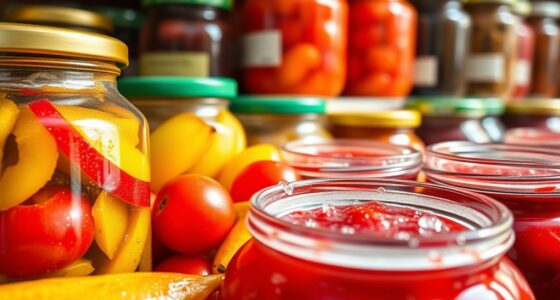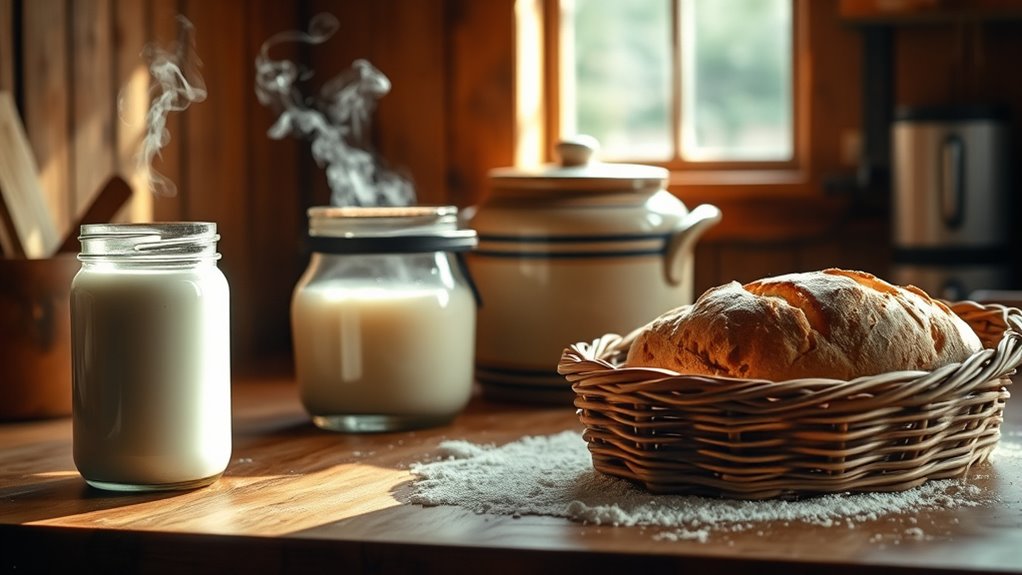

Fermentation in your kitchen turns ingredients like milk, grains, and hops into tasty, nutritious foods such as yogurt, beer, and bread by harnessing natural wild microbes. You can start with a sourdough starter, cultivating wild yeasts and bacteria from your environment, which creates complex flavors and improves digestibility. This traditional process connects you to centuries of craft, and exploring it further will reveal how microbes shape your favorite foods and health benefits.
Key Takeaways
- Fermentation uses natural microbes to transform ingredients, enhancing flavor, texture, and nutritional value in foods like yogurt, beer, and bread.
- Yogurt fermentation involves lactic acid bacteria, which ferment milk sugars, producing probiotics and a tangy flavor.
- Beer fermentation relies on yeast converting sugars into alcohol and carbon dioxide, creating bubbly, alcoholic beverages.
- Bread fermentation, especially sourdough, uses wild yeasts and bacteria to leaven dough and develop complex flavors.
- Wild fermentation emphasizes natural microbes from the environment, resulting in artisanal, preservative-free, and healthful foods.

Fermentation has become a popular way to transform everyday ingredients into flavorful, healthful foods right in your kitchen. Whether you’re making bread, yogurt, or beer, fermentation unleashes new tastes and textures while boosting nutritional value. One of the most accessible and rewarding fermentation projects is creating a sourdough starter. Instead of relying on commercial yeast, you harness the power of wild fermentation—using naturally occurring yeasts and bacteria present in the environment and on your ingredients. With a little patience, you cultivate a lively culture that can ferment flour and water into a tangy, bubbly dough. This process emphasizes the beauty of wild fermentation, where the microflora from your kitchen, air, and even your hands contribute to the unique flavor profile of your bread. As the sourdough starter matures, it develops a complex, sour aroma, and its natural leavening power replaces commercial yeast, giving your bread a distinctive character. Maintaining a sourdough starter is straightforward, but it requires regular feeding with flour and water, allowing the wild yeasts and bacteria to thrive. Over time, you’ll notice a rise in activity, with bubbles forming and a pleasant acidity developing. This natural fermentation process not only enhances flavor but also pre-digests some of the gluten and nutrients in the flour, making it easier to digest and more nutritious. Creating a sourdough starter is a perfect example of wild fermentation in action, where you rely on the microbial ecosystem present in your environment rather than adding isolated cultures. It’s a living culture that evolves with each feeding, reflecting your kitchen’s unique microbial fingerprint. Once established, your sourdough starter becomes a staple, capable of turning simple ingredients into artisanal bread with a crunchy crust and chewy interior. Making bread this way connects you to traditional baking methods, emphasizing the natural fermentation process that has been used for centuries. This approach also offers control over ingredients, so you can avoid preservatives and additives often found in commercial bread. Embracing wild fermentation and maintaining a sourdough starter empowers you to produce wholesome, flavorful bread that’s rich in history and health benefits. It’s a rewarding journey that transforms basic flour and water into a living, breathing culture, giving you a foundation to explore a variety of baked goods and fermented foods. Additionally, understanding the role of microflora in fermentation highlights how beneficial microorganisms contribute to both flavor and nutritional value. Whether you’re a seasoned baker or just starting out, understanding the principles of sourdough and wild fermentation opens the door to a deeper appreciation of how microbes shape the foods we eat every day.
Frequently Asked Questions
How Long Does Homemade Fermentation Typically Last Before Spoilage?
You can typically store homemade fermented foods for about one to three weeks before spoilage signs appear. Keep an eye on storage duration and watch for spoilage indicators like off-odors, mold, or sliminess. Proper refrigeration slows spoilage, but always trust your senses—if it smells sourer than usual or looks unusual, it’s best to discard. Regularly monitor your ferments to enjoy safe, delicious results.
Can I Use Expired Ingredients for Fermentation Safely?
You can sometimes use expired ingredients for fermentation, but you should carefully assess expired ingredient safety first. If the ingredients show no mold, off smells, or discoloration, their fermentation ingredient quality might still be acceptable. However, expired ingredients can carry risks, so prioritize freshness for ideal safety and results. Always trust your senses and when in doubt, opt for fresh ingredients to ensure safe, successful fermentation.
What Are Common Signs of Bad Fermentation in Yogurt or Bread?
You’ll notice bad fermentation in yogurt or bread if you see visual mold or it develops a sour smell. Mold appears as fuzzy spots in various colors, indicating spoilage. A strong, unpleasant sour odor also signals that fermentation has gone wrong. Trust your senses—discard anything that looks moldy or smells off to avoid consuming unsafe products. Proper storage and hygiene help prevent these issues and ensure safe fermentation.
Is It Necessary to Sterilize All Equipment Before Fermenting?
A stitch in time saves nine, so yes, you should sterilize all equipment before fermenting. Proper sanitization practices help prevent unwanted bacteria and mold, ensuring your fermentation turns out successfully. Equipment sterilization is vital, especially for dairy and bread starters, as it keeps the environment clean and safe. Skipping this step can lead to spoilage or unsafe products, so always take the time to sanitize thoroughly.
How Do Environmental Factors Affect Fermentation Speed and Quality?
Environmental factors like temperature control and humidity levels considerably impact fermentation speed and quality. When you keep the temperature steady, fermentation happens more predictably, preventing unwanted bacteria growth. Proper humidity levels help yeast and bacteria thrive, ensuring consistent results. If it’s too hot or dry, fermentation slows or spoils. You should monitor these conditions closely, adjusting as needed, to achieve ideal fermentation and high-quality products every time.
Conclusion
Now that you’ve glimpsed the magic behind fermentation, imagine the possibilities waiting in your own kitchen. Will your next batch turn into creamy yogurt, bubbly beer, or perfect bread? The secrets are within your reach—just a little patience and curiosity. The more you explore, the more surprises you’ll uncover. Are you ready to open the delicious mysteries of fermentation and transform everyday ingredients into something extraordinary? The adventure is just beginning.