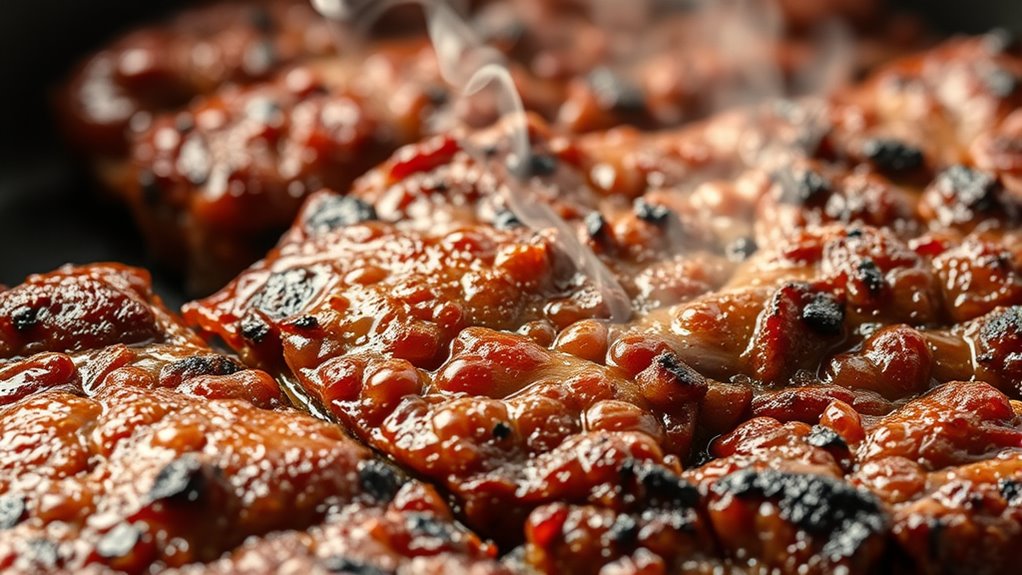

When you cook meat, proteins denature, changing structure and helping with tenderness and moisture. The Maillard reaction, which occurs when amino acids and sugars combine at high heat, forms a flavorful browned crust and rich aroma. These chemical changes improve flavor, texture, and visual appeal. Controlling heat and time guarantees perfect results without burning. If you want to uncover more about these fascinating processes and how they shape your meat’s final taste, there’s much more to explore.
Key Takeaways
- Maillard reactions between amino acids and sugars produce the browned crust and complex flavors in cooked meat.
- Protein denaturation unfolds muscle proteins, enhancing digestibility and affecting meat texture and moisture retention.
- Heat causes fat breakdown, releasing flavors, adding juiciness, and contributing to aroma development.
- Precise temperature control optimizes chemical reactions to maximize flavor, tenderness, and safety.
- Overcooking can cause excessive protein tightening, moisture loss, and undesirable bitter compounds from burnt Maillard products.
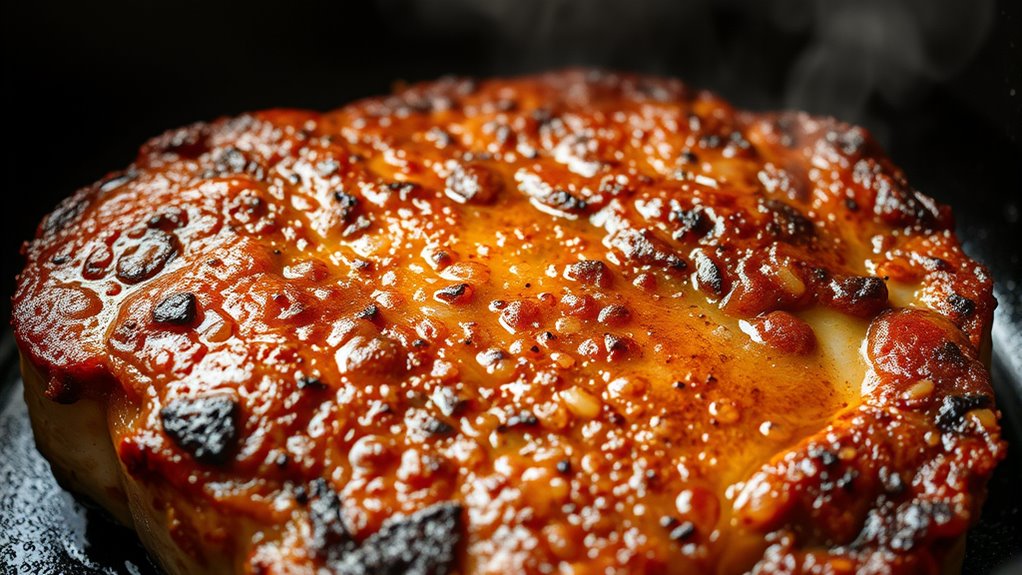
Have you ever wondered what really happens on a molecular level when you cook meat? When heat hits the surface, a complex series of chemical reactions begins, transforming raw meat into something flavorful and tender. One of the earliest changes is protein denaturation. Proteins in the meat’s muscle fibers are tightly coiled structures, but as you apply heat, these structures start to unwind and lose their original shape. This process is vital because it allows the meat to become more digestible and changes its texture from raw and rubbery to firm and tender. As proteins denature, they also begin to bond with water, which can influence juiciness. However, if you overcook, these proteins can tighten excessively, squeezing out moisture and resulting in dry meat. Managing heat carefully is key to balancing protein denaturation for ideal tenderness and moisture retention.
Additionally, advances in automation technology are helping chefs and food scientists develop more precise cooking methods, ensuring consistent results.
Alongside protein denaturation, flavor development kicks into high gear. When heat is applied, especially at moderate to high temperatures, Maillard reactions take center stage. These chemical reactions occur between amino acids—components of denatured proteins—and sugars naturally present in the meat. The Maillard process is responsible for creating that rich, browned crust on a perfectly seared steak. It produces complex flavor compounds and aromatic molecules that give cooked meat its savory, roasted aroma. Without this reaction, meat would lack depth and complexity in flavor, tasting dull and bland. The browning not only enhances taste but also adds an appealing visual contrast, signaling to your senses that the meat is cooked to perfection. Achieving the right temperature and timing is essential to maximize flavor development without burning the surface, which can produce bitter flavors and harmful compounds.
As the meat cooks further, other chemical changes contribute to its overall appeal. The breakdown of fats adds richness and juiciness, while the continued heat causes the release of volatile compounds that enhance aroma. The interplay of protein denaturation and Maillard reactions creates the foundation of cooked meat’s delicious taste and texture. Understanding these molecular events helps you become a better cook, giving you control over the final outcome. Whether searing a steak or slow-roasting a roast, being mindful of how heat influences protein structure and flavor formation allows you to craft meat dishes that are not only safe and tender but also bursting with complex flavors. Essentially, cooking meat is a delicate dance of chemistry, transforming simple ingredients into a savory masterpiece right before your eyes.
Frequently Asked Questions
How Does Ph Influence Meat Browning During Cooking?
You’ll notice that pH influences meat browning by affecting pH modulation, which alters the environment for Maillard reactions. A higher pH (more alkaline) enhances browning because it speeds up these reactions and promotes enzyme activation that tenderizes meat. Conversely, a lower pH (more acidic) slows browning, resulting in less color development. Adjusting pH can, as a result, control how well your meat browns during cooking.
What Role Do Enzymes Play in Raw Versus Cooked Meat Flavor?
Enzyme activity in raw meat is essential for flavor development, breaking down proteins and fats to release savory compounds. When cooked, enzymes denature and lose their function, halting flavor enhancement. This shift highlights how enzymes shape raw meat’s fresh taste, while their absence during cooking allows other processes, like Maillard reactions, to create complex, roasted flavors. You experience these changes as the meat transforms from tender raw to richly flavored cooked meat.
Can Marinating Affect Maillard Reactions?
Marination chemistry can influence Maillard reactions by adding ingredients like acids, sugars, and amino acids that enhance flavor. When you marinate meat, these components penetrate the surface, promoting flavor enhancement during cooking. However, marinating with too much acid may tenderize the meat and slow browning, while sugars can boost caramelization. So, your marination choices directly affect how the Maillard reaction develops, shaping the overall flavor and crust.
How Does Initial Meat Temperature Impact Flavor Development?
They say, “You are what you eat,” and that’s true for flavor development. Your initial meat temperature greatly impacts flavor complexity; starting with a cold cut allows a slower, more nuanced Maillard reaction, while a hot start creates rapid browning but less depth. By controlling initial temperature, you influence the balance of flavors, ensuring your meat develops richer, more complex taste profiles.
Are There Health Implications of Maillard Reaction Products?
The Maillard reaction can produce health risks because certain compounds formed, like heterocyclic amines and polycyclic aromatic hydrocarbons, are potentially carcinogenic. When you cook meat at high temperatures or for too long, you increase these risks. It’s wise to moderate cooking times and temperatures, and include more antioxidants like vegetables in your meal, to minimize exposure to these carcinogenic compounds and enjoy your meat safely.
Conclusion
As you cook meat, the Maillard reaction transforms its flavor and aroma, making every bite more enticing. Beyond that, other chemical changes enhance tenderness and juiciness. Did you know that the Maillard reaction begins around 140°C (284°F), and cooking at higher temperatures can produce more complex flavors? Embracing these chemical processes lets you master every meal, turning simple ingredients into culinary masterpieces. So, next time you cook meat, remember—you’re orchestrating a fascinating chemical symphony.