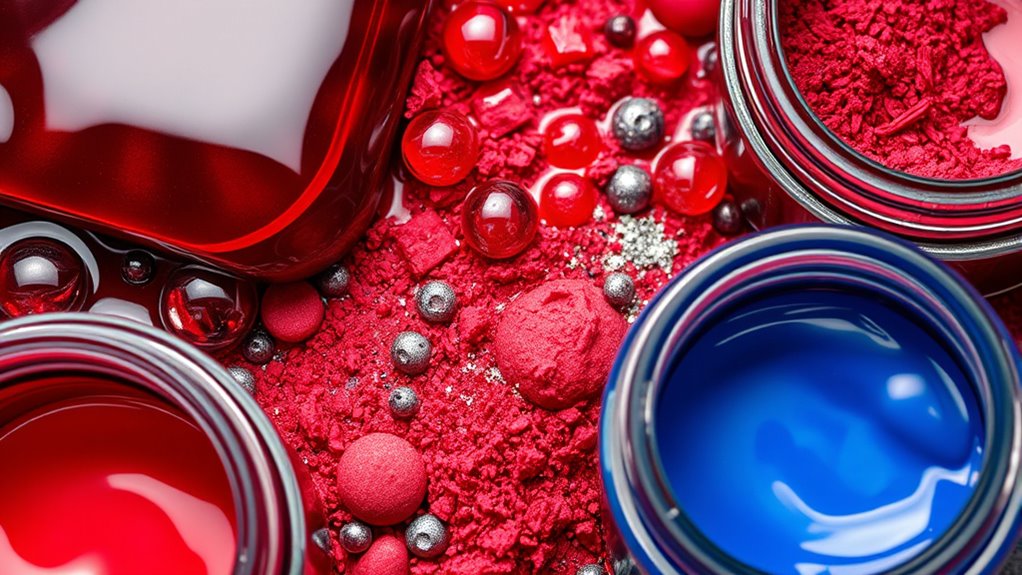

Paints and primers contain resins, pigments, and additives that influence their appearance, durability, and application. Resins form the film that binds the color pigments to surfaces, ensuring longevity. Pigments provide color and opacity, while additives enhance properties like drying time, flow, or resistance to mold and weather conditions. Understanding these components helps you select the right product for your project. Keep exploring to discover how choosing the right formulations can improve your results and environmental impact.
Key Takeaways
- Resins in paints and primers form the film that provides adhesion, durability, and flexibility.
- Pigments are responsible for color, opacity, and UV protection in formulations.
- Additives enhance properties like drying time, flow, leveling, and resistance to environmental factors.
- Resin types (e.g., acrylic, alkyd, epoxy) influence the finish, application, and compatibility of the product.
- Proper balance of resins, pigments, and additives ensures optimal performance and environmental compliance.
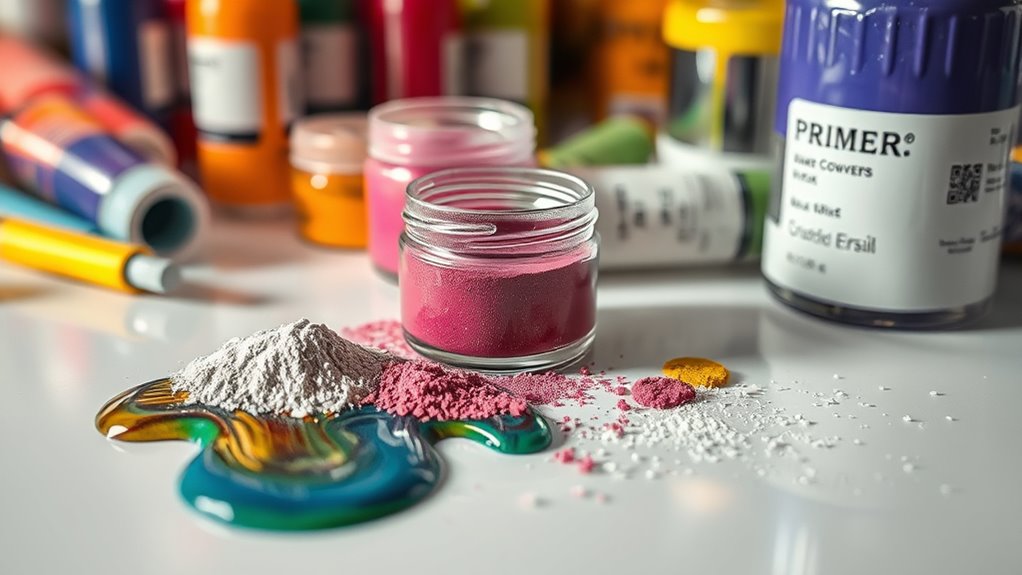
Paints and primers are essential tools for achieving a smooth, durable finish on any surface. Before you even start applying paint, proper surface preparation is vital. This means cleaning the surface thoroughly, removing any dirt, grease, or old paint that might interfere with adhesion. Sanding rough patches, filling cracks, and ensuring the surface is dry help the primer bond effectively, leading to a more even, long-lasting finish. Skipping these steps can cause peeling, uneven color, or premature wear, which defeats the purpose of your project. When selecting primers and paints, consider their environmental impact. Many traditional formulations contain volatile organic compounds (VOCs) that can release harmful fumes during and after application, affecting indoor air quality and contributing to pollution. Fortunately, there are low-VOC or VOC-free options available today that reduce environmental harm without sacrificing quality. Choosing eco-friendly products not only benefits the planet but also creates a healthier space for you and your family.
Once you’ve prepared the surface, the role of surface preparation extends to choosing the right primer. Primers act as a bonding agent, sealing porous surfaces and providing a uniform base for the topcoat. They can also block stains or prevent bleed-through from underlying materials. When selecting a primer, think about the surface type—whether it’s wood, drywall, metal, or masonry—and choose one formulated for that material. Proper surface prep and the use of suitable primers can minimize the amount of paint needed, reducing waste and lowering your environmental footprint. Additionally, understanding paint formulations can help in selecting products that are safer and more sustainable.
In terms of environmental impact, the formulation of your paints and primers matters. Look for products that are labeled as environmentally friendly, biodegradable, or low in VOCs. These options help reduce the release of harmful chemicals into the air and water systems. Additionally, using the right amount of product and avoiding over-application prevents excess waste. Proper disposal of unused paints and primers also minimizes environmental harm, so always follow local regulations.
In the end, your focus on surface preparation and environmentally conscious choices makes a significant difference. Not only does it improve the quality and longevity of your finish, but it also aligns with sustainable practices. By selecting the right products and preparing your surfaces correctly, you’re ensuring your project is both beautiful and responsible. This attention to detail results in a professional-looking finish that stands the test of time, all while respecting the environment around you.
Frequently Asked Questions
How Do Environmental Factors Affect Primer and Paint Longevity?
Environmental factors profoundly affect your primer and paint longevity. UV degradation from sunlight causes the paint to break down and fade over time. Moisture exposure leads to peeling, bubbling, and mold growth, reducing durability. To maximize lifespan, choose products with enhanced UV resistance and moisture resistance. Regular maintenance and proper surface preparation also help your paint withstand harsh conditions, keeping it looking fresh longer and protecting your surfaces effectively.
What Are the Latest Innovations in Eco-Friendly Paint Formulations?
You’ll love the latest eco-friendly paint innovations that focus on sustainability. Manufacturers are now using biodegradable solvents and renewable raw materials, making paints safer for the environment. These formulations reduce toxic waste and carbon footprints, all while maintaining high performance. By choosing these greener options, you help protect natural resources and enjoy vibrant, long-lasting colors without compromise. Embrace these advances for a cleaner, healthier future in every brushstroke.
How Do Different Resin Types Influence Paint Durability?
Different resin types directly impact your paint’s durability by influencing resin flexibility and chemical resistance. For example, acrylic resins offer excellent flexibility, helping your paint withstand cracking and weathering. Epoxy resins provide superior chemical resistance, protecting surfaces from corrosion and chemicals. Choosing the right resin depends on your application’s needs, ensuring your paint remains durable, flexible, and resistant to environmental and chemical stresses over time.
Can Primers Be Used as Standalone Coatings?
Primers are typically not used as standalone coatings because they’re designed to improve coating adhesion and prepare surfaces for paint. While some specialized primers can offer limited protection or aesthetic appeal, they usually lack the durability needed for long-term use. If you want a proper finish, apply a compatible topcoat over the primer. Using primers alone won’t provide the necessary protection or appearance, so it’s best to follow up with a proper paint layer.
How Do Additives Improve Paint Performance in Extreme Conditions?
Think of your paint as armor for your surfaces. Additives like corrosion inhibitors shield against rust, while UV stabilizers act as a sunscreen, preventing fading and deterioration. These additives work actively to enhance performance in extreme conditions by protecting against corrosion, UV damage, and harsh weather. They strengthen your coating’s resilience, ensuring your surfaces stay vibrant and intact longer, even under the toughest environmental stresses.
Conclusion
Understanding the chemistry behind paints and primers helps you choose the right products for your projects. Did you know that resins make up about 50% of many paints, providing durability and flexibility? By selecting the right combination of resins, pigments, and additives, you can guarantee a long-lasting, vibrant finish. So, next time you pick out paint, remember the science behind it—your perfect paint job starts with knowing what’s inside.