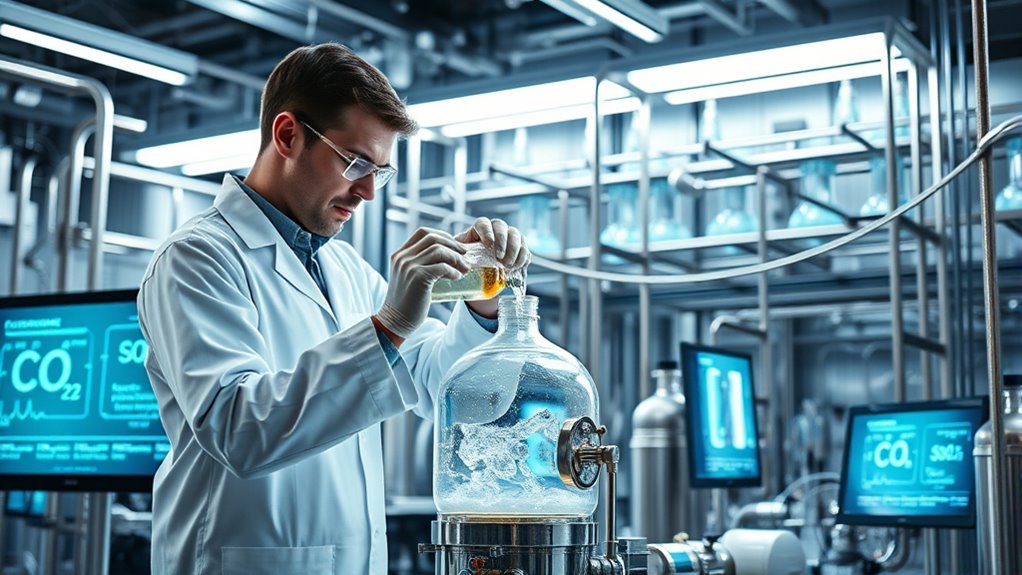

Carbon capture involves trapping CO₂ emissions from sources like factories and power plants, then converting that CO₂ into useful chemicals such as methanol, ethanol, or plastics. Using specialized catalysts and energy—preferably from renewable sources—you can transform CO₂ into valuable products, helping cut down greenhouse gases. This process supports a sustainable circular economy and offers new industrial opportunities. To discover the detailed methods and benefits behind turning CO₂ into useful chemicals, keep exploring this innovative area.
Key Takeaways
- CO₂ capture involves collecting CO₂ emissions from sources like factories and power plants for reuse.
- Conversion uses chemical processes with catalysts to transform CO₂ into useful chemicals such as methanol or plastics.
- Catalysts improve efficiency and reduce energy costs in the chemical synthesis of CO₂-derived products.
- Renewable energy powers sustainable CO₂ conversion methods, supporting environmental and economic goals.
- Integrating CO₂ conversion into industries helps reduce emissions and creates valuable products from waste gases.
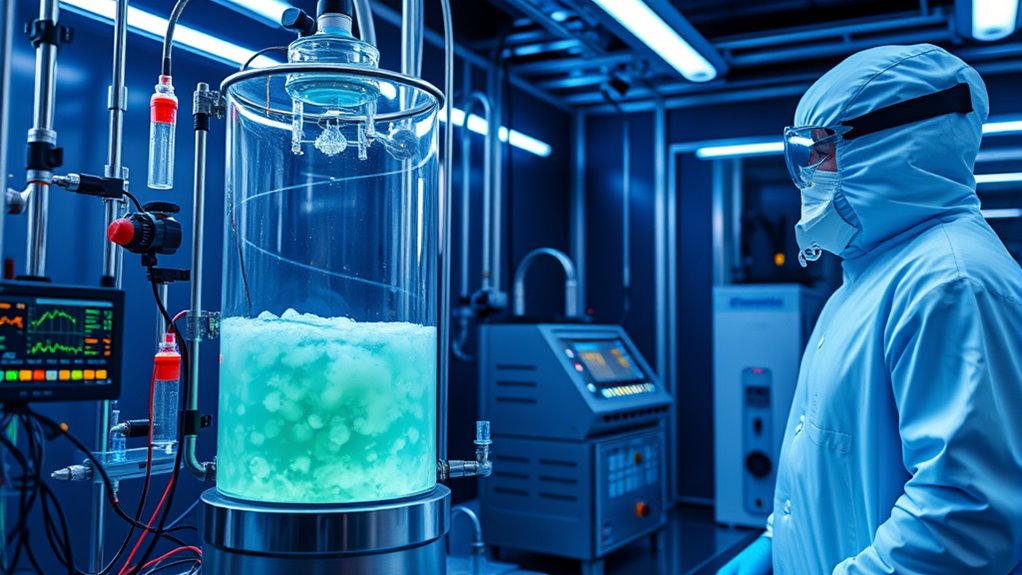
Have you ever wondered how we can reduce greenhouse gas emissions from industries and power plants? One promising approach is CO₂ conversion, a process that transforms carbon dioxide into valuable chemicals through chemical synthesis. Instead of releasing CO₂ into the atmosphere, you can think of capturing it and turning it into something useful, which not only helps fight climate change but also creates economic opportunities.
CO₂ conversion involves capturing CO₂ at its source—like factories or power plants—and then using advanced chemical processes to convert it into chemicals, fuels, or other materials. This method relies on chemical synthesis, where CO₂ serves as a raw material, and through catalysts and energy input, it transforms into products such as methanol, ethanol, or even plastics. Additionally, research into catalyst design is crucial for improving process efficiency and scalability.
CO₂ capture and chemical synthesis transform emissions into valuable fuels and materials.
By integrating CO₂ conversion into existing industrial operations, you can considerably lower emissions while producing marketable goods. The key to effective CO₂ conversion is developing efficient chemical synthesis pathways. These pathways often involve catalysts that facilitate the transformation of CO₂ at lower energy costs, making the process more sustainable.
For example, electrochemical or thermochemical methods can be employed, where electricity—preferably from renewable sources—powers the conversion. This way, you’re not just capturing CO₂ but actively reusing it, closing the loop in carbon management.
Imagine a factory that captures CO₂ directly from its exhaust gases. Instead of venting it into the atmosphere, it feeds this CO₂ into a reactor where chemical synthesis occurs. Under the right conditions, the CO₂ reacts with hydrogen or other reactants to form useful chemicals.
This not only reduces the plant’s carbon footprint but also produces substances that can be sold or used onsite, creating new revenue streams. It’s a win-win situation—mitigating climate impact while boosting economic resilience.
Furthermore, advancements in catalyst design and process optimization are making CO₂ conversion more practical and scalable. As technology improves, you’ll see more industries adopting these methods, turning waste gases into valuable commodities.
This shift represents a significant step toward a circular carbon economy, where CO₂ isn’t just a pollutant but a resource. Additionally, improved understanding of color accuracy in projectors can lead to more visually compelling presentations of such innovative technologies.
Frequently Asked Questions
What Are the Main Challenges in Commercializing Carbon-To-Chemical Technologies?
You face main challenges in commercializing carbon-to-chemical technologies, mainly due to cost barriers and technological maturity. High costs make it difficult to compete with existing methods, and many technologies aren’t fully mature yet, causing hesitation among investors.
Overcoming these hurdles requires advances in process efficiency, reducing expenses, and scaling up production. With continued innovation, you can make these technologies more viable and accelerate their adoption in the market.
How Does the Energy Consumption of Carbon Capture Processes Impact Overall Sustainability?
Imagine you’re in a steampunk workshop, gears turning tirelessly. The energy consumption of carbon capture processes affects your project’s sustainability; high energy use can negate environmental benefits.
To improve this, focus on energy efficiency and conduct thorough lifecycle analysis to weigh emissions savings against energy inputs. This guarantees your technology remains eco-friendly and viable, avoiding the trap of increased fossil fuel use that could undermine your sustainability goals.
Are There Environmental Risks Associated With Chemical Conversion of Co₂?
You should consider that chemical conversion of CO₂ can pose environmental impacts, such as potential chemical leaks or byproduct waste.
While advancements aim to enhance chemical safety, risks remain if processes aren’t properly managed.
These environmental impacts could affect ecosystems or human health.
Thus, it’s crucial to carefully regulate and monitor these conversions to minimize risks and ensure that chemical safety measures are strictly followed.
How Scalable Are Current Technologies for Widespread Industrial Use?
You might wonder how scalable current technologies are for widespread industrial use. While they show promise, scalability limitations exist due to high costs, energy demands, and the need for specialized infrastructure.
To succeed, industries must focus on seamless industrial integration, making these methods more efficient and economically viable.
Overcoming these challenges is vital for large-scale adoption, enabling broader environmental and economic benefits in reducing CO₂ emissions.
What Policies Support the Adoption of Carbon Capture and Utilization Methods?
You can support carbon capture and utilization by advocating for strong policies like carbon pricing and government incentives. These measures make adopting CCS technologies more financially attractive for industries, encouraging them to reduce emissions.
Conclusion
Now that you know how carbon capture transforms CO₂ into useful chemicals, imagine what’s next. Could this breakthrough revolutionize our fight against climate change? The potential is enormous, but many questions remain. Will these technologies become mainstream or stay experimental? As scientists push boundaries, you’ll want to stay tuned. The future of carbon capture is unfolding rapidly—are you ready to see what’s coming next? The best is yet to be revealed.