To truly reduce your lab’s footprint without greenwashing, focus on practical upgrades like sourcing materials with eco-friendly credentials and supporting suppliers committed to sustainability. Implement waste diversion strategies such as recycling, composting, and reusing materials. Upgrading to energy-efficient lighting and HVAC can further cut environmental impacts. These honest practices demonstrate real commitment and long-term change, helping you make a genuine difference. Keep exploring to discover even more effective ways to create a greener lab environment.
Key Takeaways
- Prioritize sustainable sourcing by selecting eco-friendly materials, ethical suppliers, and packaging made from recycled or renewable resources.
- Implement waste diversion strategies like recycling, composting, and reducing disposable items to significantly lower landfill contributions.
- Upgrade to energy-efficient lighting, HVAC, and equipment to reduce energy consumption and operational costs.
- Embed green practices into daily routines to foster a culture of sustainability and ensure long-term commitment.
- Focus on measurable outcomes such as reduced waste, lower carbon emissions, and resource conservation to demonstrate genuine environmental impact.
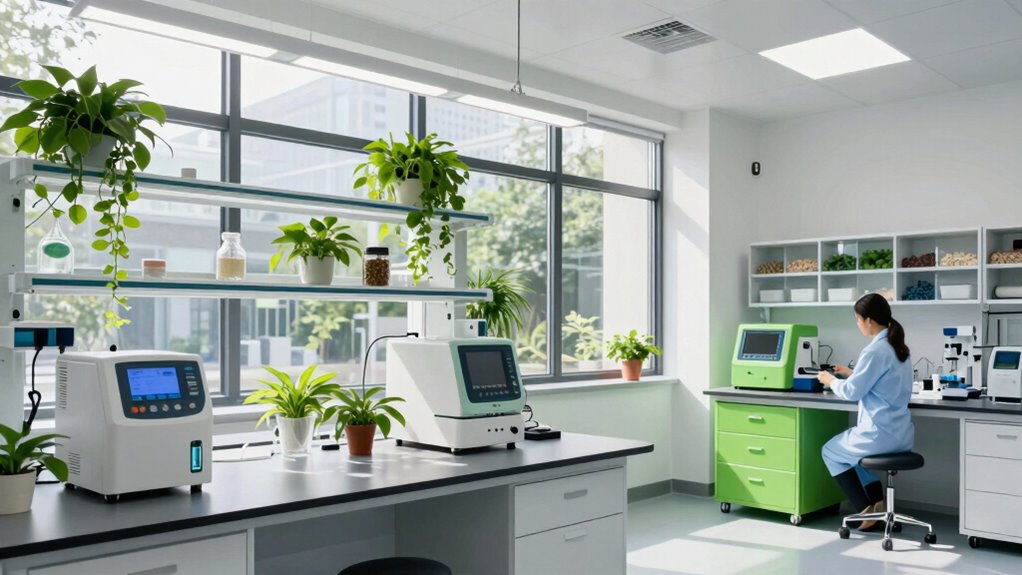
Many labs are now taking steps to minimize their environmental impact by implementing green upgrades. If you’re looking to make your lab more sustainable, focusing on sustainable sourcing and waste diversion can lead to meaningful change. These strategies aren’t just buzzwords—they’re practical methods to reduce your footprint and demonstrate real commitment to environmental responsibility.
Sustainable sourcing is about choosing materials, equipment, and supplies that are produced responsibly. When you opt for lab supplies with eco-friendly credentials, you’re supporting suppliers who prioritize ethical practices, use renewable resources, and minimize harmful chemicals. This might mean selecting packaging made from recycled materials or sourcing reagents that are produced with low environmental impact. By doing so, you reduce the demand for products that harm ecosystems and contribute to pollution. It’s a conscious choice that aligns your lab’s operations with broader sustainability goals, ensuring that every purchase fosters environmental health rather than depleting natural resources.
Waste diversion is another critical upgrade that can considerably cut down your lab’s environmental footprint. Instead of sending waste to landfills, you implement strategies to recycle, compost, or repurpose materials whenever possible. This could involve setting up composting programs for organic waste, partnering with recycling services for plastics and metals, or redesigning workflows to minimize disposable items. Waste diversion not only reduces the volume of waste that ends up in landfills but also decreases the greenhouse gases produced during decomposition. It requires an active commitment to properly sort waste streams and educate staff about sustainable disposal practices. Over time, these efforts can lead to a substantial reduction in your lab’s overall waste output, aligning your operations with eco-conscious principles.
Implementing innovative energy solutions such as energy-efficient lighting and HVAC systems can further enhance your lab’s sustainability efforts and reduce operational costs. Integrating these practices into your lab’s daily routines might seem challenging at first, but the benefits are worthwhile. You’ll lower your environmental impact, potentially reduce costs, and set an example for others in your field. Remember, genuine green upgrades focus on tangible results—sustainable sourcing ensures your supplies are responsibly produced, and waste diversion minimizes what ends up polluting the environment. Combined, these efforts create a more sustainable lab that actively contributes to environmental preservation rather than just claiming to do so. The key is consistency: make these practices a core part of your lab’s culture, and over time, they’ll become second nature. By prioritizing responsible sourcing and waste diversion, you’re not just upgrading your lab—you’re helping shape a greener, more sustainable future.

Lab Armor Beads, 4 Liters
- Intended for research use only: Not for food or drug use
As an affiliate, we earn on qualifying purchases.
As an affiliate, we earn on qualifying purchases.
Frequently Asked Questions
How Can Small Labs Implement Sustainable Practices Cost-Effectively?
You can implement sustainable practices cost-effectively by choosing cost-effective sourcing for eco-friendly supplies and equipment. Engage your employees by encouraging them to adopt green habits and participate in sustainability initiatives. Small changes, like reducing energy use, recycling, and optimizing resource management, make a big difference. These steps not only lower costs but also foster a culture of sustainability, helping your lab reduce its footprint without breaking the bank.
What Are the Most Overlooked Environmental Impacts in Lab Operations?
You might overlook how much your lab’s energy consumption and waste management impact the environment. It’s easy to focus on big changes while ignoring that tiny, constant energy drain adds up to huge carbon footprints. Waste often piles up without proper sorting, leading to unnecessary landfill. Don’t underestimate these hidden impacts; optimizing energy use and improving waste management can dramatically lower your lab’s ecological footprint, making your sustainability efforts truly effective.
How Do Upgrades Align With Existing Safety and Compliance Standards?
Upgrades align with safety protocols and compliance standards by integrating eco-friendly features without jeopardizing safety. You’ll want to make certain new equipment or processes meet regulatory requirements, like proper ventilation, waste disposal, and hazard controls. When planning upgrades, double-check that they adhere to safety and compliance standards, and involve safety officers early. This way, you maintain a safe environment while reducing your lab’s environmental impact effectively.
Can Green Lab Technologies Be Integrated Into Older Laboratory Infrastructures?
Think of upgrading an old lab like fitting new sails to a vintage ship—you can do it, but you’ll face retrofit challenges and compatibility issues. Green lab technologies can be integrated into older infrastructures, yet it requires careful planning and sometimes custom solutions. You need to assess existing systems thoroughly and work closely with experts to guarantee seamless compatibility, making your lab greener without compromising safety or functionality.
What Metrics Are Best for Measuring Genuine Sustainability Improvements?
You should focus on metrics like energy efficiency and waste reduction to measure genuine sustainability improvements. Tracking energy consumption per experiment helps identify efficiency gains, while monitoring waste reduction shows how well you’re minimizing environmental impact. These metrics provide clear, actionable insights, allowing you to see real progress over time. Regularly reviewing them guarantees your lab’s efforts are meaningful and truly reduce your footprint, rather than just appearing sustainable.
Conclusion
By choosing real upgrades over greenwashing, you’ll make a tangible difference in reducing your lab’s footprint. Embrace energy-efficient equipment, sustainable materials, and waste reduction practices—these aren’t just trends, they’re the future. Remember, it’s not 1999 anymore; green labs aren’t just a fantasy. So, take action today and turn your lab into a genuine eco-friendly space. Because, as they say, a green lab without greenwashing is the true science of sustainability.