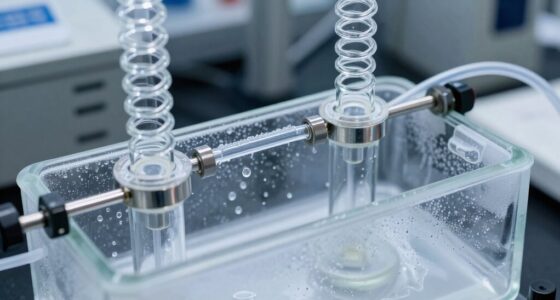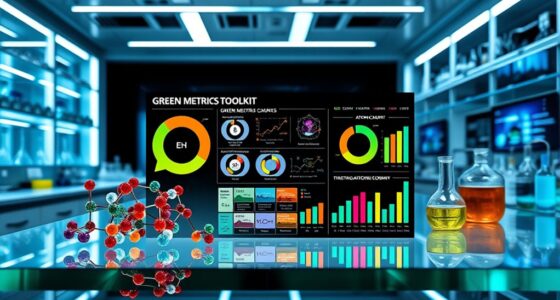
To design out hazards early, you can use tools like risk matrices, checklists, and computer-aided risk assessments. These methods help you identify potential safety issues, failure modes, and hazards during initial design stages. Visualization tools enable you to see vulnerabilities and plan mitigations. Using structured approaches from the start reduces costly redesigns and enhances safety. Keep exploring these tools, and you’ll discover how to integrate hazard prevention seamlessly into your development process.
Key Takeaways
- Utilize structured checklists and brainstorming sessions to systematically identify potential hazards early in design.
- Apply simplified risk assessment tools like risk matrices and visualizations to evaluate hazard severity and likelihood.
- Incorporate computer-aided modeling and simulations to detect vulnerabilities and test hazard mitigation strategies upfront.
- Engage multidisciplinary teams to consider engineering, user, and environmental factors for comprehensive hazard identification.
- Prioritize early hazard elimination through iterative design modifications to prevent costly safety issues later.

Early-stage screening tools are essential for quickly identifying promising candidates or potential issues before investing significant resources. When you’re in the development phase, you want to catch problems early, and that’s where these tools come into play. They allow you to perform a preliminary risk evaluation and hazard identification, setting the foundation for safer, more effective designs. By proactively pinpointing risks at this stage, you can avoid costly revisions later and streamline the path forward.
Risk evaluation during early-stage screening involves examining the potential dangers associated with your concept or prototype. You analyze how different elements might fail or create hazards and determine the severity and likelihood of those risks. This process helps prioritize which areas need immediate attention, ensuring you focus your efforts where they’re most needed. When you conduct a thorough risk evaluation early on, you prevent hazards from becoming embedded in the final product, reducing the chance of safety issues, recalls, or regulatory hurdles down the line. Incorporating regulatory standards into your risk assessment ensures your design aligns with industry requirements from the outset.
Hazard identification is another critical component. It involves systematically examining your design, materials, and processes to identify possible hazards. Think of hazard identification as a detective process—you’re searching for anything that could cause harm or compromise safety, whether it’s sharp edges, toxic materials, or mechanical failures. Using structured checklists, brainstorming sessions, or simulation tools, you can uncover hazards that might not be obvious at first glance. Identifying hazards early allows you to modify your design proactively, rather than reacting to incidents after they’ve occurred.
In practice, early-stage screening tools often include computer-aided risk assessments, simplified modeling, or risk matrices that categorize hazards based on their potential impact. These tools make it easier to visualize where vulnerabilities lie and plan mitigation strategies. They also foster a culture of safety by encouraging you to think about hazards from multiple perspectives—engineering, user interaction, and environmental factors. When you integrate hazard identification and risk evaluation into your initial development process, you create a more resilient design that inherently minimizes safety concerns.
Ultimately, these early screening methods empower you to make informed decisions before substantial investments are made. They serve as a safeguard, helping you avoid costly redesigns and ensuring that safety is built into your project from the ground up. By systematically assessing risks and identifying hazards early, you set the stage for safer, more reliable solutions that meet both regulatory standards and user expectations.
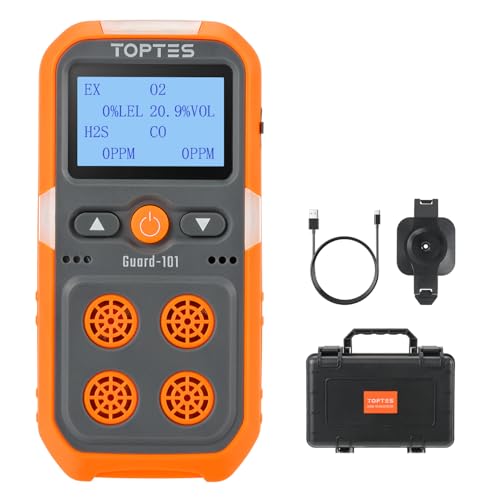
TopTes Guard-101 Gas Detector, 4 Gas Monitor for H2S, CO, LEL and O2, with Vibration, Visual and Audible Alarms, 14h Long Battery Life, Safety Explosion-Proof, for Work, Home - Orange
Quick Detection, Safety First: Guard-101 4 gas monitor multi gas detector is designed for rapid detection of 4...
As an affiliate, we earn on qualifying purchases.
Frequently Asked Questions
How Can I Integrate Hazard Screening Into Existing Design Workflows?
You can integrate hazard screening into your existing workflow by identifying key risk points early and incorporating hazard checks at each stage. Adapt your workflow by adding hazard integration tools that streamline risk assessments during design reviews. Collaborate with your team to ensure hazard considerations become part of standard procedures. Regularly update your processes based on feedback, making hazard screening a seamless, ongoing part of your design workflow.
What Are the Costs Associated With Implementing Early-Stage Hazard Screening Tools?
Implementing early-stage hazard screening tools is like planting seeds for safety, but it does come with cost implications. You’ll need to allocate resources for training, software, and ongoing updates, which can vary depending on your project’s complexity. While initial expenses might seem high, they often save money long-term by reducing hazards early. Balancing these costs with your safety goals helps guarantee a smarter, safer design process.
How Do These Tools Adapt to Different Industries and Project Sizes?
You’ll find that early-stage screening tools adapt well across industries and project sizes by emphasizing industry adaptability and project scalability. They’re designed to be flexible, allowing you to tailor assessments according to specific industry hazards and the scope of your project. This guarantees you can effectively identify risks early, no matter the industry or project scale, saving you time and resources while improving safety outcomes.
Can Early-Stage Screening Predict All Potential Hazards Accurately?
You might think early-stage screening can predict every hazard accurately, but it’s like trying to see the entire universe in a grain of sand. While these tools excel at hazard identification and risk assessment, they can’t catch every potential danger. They’re essential for filtering risks early, but ongoing evaluation is needed to adapt to new hazards that might emerge later. So, expect some surprises despite their effectiveness.
What Training Is Required for Teams to Effectively Use These Screening Tools?
You need to undergo targeted training requirements to effectively use early-stage screening tools. This involves developing skills in hazard identification, risk assessment, and tool operation. Focus on hands-on workshops, safety protocol education, and understanding how to interpret screening results. Continuous skill development guarantees your team can accurately identify potential hazards early, making the screening process more reliable and improving overall safety. Regular updates keep your skills sharp and current.
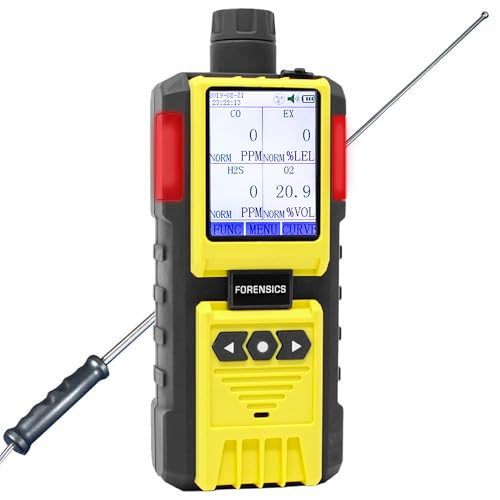
4 Gas Monitor by Forensics | Built-in Pump Multi Gas Meter | O2, CO, H2S, LEL | Color Display & Graphing | USA NIST Calibration | Computer Data Logging |
🎆 Built-in PUMP + 4 Foot Probe: Best of the best. High quality electrochemical sensors Made in the...
As an affiliate, we earn on qualifying purchases.
Conclusion
As you explore these early-stage screening tools, remember they’re just the beginning. What hidden hazards might still lurk beneath the surface? The true challenge lies ahead—how you interpret and act on this initial data could make all the difference. Will these tools be enough to prevent future risks, or will unseen dangers slip through? The journey of designing out hazards isn’t over; it’s only just beginning. Stay vigilant, because what you uncover now could shape the future of safety.

USA NIST Calibrated 4 Gas Monitor by Forensics | O2, CO, H2S, LEL | USB Recharge |
⚛️ SENSOR: High quality electrochemical sensors. USA NIST traceable calibration. Oxygen (O2), Carbon Monoxide (CO), Hydrogen Sulfide (H2S)...
As an affiliate, we earn on qualifying purchases.

16 in 1 Air Quality Monitor Indoor 7" Large Display 9 AQI+7 Alerts, CO2 Monitor Air Quality Tester for CO2, TVOC, PM2.5 PM1.0 PM10, HCHO Temperature Humidity AQI & Time Air Quality Meter for Home
【16-in-1 Air Quality Monitor Indoor】Experience the ultimate indoor air quality monitoring with our 16-in-1 Air Quality Monitor, offering...
As an affiliate, we earn on qualifying purchases.