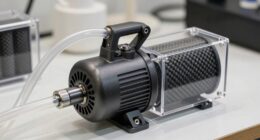
To stop unwanted venting of solvent vapors without you noticing, you need to use cold traps and condensers correctly. These devices capture vapors during processes like distillation or reflux, preventing them from escaping into the environment. Regularly check and maintain them—coolant levels, temperatures, and for leaks—to make certain they work effectively. Properly functioning cold traps and condensers protect you and your lab from hazards, costs, and compliance issues—more details can help you optimize their use.
Key Takeaways
- Regularly inspect and maintain cold traps and condensers to ensure proper sealing and prevent vapor leaks.
- Use appropriate cooling methods (liquid nitrogen, dry ice, circulating water) for effective vapor condensation.
- Ensure devices are properly connected and free of leaks to prevent unnoticed solvent venting.
- Monitor coolant levels and replace or top up regularly to maintain optimal condensation efficiency.
- Incorporate vapor filtration to trap impurities and reduce volatile emissions escaping into the environment.
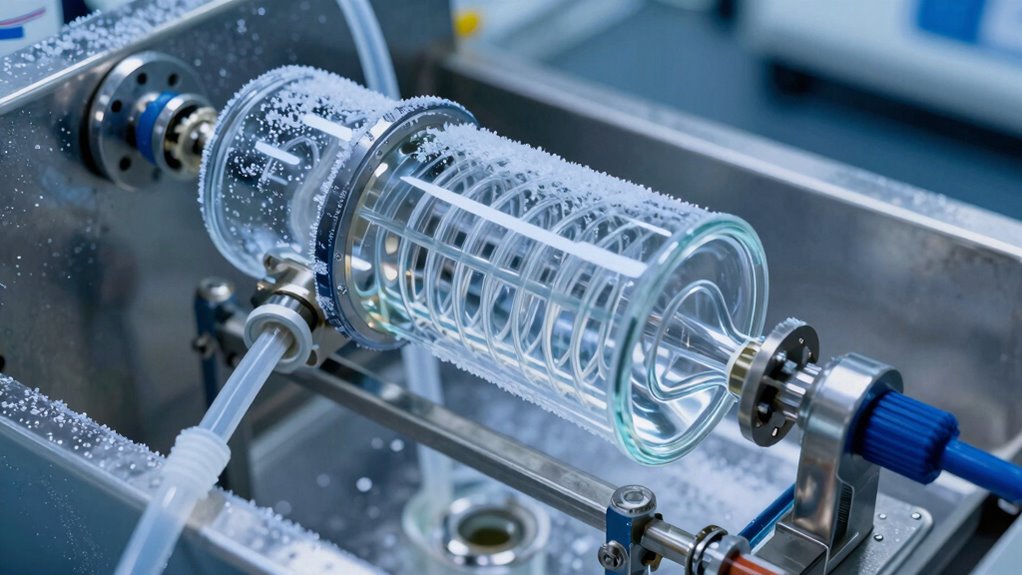
Cold traps and condensers are fundamental tools in many laboratory and industrial processes for preventing contamination and recovering vapors. If you work with solvents or volatile chemicals, understanding how these devices help with solvent recovery and vapor filtration is essential. These tools act as barriers, capturing vapors before they escape into the environment or reach sensitive equipment. This not only protects your workspace but also guarantees compliance with safety standards and reduces costs associated with solvent loss.
Cold traps and condensers prevent contamination and recover vapors, ensuring safety, compliance, and cost savings in lab processes.
When you incorporate cold traps and condensers into your setup, you effectively stop venting solvent vapors without even realizing it. Vapors generated during processes like distillation, evaporation, or reflux are often invisible and can evaporate unnoticed if not properly contained. Cold traps, cooled with liquid nitrogen or dry ice, are designed to capture these vapors directly, preventing them from contaminating the surrounding air or damaging your instruments. Similarly, condensers, which are often cooled with circulating water or other coolants, serve to condense vapors back into liquid form, enabling their recovery and reuse. This process enhances solvent recovery, saving you money and reducing hazardous waste.
Vapor filtration through these devices also plays a critical role in maintaining a safe and clean environment. As vapors pass through a cold trap or condenser, impurities and particulates are effectively removed, minimizing the risk of chemical exposure or equipment fouling. This filtration process is especially important when working with aggressive or hazardous solvents, as it prevents vapors from escaping into the lab atmosphere. Properly maintained cold traps and condensers ensure that only purified vapors are released, if any, and that the recovered solvent remains free of contaminants.
You should also pay close attention to the design and maintenance of your cold traps and condensers. A poorly maintained system can lead to vapor leaks or inefficient condensation, resulting in solvent loss and increased exposure risks. Regular cleaning, checking coolant levels, and ensuring proper cooling temperatures are essential steps to keep these devices functioning at their best. Additionally, understanding the proper setup and operation of these tools is crucial for maximizing their performance and safety. When used correctly, they serve as silent guardians, actively stopping solvent vapors from venting into the environment and ensuring your processes are safer, more efficient, and more cost-effective.
Frequently Asked Questions
How Do Cold Traps Impact Overall Laboratory Safety?
Cold traps improve laboratory safety by capturing solvent vapors before they escape, reducing inhalation hazards. This enhances ventilation improvements, preventing harmful fumes from spreading and creating safer working conditions. By effectively trapping vapors, cold traps help with hazard mitigation, minimizing potential fires or chemical exposure risks. You can feel more secure knowing that your lab environment is safer and that vapor release is controlled, protecting both you and your colleagues.
Can Cold Traps Be Used With All Solvent Types?
You can’t use cold traps with all solvent types safely. For example, some solvents like acetone are highly volatile and may not condense well at typical cold trap temperatures. It’s crucial to check solvent compatibility and optimize temperatures to ensure effective condensation without risking damage or vapor escape. Always verify the cold trap’s specifications and adjust temperature settings accordingly for different solvents to maximize safety and efficiency.
What Maintenance Is Required for Cold Traps and Condensers?
You need to perform routine cleaning of your cold traps and condensers regularly to prevent buildup of residues. Check seals frequently to guarantee they’re intact and functioning properly, preventing leaks and maintaining efficiency. Inspect the cooling system for signs of wear or damage, and replace parts as needed. Proper maintenance keeps your cold traps running smoothly, improves their lifespan, and ensures they effectively stop venting solvent vapors without you noticing.
Are There Environmental Benefits to Using Cold Traps?
Sure, cold traps aren’t just about avoiding messy spills; they’re practically environmental heroes. By capturing solvent vapors, you drastically reduce emissions, lowering your environmental impact. It’s like giving Mother Earth a breather while you work. Less venting means fewer harmful pollutants released into the air, making your lab or facility a greener, cleaner place. Who knew that a simple cold trap could be such an eco-friendly, unsung hero?
How Do Cold Traps Affect Solvent Recovery Efficiency?
Cold traps improve solvent recovery efficiency by maintaining high solvent purity through effective trap design. As the trap cools, it condenses vapors quickly, preventing loss and contamination. This guarantees you recover more solvent with fewer impurities, saving resources and reducing waste. Properly designed traps optimize condensation, making your process more efficient and environmentally friendly, while also maintaining the quality of your recovered solvents.
Conclusion
By understanding how cold traps and condensers work, you can prevent unintentional solvent vapor loss and improve safety. Some might think monitoring these systems is too complicated or time-consuming, but with regular checks, it becomes straightforward. Don’t overlook this simple step—it’s a small effort that saves you money and reduces environmental hazards. Take control of your lab processes today, and guarantee you’re venting safely and efficiently, without wasting valuable solvents or risking exposure.