

Segregating solvent waste properly is a simple and effective way to cut costs and reduce risks in your facility. By accurately identifying and separating different types of solvents—flammables, corrosives, or reactive—you prevent dangerous reactions and simplify disposal. Using labeled containers and collecting waste at the source keeps segregation intact. Proper waste management not only enhances safety but also boosts recycling opportunities, saving money. Keep going to discover more about how these practices can benefit your operation.
Listen free for 30 days with Audible
Thousands of audiobooks and originals — cancel anytime.
As an affiliate, we earn on qualifying purchases.
Key Takeaways
- Properly identify and separate incompatible solvents to prevent dangerous reactions and ensure safety.
- Use clearly labeled containers for each waste stream to facilitate correct segregation and handling.
- Collect solvent waste at the source to maintain segregation integrity and reduce cross-contamination.
- Segregate flammable, corrosive, and reactive solvents to lower fire risks and regulatory compliance costs.
- Recycling and reusing solvents through proper segregation reduce waste disposal costs and environmental impact.
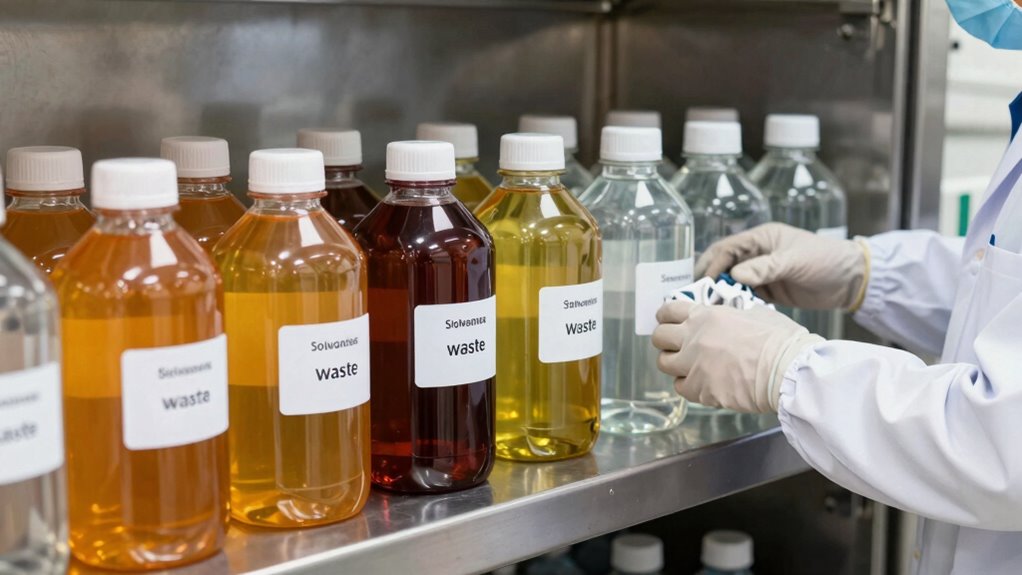
Proper solvent waste segregation is essential for maintaining safety and environmental compliance in any facility that uses chemicals. When you separate waste correctly, you reduce the risk of accidents, simplify disposal processes, and ensure you meet regulatory standards. Proper segregation means identifying different types of solvents and placing them in the right containers, which is the first step toward effective hazardous disposal. This straightforward practice not only mitigates potential hazards but also opens the door to recycling methods that can save your organization money and resources.
Proper solvent waste segregation ensures safety, compliance, and cost-effective recycling in chemical facilities.
You need to understand the importance of hazardous disposal in this context. Mixing incompatible solvents can lead to dangerous chemical reactions, fires, or health hazards. By segregating waste at the source, you prevent these risks from escalating. For example, keep solvents that are flammable separate from those that are corrosive or reactive. Using clearly labeled containers makes it easier to identify and segregate different waste streams, reducing the chance of mistakes. This proactive approach ensures that hazardous disposal becomes more manageable, compliant, and safe.
Recycling methods play a significant role in solvent waste management. When you segregate waste properly, you create opportunities to reclaim and reuse solvents, cutting costs and minimizing environmental impact. Many solvents can be recycled if collected separately from contaminated or mixed waste. This process involves cleaning or distilling the solvents to remove impurities, which is often more economical and eco-friendly than disposal. Proper segregation ensures that only compatible solvents are combined for recycling, avoiding contamination that could make recycling impossible or unsafe.
Additionally, understanding the different recycling methods available allows you to choose the most appropriate for your facility. Some solvents can be distilled on-site, while others may require specialized recycling services. Proper segregation streamlines these processes, reduces waste volume, and prolongs the lifespan of your solvent supplies. It also helps you avoid hefty disposal fees associated with hazardous waste disposal, as recyclables are often less costly to process. Furthermore, high-quality projectors and proper color management are vital in creating professional, safe, and efficient work environments by ensuring accurate visual displays and reducing the need for rework or correction.
hazardous solvent waste containers
As an affiliate, we earn on qualifying purchases.
As an affiliate, we earn on qualifying purchases.
Frequently Asked Questions
How Often Should Solvent Waste Be Inspected and Segregated?
You should inspect solvent waste daily to guarantee proper segregation and identify any potential hazards early. Follow segregation best practices by separating incompatible solvents immediately upon disposal or collection. Regular inspections help maintain safety, prevent chemical reactions, and reduce costs. Consistent oversight ensures waste is correctly categorized, minimizing risks and compliance issues. Prioritize daily checks to keep your waste management process safe, efficient, and aligned with industry standards.
What Are the Penalties for Improper Solvent Waste Disposal?
You face penalties like hefty fines, legal actions, and even shutdowns if you improperly dispose of solvent waste. Failure to follow hazard identification and compliance standards can lead to these serious consequences. To avoid these risks, make certain you adhere to proper segregation, document disposal practices, and stay updated on regulations. Consistent inspection and adherence to safety protocols protect your operations and keep you compliant with environmental laws.
Can Solvent Waste Be Recycled Instead of Segregated?
Yes, solvent waste can often be recycled instead of segregated, helping you achieve waste minimization. By implementing solvent recycling, you reduce disposal costs and environmental impact. Recycled solvents can be reused in your processes, cutting down on new solvent purchases. Make certain to follow proper procedures to guarantee safe and effective solvent recycling, which not only saves money but also promotes sustainable practices in your facility.
What Training Is Required for Staff Handling Solvent Waste?
Did you know that proper training reduces chemical safety incidents by 50%? You need to train staff handling solvent waste in waste management procedures, including proper segregation, storage, and disposal. They should understand chemical safety protocols and emergency response actions. Hands-on training, regular refreshers, and clear written procedures guarantee your team handles solvents safely, minimizes risks, and complies with regulations, keeping everyone protected and your facility compliant.
How Do Regulations Differ Across Various Industries?
You need to understand that industry standards and regulatory compliance vary across sectors, affecting how solvent waste is managed. In manufacturing, stricter regulations may apply, while laboratories might follow specific protocols. You’re responsible for staying informed about these differences and ensuring your waste segregation practices align with applicable laws. Regular training and audits help maintain compliance, reduce risks, and optimize waste handling, so always keep updated on industry-specific requirements.
Conclusion
By mastering solvent waste segregation, you turn a tangled web of hazardous materials into a well-organized safety net. It’s like guiding a ship through stormy waters with a steady hand—cutting costs and reducing risks along the way. When you follow this simple rule, you not only protect your team and environment but also steer your operations toward smoother, safer sailing. Embrace this practice, and watch your workplace transform into a safer harbor.
Fall Picks
fall essentials
As an affiliate, we earn on qualifying purchases.






![Sean Carroll Explains The Biggest Ideas In The Universe – Full Interview [Video] (2025)](https://chemicalceo.com/wp-content/uploads/2026/09/sean-carroll-explains-the-biggest-ideas-in-the-universe-full-interview-video-202-featured-260x140.jpg)