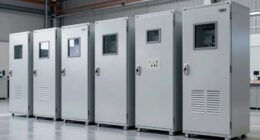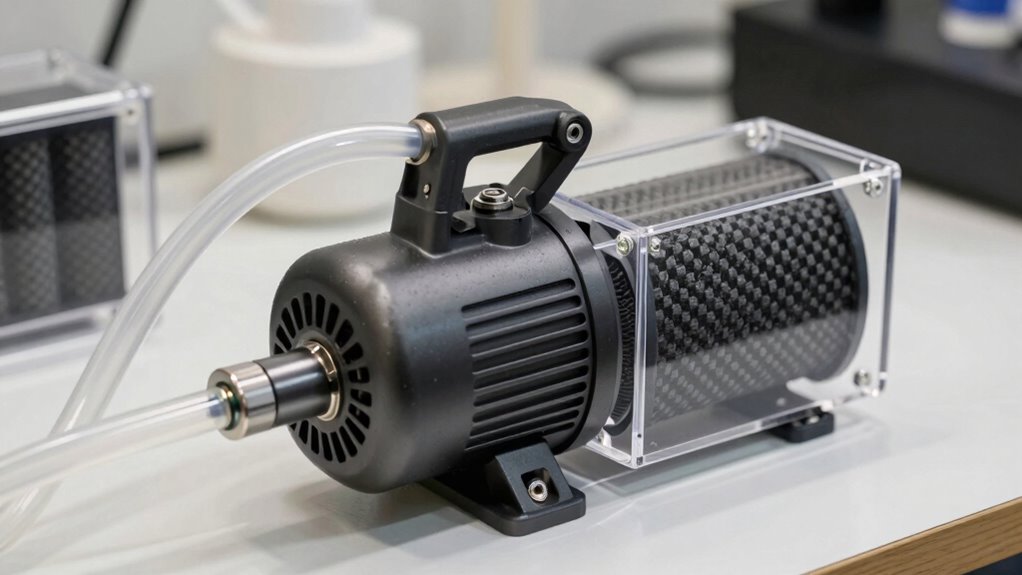
To safeguard indoor air quality from vacuum pump emissions, setting up a proper carbon filter system is essential. You should use a combination of exhaust fans, ducting, and high-quality activated carbon filters that target your specific gases. Regular maintenance, like inspecting and replacing filters on schedule, ensures they stay effective. Properly designed and maintained systems prevent harmful gas buildup and keep your environment safe. Keep exploring to discover how to optimize your filter setup further.
Key Takeaways
- Carbon filters trap and neutralize harmful gases and VOCs emitted during vacuum pump operation, preventing indoor air contamination.
- Regular maintenance and timely replacement of carbon filters ensure maximum filtration efficiency and air quality safety.
- Properly designed exhaust systems direct pollutants outside, reducing indoor exposure and preventing gas buildup.
- Combining ducting, exhaust fans, and carbon filters enhances containment and removal of hazardous emissions.
- Following manufacturer guidelines and best practices maintains effective filtration, prolongs equipment life, and ensures health compliance.
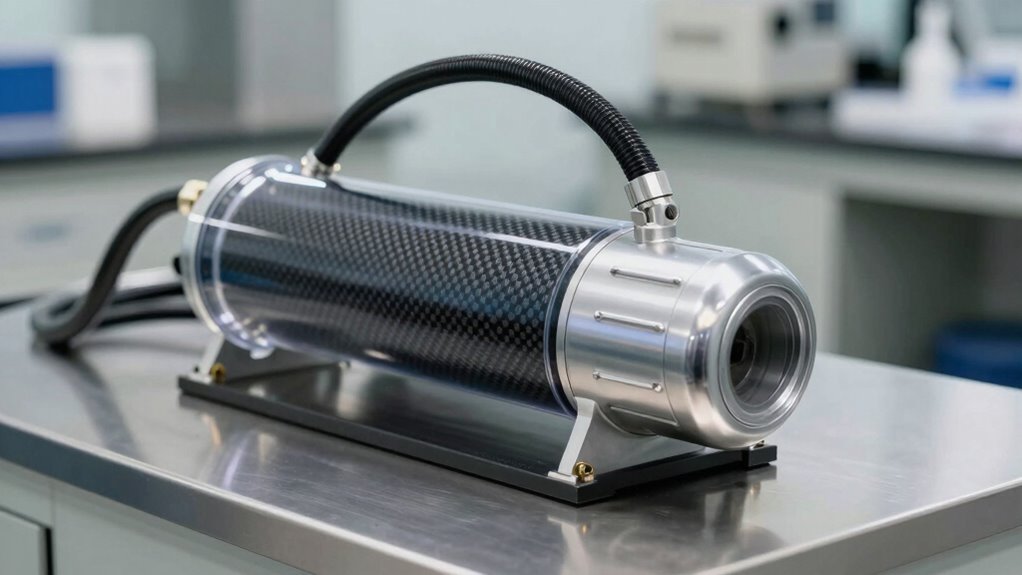
Have you ever wondered what happens to the air and gases expelled by a vacuum pump? When your pump operates, it releases a mixture of air, vapors, and potentially hazardous gases into the environment. Without proper management, these emissions can compromise indoor air quality and pose health risks. That’s where effective ventilation strategies come into play. Implementing a well-designed ventilation system ensures that harmful gases are safely directed away from occupied spaces. It’s essential to understand that ventilation isn’t just about moving air; it’s about controlling the flow to prevent contaminants from lingering. Using exhaust fans, ducting, or specialized filtration setups helps maintain a safe environment by continuously replacing contaminated air with fresh air. This is especially critical in laboratory, industrial, or medical settings where gases may be hazardous. Properly designed exhaust systems can also help prevent pressure imbalances that might cause leaks or backflow, further enhancing safety.
A key component of managing vacuum pump exhaust is proper filter maintenance. Installing a carbon filter setup is a practical way to trap and neutralize volatile organic compounds (VOCs), odors, and other harmful emissions before they escape into the room. Regularly inspecting and replacing filters ensures they remain effective. Neglecting filter maintenance can lead to reduced filtration efficiency, allowing contaminants to bypass the filter and pollute the indoor air. It’s a simple but crucial step to keep your space safe and compliant with health standards. When choosing filters, ensure they are rated for the specific gases your pump expels, and follow manufacturer guidelines for replacement intervals. Proper filter maintenance not only protects indoor air quality but also prolongs the lifespan of your vacuum pump by preventing buildup and corrosion caused by lingering contaminants.
Controlling vacuum pump exhaust isn’t a set-it-and-forget-it task. It requires ongoing attention to ventilation strategies and filter upkeep. You should routinely check your setup for leaks or blockages in the exhaust system, as these can cause pressure build-up or re-circulation of contaminated air. Employing a combination of exhaust hoods, ducting, and carbon filters creates an integrated approach that maximizes safety. Remember, the goal is to contain and eliminate pollutants efficiently, rather than just dispersing them randomly. With consistent filter maintenance, your setup remains reliable, reducing risks and ensuring compliance with safety standards. Staying informed about exhaust filtration technologies and best practices can greatly improve your system’s effectiveness. By staying proactive with proper ventilation strategies and filter care, you protect indoor air quality and create a safer environment for everyone in your space.
Frequently Asked Questions
How Often Should the Carbon Filter Be Replaced?
You should replace the carbon filter based on its filter lifespan, which typically ranges from three to six months, depending on usage and air quality. Keep an eye on the replacement schedule recommended by the manufacturer, as this helps maintain peak filtration efficiency. Regularly inspect the filter for signs of saturation or odor, and replace it promptly to guarantee your indoor air stays clean and safe.
Can the Setup Be Used Outdoors?
You can, but outdoor deployment requires careful planning. While it might seem straightforward, environmental impact becomes a critical concern. Exposure to weather and wind can compromise the filter’s efficiency, and pollutants might disperse unpredictably. If you choose to set it up outside, guarantee it’s protected and positioned correctly. This way, you safeguard air quality while minimizing environmental harm, making outdoor use a viable but delicate balance.
What Are the Signs of a Clogged Filter?
You’ll notice a clogged filter when odor control diminishes, and you start detecting a strong, persistent smell despite the filter being new. You might also experience increased pressure or noise from your vacuum pump, and the filter’s lifespan shortens as it struggles to absorb odors effectively. Regularly checking and replacing the filter guarantees peak performance, maintains good indoor air quality, and prolongs its lifespan.
Is There Any Maintenance Required for the Exhaust System?
Yes, you need to perform regular maintenance on your exhaust system to guarantee ideal air quality and safety. Check the carbon filter regularly for signs of clogging or saturation, and replace it as needed. Clean any debris and inspect for leaks to prevent harmful emissions. Following these safety precautions helps maintain a safe environment by ensuring your system functions efficiently and keeps indoor air clean and safe.
How Does Temperature Affect Filter Performance?
Temperature impact can substantially affect your filter’s efficiency. When temperatures rise, the filter material may become less effective at trapping contaminants, reducing overall performance. Conversely, colder temperatures can cause condensation, which might clog the filter and hinder airflow. To maintain ideal filter efficiency, guarantee your setup operates within recommended temperature ranges, and monitor conditions regularly. Proper temperature management helps prolong filter life and keeps indoor air quality high.
Conclusion
Now that you’ve set up your vacuum pump exhaust with a carbon filter, you’ve taken a vital step toward cleaner indoor air. Imagine, like the pioneers of yore, bravely safeguarding their homes from unseen dangers, you’re protecting your space with modern ingenuity. Keep in mind, a well-maintained filter is your best ally—don’t let your vigilance wane. With this setup, you’re not just ventilating; you’re pioneering a safer, fresher environment for all who enter.