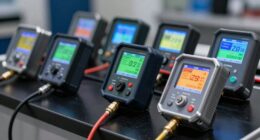

To stop failing spore tests, you need to validate your autoclave step-by-step. First, guarantee biological indicators are correctly placed in challenging load areas and run through every cycle. Afterward, incubate the indicators for 24-48 hours to check for microbial growth. If spores survive, review your sterilization parameters, loading procedures, and calibration. Consistent documentation and troubleshooting will help you maintain effective sterilization—keep exploring the details to master the process.
Key Takeaways
- Review cycle parameters and ensure they meet recommended sterilization standards before retesting.
- Check biological indicator placement to ensure it’s in the most challenging load areas for accurate validation.
- Analyze incubation results promptly; no growth indicates successful sterilization, while growth requires troubleshooting.
- Investigate potential causes of failure, such as equipment calibration, load configuration, or cycle parameters, and correct them.
- Revalidate the autoclave after adjustments, documenting all steps to confirm the issue is resolved and prevent recurrence.

Autoclave validation is a crucial process that guarantees sterilization equipment consistently achieves the desired level of microbial elimination. When you validate an autoclave, you’re fundamentally confirming that each sterilization cycle effectively kills all microorganisms, including the most resistant spores. To do this accurately, you rely heavily on biological indicators, which are designed to mimic the toughest microbes that could survive sterilization. These indicators contain spores known for their resilience, and their purpose is to verify that your sterilization cycle is capable of destroying such microorganisms. By running biological indicators through each sterilization cycle, you get a clear, biological confirmation of the autoclave’s performance. If the spores are killed, it indicates your cycle is effective; if they survive, you need to troubleshoot and adjust your process.
Each sterilization cycle should be validated regularly, especially after any maintenance, changes in load, or updates to the sterilizer settings. When you start a validation, you load the biological indicators into the autoclave just like any other item, ensuring they’re placed in the most challenging locations within the load—areas where heat and steam penetration might be less efficient. Once the cycle completes, you retrieve the biological indicators and incubate them under specific conditions for a designated period, usually 24 to 48 hours. During incubation, you’ll watch for signs of microbial growth. No growth means the sterilization cycle was successful, confirming the process consistently kills microbes, including spores. Growth indicates the cycle was inadequate, prompting a review of sterilization parameters.
You also need to document every validation step meticulously. Record the biological indicators used, cycle parameters, results of incubation, and any adjustments made following failures. This documentation proves your compliance with industry standards and helps identify trends over time. Remember, a single successful test isn’t enough; routine validation ensures ongoing efficacy. If spores survive, don’t just discard the indicators—investigate potential causes, such as inadequate sterilizer calibration, overloading, or improper loading techniques. You may need to revalidate your process after corrective actions. This continuous cycle of testing, documentation, and adjustment is essential for maintaining a validated sterilization process. Incorporating field‑of‑view and imaging‑scale examples related to sterilizer performance can help in understanding the effectiveness of sterilization parameters visually. Ultimately, using biological indicators during each sterilization cycle provides the confidence that your autoclave consistently achieves sterilization, safeguarding patient safety and meeting regulatory requirements.
Frequently Asked Questions
How Often Should Autoclave Validation Be Performed?
You should perform autoclave validation at least annually to make certain your sterilization protocols remain effective. Regular validation helps identify any equipment issues that could compromise sterilization. Additionally, you should conduct routine equipment maintenance and monitor the autoclave’s performance after repairs or upgrades. Frequent validation and maintenance safeguard against failures, ensuring consistent sterilization results and maintaining compliance with safety standards.
What Are Common Causes of Autoclave Failure?
You should check for common causes of autoclave failure, such as improper sterilization parameters like temperature, pressure, or time. Biological indicators can help identify failures, but issues often originate from faulty door seals, uneven loading, or malfunctioning gauges. Regular maintenance and validating sterilization parameters ensure reliable results, preventing spore test failures and ensuring your autoclave consistently achieves sterilization standards.
Can Biological Indicators Be Reused After Testing?
You shouldn’t reuse biological indicators after testing, as they are designed for single use to assure accurate results. Reusable indicators are available but require specific cleaning and validation protocols before reuse. Always follow your facility’s testing protocols and manufacturer instructions to maintain reliability. Reusing indicators improperly can compromise sterilization validation, risking false negatives and potential contamination. It’s best to replace indicators after each test to guarantee consistent, accurate autoclave validation.
What Are the Legal Requirements for Autoclave Validation?
You must guarantee your autoclave validation meets legal compliance and adheres to regulatory standards like OSHA and CDC guidelines. This involves documenting validation procedures, regularly testing biological indicators, and maintaining calibration records. By following these requirements, you demonstrate your commitment to safety and quality assurance, minimizing the risk of contamination. Regular validation and proper documentation are essential to stay compliant and ensure your autoclave functions effectively.
How Do You Interpret Autoclave Validation Test Results?
Interpreting autoclave validation test results is like reading a map—it guides your sterilization process. You check biological indicators for growth: if none appear, sterilization standards are met. If indicators show growth, it signals the need to adjust parameters. Always compare results to accepted benchmarks, ensuring your autoclave consistently achieves sterilization standards and maintains safety. Regular monitoring helps you catch issues early and keep your equipment validated.
Conclusion
So, there you have it—autoclave validation isn’t just a boring box to tick. Skip it, and you might as well hand out sterile samples with a side of germs. Follow these steps, and you’ll confidently pass those spore tests, proving your autoclave’s the real deal. Because nothing says “professional” like knowing your sterilizer isn’t secretly harboring a microbial rebellion. Now, go forth and conquer those validation steps—your reputation (and the public health) depends on it!