You need to understand that chiral drugs depend on enantioselective synthesis to produce the correct mirror-image molecules essential for safety and effectiveness. Using chiral catalysts, chemists carefully steer reactions to favor the desired enantiomer, minimizing unwanted side effects. Techniques like optical rotation and circular dichroism confirm enantiomeric purity, ensuring regulatory compliance. Exploring further reveals how mastering these methods boosts drug quality and innovation, making a real difference in healthcare.
Key Takeaways
- Enantioselective synthesis uses chiral catalysts to produce a specific drug enantiomer, enhancing efficacy and reducing side effects.
- Chirality impacts drug activity; analyzing enantiomeric purity ensures safety and regulatory compliance.
- Techniques like optical rotation and circular dichroism confirm the three-dimensional stereochemistry of chiral drugs.
- Mastering enantioselective methods improves drug development, safety profiles, and supports personalized medicine.
- Advances in chiral technology enable more sustainable, precise, and accessible synthesis and analysis of chiral pharmaceuticals.
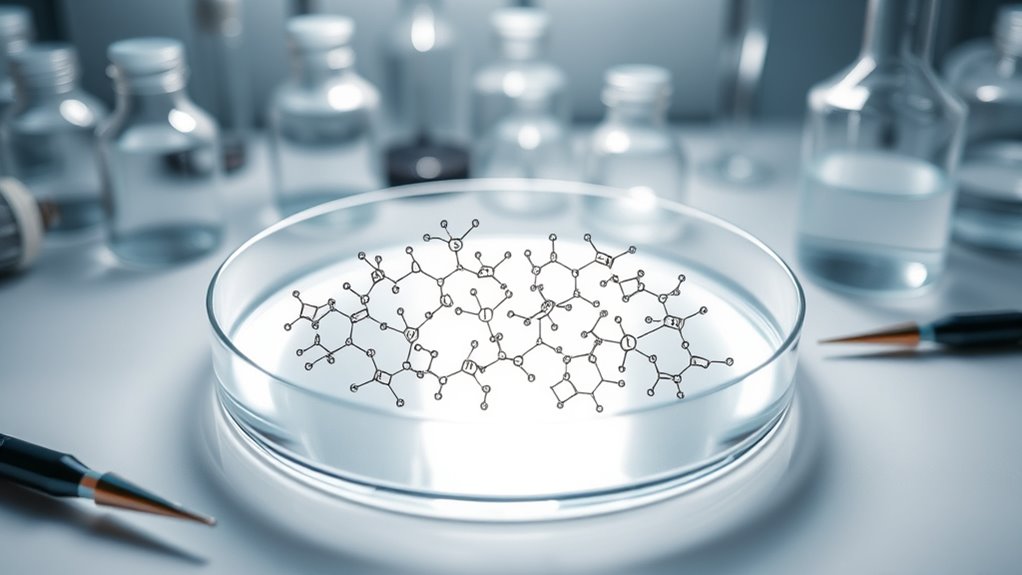
Have you ever wondered why some drugs work differently despite having similar chemical structures? The answer lies in their chirality—that subtle property where molecules exist as mirror images, known as enantiomers. These enantiomers can have vastly different effects in the body, with one often being therapeutic and the other causing side effects or being inactive. This phenomenon makes understanding and controlling chirality indispensable in drug development. Enantioselective catalysis plays a pivotal role here, allowing chemists to synthesize a specific enantiomer with high precision. By using chiral catalysts, you can steer reactions to favor the formation of the desired mirror image, increasing efficiency and reducing unwanted byproducts. This approach not only improves drug efficacy but also minimizes potential toxicity, making treatments safer for patients.
Enantioselective catalysis ensures the production of the right mirror image for safer, more effective drugs.
To guarantee the correct enantiomer dominates, stereochemical analysis becomes essential. This process involves examining the three-dimensional arrangement of atoms within the molecules to confirm their stereochemistry. Techniques such as chiroptical methods—like optical rotation and circular dichroism—help you identify the enantiomeric purity of your compounds. Accurate stereochemical analysis ensures that the synthesized drug is consistent and meets strict regulatory standards, which is critical for both safety and effectiveness. Without proper analysis, there’s a risk of administering a mixture of enantiomers, which could reduce therapeutic benefits or introduce adverse effects.
In practical terms, mastering enantioselective catalysis and stereochemical analysis means you can produce drugs that are not only more effective but also more predictable. This precision is increasingly important as the pharmaceutical industry moves toward personalized medicine, where specific enantiomers could be tailored to individual patient needs. Additionally, advances in chiral technology have made these processes more sustainable, reducing waste and energy consumption during synthesis. As a result, you’re better equipped to develop new chiral drugs that meet regulatory requirements and deliver maximum benefits.
Ultimately, understanding how enantioselective catalysis influences the stereochemical outcome of drug synthesis and how to analyze enantiomeric purity is fundamental. It empowers you to design safer, more effective medications, recognizing that the subtle differences in molecular architecture can have profound impacts on health. This combination of precise synthesis techniques and thorough analysis is transforming pharmaceutical research, ensuring that each drug not only works but does so with the highest possible safety profile. Additionally, chiral technology advancements are making these processes more accessible and sustainable for researchers worldwide.
Frequently Asked Questions
How Do Chiral Drugs Impact Personalized Medicine?
Chiral drugs notably impact personalized medicine by accounting for genetic variability among patients. You can tailor treatments more effectively because the enantiomers of these drugs may have different biological activities, leading to better outcomes and fewer side effects. By understanding how each person’s genetics influence drug response, you can customize therapies, ensuring that patients receive the most suitable enantiomeric form for their unique biological makeup.
What Are the Latest Techniques in Enantioselective Synthesis?
You should explore the latest techniques like enantioselective catalysis and asymmetric reduction, which enable you to produce specific enantiomers with high precision. These methods often involve chiral catalysts or reagents that guide the synthesis process, resulting in fewer byproducts and increased purity. Staying updated with advancements in metal-based catalysts and biocatalysis can help you achieve more efficient and sustainable enantioselective synthesis in your research.
How Is Chiral Purity Measured in Pharmaceutical Quality Control?
Imagine you’re testing a new drug for purity. You use chiral chromatography to separate enantiomers and measure their proportions precisely. Additionally, you assess optical rotation, which indicates the degree of chirality. These techniques help you determine chiral purity accurately, guarantee the drug meets quality standards. By combining chiral chromatography and optical rotation, you can confidently verify the enantiomeric excess and ensure pharmaceutical safety and efficacy.
Are There Any Environmental Concerns With Chiral Drug Manufacturing?
Yes, there are environmental concerns with chiral drug manufacturing. You need to take into account the environmental impact of the process, including the generation of manufacturing waste, which may contain unwanted enantiomers or hazardous chemicals. Proper waste management and greener synthesis methods can help minimize these issues, reducing pollution and ecological harm. By adopting sustainable practices, you can lessen the negative effects of chiral drug production on the environment.
What Are Future Trends in Chiral Drug Development Research?
Did you know that the global chiral drug market is projected to reach $150 billion by 2028? You’ll see future research focus on advancements in computational modeling, which streamline drug design, and the development of novel chiral catalysts that improve enantioselectivity. These innovations aim to make synthesis more efficient, cost-effective, and environmentally friendly, ultimately leading to safer, more targeted medications with fewer side effects.
Conclusion
So, next time you pop a pill, remember—you’re trusting a tiny chiral wonder to do its magic. Thanks to enantioselective synthesis and analysis, we’ve turned the science of getting it just right into a blockbuster hit. Who knew that the secret to better medicines was all about steering molecules the right way? So, cheers to chemistry—making sure your drugs aren’t just drugs, but precisely the right drugs. Cheers to science, indeed!