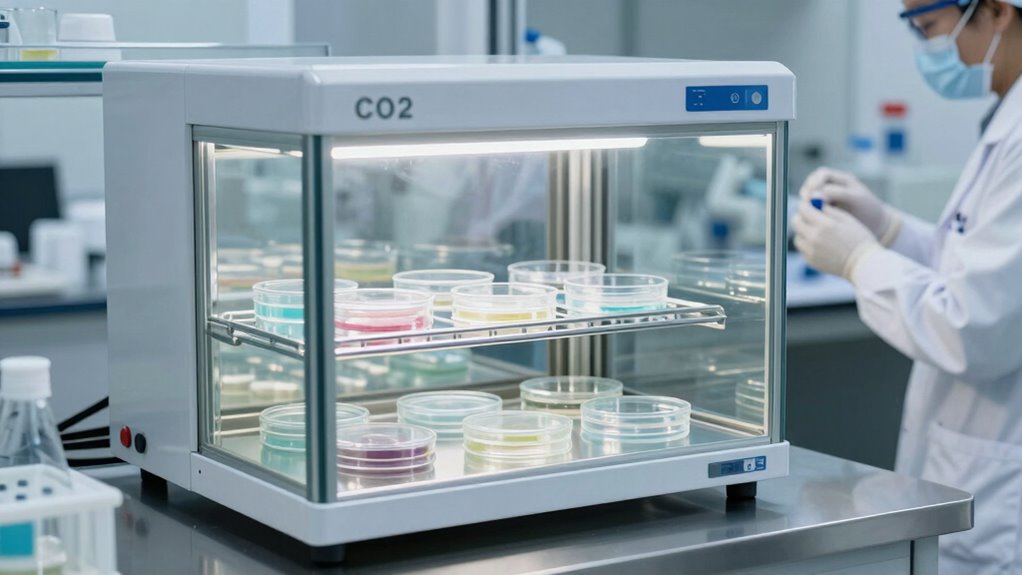
To prevent contamination in your CO2 incubator, follow a strict routine of sterilizing all tools and surfaces regularly, using autoclaving or chemical disinfectants, and practicing sterile techniques throughout handling. Keep the incubator environment clean by maintaining proper temperature, humidity, and filter checks, and limit external airflow disruptions. Consistently monitor conditions and respond to any signs of contamination quickly. Staying diligent with these steps guarantees your cultures stay safe—discover key tips to strengthen your routine further.
Key Takeaways
- Regularly disinfect and sterilize incubator interior surfaces, seals, and filters to prevent microbial buildup.
- Maintain strict sterile techniques during handling, including glove use and working within laminar flow hoods.
- Monitor environmental parameters continuously and address deviations immediately to minimize contamination risks.
- Routinely inspect and replace incubator seals and filters to ensure a sealed, contamination-free environment.
- Keep detailed records of sterilization cycles, maintenance, and environmental checks for traceability and quality control.
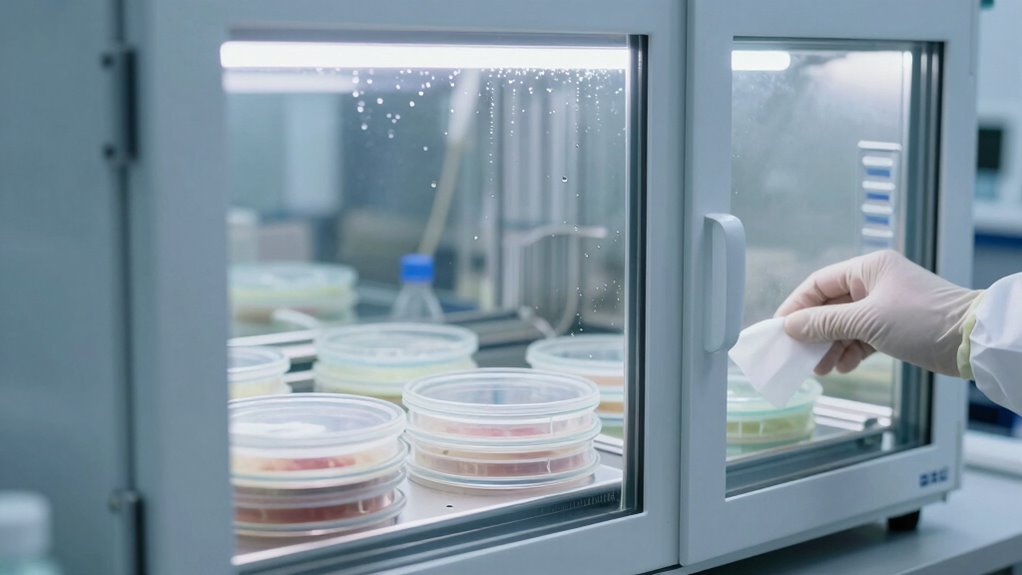
Contamination in CO2 incubators can substantially compromise cell cultures and experimental results. When working in such sensitive environments, it’s essential to maintain strict sterile techniques to prevent microbial intrusion. You should always start by thoroughly cleaning your workspace and ensuring that all surfaces and equipment are disinfected before handling any cell cultures. This step minimizes the risk of introducing contaminants from the environment or your tools. Additionally, adopting proper sterile techniques—like wearing gloves, lab coats, and masks—creates a barrier that prevents accidental transfer of microbes from your skin or clothing to the incubator and its contents.
Always disinfect surfaces and use sterile techniques to prevent contamination in CO2 incubators.
Equipment sterilization is another critical factor in maintaining a contaminant-free environment. Regularly sterilize all tools, such as pipettes, forceps, and culture vessels, using appropriate methods like autoclaving or chemical sterilants. Never reuse contaminated equipment; instead, sterilize it between uses to eliminate any potential microbial presence. When placing items into the incubator, ensure they are sterile and handled with care to avoid contamination. Using sterile gloves and working within a laminar flow hood during preparation can *considerably* reduce the chance of introducing bacteria, fungi, or mycoplasma. Moreover, implementing routine monitoring of sterilization processes ensures ongoing effectiveness and early detection of potential issues.
It’s also *crucial* to monitor the integrity of your sterilization procedures. Confirm that autoclaves are functioning correctly and that sterilants are effective. Keep records of sterilization cycles and regularly check for any signs of failure, such as residual contamination or equipment malfunction. If you notice any irregularities, address them immediately to prevent contaminant spread inside the incubator. *Furthermore*, make it a routine to disinfect and clean the interior surfaces of your incubator periodically using appropriate disinfectants that do not damage the equipment but are effective against common microbes.
Properly managing your incubator environment extends beyond sterilization. Ensure that your incubator is kept in a clean, stable environment with minimal foot traffic and airflow disruptions. Regularly check the incubator’s seals and filters, replacing them as needed, to prevent outside contamination from entering. Maintain consistent temperature, humidity, and CO2 levels, as fluctuations can weaken the system’s defenses against microbial invasion. Incorporating monitoring equipment can help detect environmental deviations early and maintain optimal conditions for cell culture integrity.
Frequently Asked Questions
How Often Should I Replace the Incubator’s HEPA Filters?
You should replace your incubator’s HEPA filters every 6 to 12 months to guarantee ideal filter maintenance and contamination prevention. Regularly check for signs of clogging or reduced airflow, which indicate it’s time for a change. Proper filter maintenance minimizes contamination risks, keeps your incubator functioning effectively, and maintains a sterile environment for your samples. Don’t wait too long—timely filter replacement is key to reliable, contamination-free results.
What Are the Signs of Early Contamination in a CO2 Incubator?
You should look for contamination indicators like unexpected changes in culture appearance, unusual odors, or increased contamination rates. Early detection is key, so regularly monitor your incubator’s environment and culture conditions. If you notice any inconsistencies or suspect contamination indicators, act swiftly to isolate affected samples and perform thorough cleaning. Keeping a vigilant eye helps prevent widespread contamination and guarantees your incubator remains a reliable environment for your cell cultures.
Can Using Disinfectants Damage the Incubator’s Components?
Like a knight facing a dragon, you must be cautious. Disinfectant residues can harm your incubator’s components if they’re not compatible with the materials. Always check material compatibility before using disinfectants, and verify thorough rinsing to prevent residue buildup. Using harsh disinfectants or neglecting proper cleaning can cause damage, reducing your incubator’s lifespan and effectiveness. Stick to recommended cleaning protocols to keep your equipment safe and reliable.
Is It Necessary to Sterilize Equipment Before Placing Inside the Incubator?
Yes, you should sterilize equipment before placing it inside the incubator. Following proper sterilization protocols helps prevent contamination and guarantees reliable results. Regular equipment maintenance, including sterilization, minimizes the risk of introducing microbes that can compromise your samples. By adhering to these protocols, you maintain a clean environment, protect your incubator’s components, and promote ideal conditions for your experiments. Always verify your sterilization methods align with manufacturer recommendations.
How Do Environmental Factors Influence Contamination Risks?
Environmental factors like airflow patterns and humidity control play a vital role in contamination risks. Poor airflow can create stagnant zones where microbes thrive, while uncontrolled humidity fosters mold and bacteria growth. You should guarantee proper airflow circulation and maintain ideal humidity levels to minimize contamination. By actively managing these factors, you create a cleaner, safer environment inside your incubator, reducing the chances of unwanted microbial intrusion and ensuring reliable experimental results.
Conclusion
Remember, maintaining your CO2 incubator is like tending a garden—consistency keeps unwanted weeds at bay. By following proven prevention routines, you protect your precious samples from contamination, much like a knight guarding a fortress. Stay vigilant, clean regularly, and don’t let complacency be your undoing. With these habits, you’ll keep your incubator pristine, ensuring your research thrives. After all, as the saying goes, “A stitch in time saves nine”—so act now to keep contamination at bay.