HEPA filters in biolabs are designed to trap 99.97% of particles as small as 0.3 microns, but this high efficiency depends on proper airflow and regular maintenance. If airflow isn’t well-managed, particles can bypass or settle, reducing filter effectiveness. Ensuring tight seals and timely filter replacements are key to maintaining sterile conditions. To understand how airflow and maintenance impact this efficiency, keep exploring the critical factors behind ideal HEPA filtration.
Key Takeaways
- “99.97%” indicates HEPA filters remove 99.97% of airborne particles measuring 0.3 microns during proper operation.
- The 0.3-micron size is considered the most penetrating particle, representing the filter’s worst-case scenario.
- Effective airflow management ensures HEPA filters achieve their specified particle removal efficiency.
- Regular maintenance and proper sealing are essential to maintain the filter’s high filtration performance.
- The high removal efficiency supports sterile environments crucial for biolabs and contamination control.
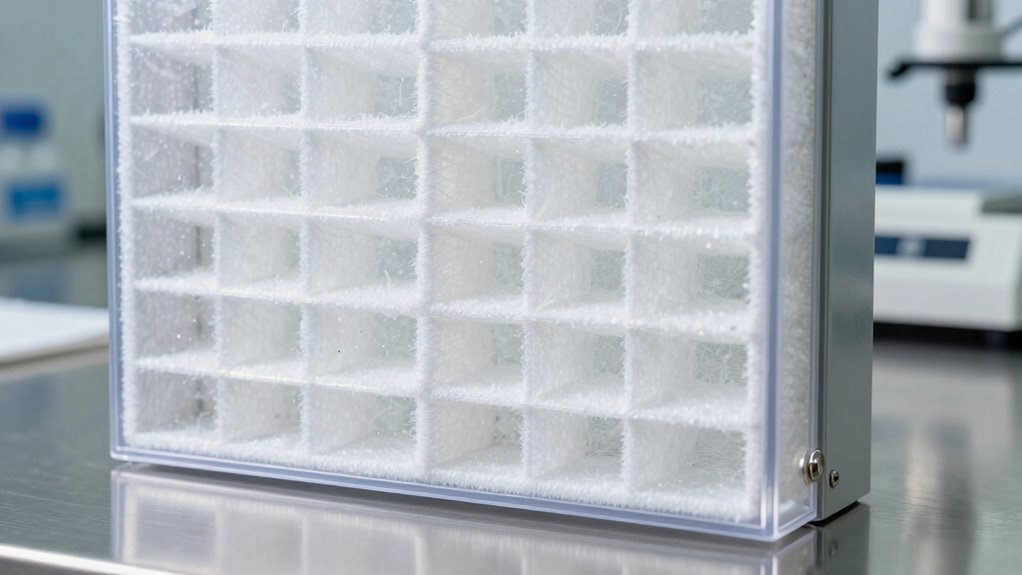
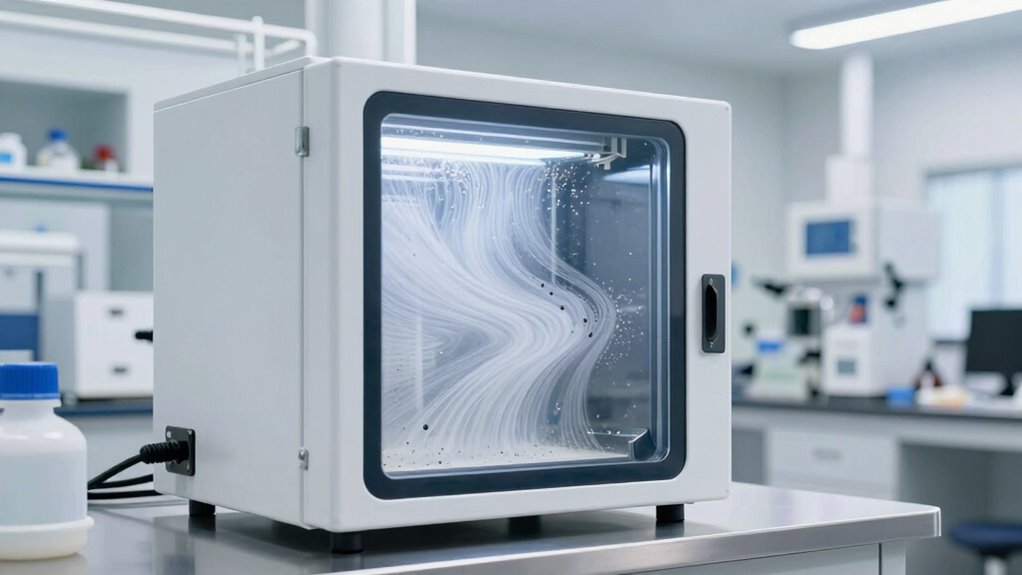
Have you ever wondered how some air purifiers trap tiny particles so effectively? It all comes down to understanding airflow dynamics and how filters are designed to maximize their efficiency. In a biolab setting, where maintaining a sterile environment is essential, knowing how HEPA filters work helps you appreciate the importance of proper operation and maintenance. Airflow dynamics play a critical role here; they determine how air moves through the filtration system. If the airflow isn’t properly managed, even the best filter can become less effective. Good airflow ensures that contaminated air is swiftly pulled into the filter and clean air is evenly circulated back into the room. This steady, directed movement of air prevents dead zones where particles could settle or bypass the filter altogether. When airflow is optimized, the filter’s ability to trap 99.97% of particles as small as 0.3 microns becomes more dependable, providing the high level of purification required in biolabs. It’s essential to maintain consistent airflow by regularly checking fan speeds, replacing filters when they become clogged, and ensuring that the system isn’t obstructed by dust or debris. Proper filter maintenance directly impacts the filter’s performance. Over time, filters collect particles, and if they aren’t replaced or cleaned as recommended, airflow can diminish, reducing the filter’s ability to trap harmful particles effectively. Neglecting filter maintenance not only compromises air quality but can also strain the system, leading to higher energy consumption and potential equipment failure. In a biolab, where every particle counts, staying on top of filter maintenance is non-negotiable. You should establish a routine inspection schedule, replacing filters based on manufacturer guidelines and operational conditions. Monitoring airflow rates with gauges or sensors can alert you to when filters are becoming clogged, preventing a drop in filtration efficiency. Proper maintenance also involves ensuring that the filter seals tightly within its housing so that unfiltered air doesn’t bypass the filter altogether. When you keep airflow dynamics optimized and maintain your filters diligently, you maximize the HEPA filter’s capacity to capture microscopic particles. This means safer, cleaner air in your lab, reducing the risk of contamination or exposure to harmful airborne agents. Understanding airflow dynamics helps you implement more effective filtration strategies and ensures system longevity. Ultimately, understanding these elements helps you sustain a controlled environment where precision and safety are paramount. By paying attention to airflow and proactively maintaining filters, you ensure your HEPA filtration system performs at its best, giving you peace of mind that the air in your biolab remains as pure as it needs to be.
Frequently Asked Questions
How Often Should HEPA Filters Be Replaced in Biolabs?
You should replace HEPA filters in biolabs every 12 to 24 months, depending on factors like filter lifespan and usage. Regularly monitor airflow and pressure gauges to detect when the filter’s efficiency drops. If you notice decreased airflow or increased pressure, it’s time for replacement. Proper maintenance ensures peak filtration, so follow manufacturer recommendations and your lab’s protocols for replacement frequency to keep your environment safe and sterile.
Can HEPA Filters Remove Viruses as Small as 0.1 Microns?
HEPA filters can remove viruses as small as 0.1 microns, but viral penetration depends on factors like airflow and filter integrity. While they’re highly effective, small viruses may sometimes bypass filters if they’re damaged or nearing the end of their lifespan. To guarantee maximum protection, you should monitor your filter’s lifespan closely and replace it promptly when efficiency declines, preventing compromised viral filtration in your lab.
What Maintenance Is Required to Ensure HEPA Filter Efficiency?
Think of your HEPA filter as a vigilant gatekeeper—you need to keep its defenses strong. Regularly check filter integrity by inspecting for tears or clogging, and replace filters as recommended by the manufacturer. Use airflow monitoring to detect any drops in performance, indicating it’s time for maintenance. This proactive approach guarantees your HEPA filter stays efficient, trapping even the tiniest particles and viruses, keeping your lab environment safe.
Are HEPA Filters Effective Against Chemical Vapors?
HEPA filters aren’t effective against chemical vapors because they mainly trap particles through mechanical filtration, not chemical adsorption. For vapor filtration, you need activated carbon or specialized chemical filters that adsorb vapors and gases. Relying solely on HEPA filters won’t protect you from chemical vapors, so incorporate activated carbon filters into your setup for effective vapor filtration and chemical protection.
How Do Environmental Conditions Affect HEPA Filter Performance?
While environmental conditions can influence HEPA filter performance, maintaining proper airflow patterns and humidity control helps guarantee peak efficiency. Poor airflow may cause uneven distribution, reducing filtration effectiveness, while high humidity can lead to moisture buildup that hampers filter lifespan. You should regularly monitor these factors, making adjustments as needed, to keep your HEPA filters working at their best. Proper environmental management preserves the filter’s ability to protect your lab environment.
Conclusion
Understanding HEPA filtration is key to maintaining a safe biolab environment. That “99.97%” figure means you’re effectively removing nearly all dangerous particles, giving you peace of mind. Remember, “a chain is only as strong as its weakest link,” so make sure your filters are well-maintained. By knowing the basics, you can confidently keep your lab safe and compliant. Stay vigilant, stay safe—because in this field, safety isn’t just a rule, it’s your best tool.