
Advances in nanotechnology and chemical modifications are revolutionizing oral biologic delivery by improving permeation through the gastrointestinal tract. You can now benefit from nanoparticle carriers that protect biologics from acid and enzymes, while surface modifications enhance targeting and absorption. These innovations help biologics withstand harsh GI conditions and reach systemic circulation more effectively. To discover how these chemistry breakthroughs are transforming therapies and what future options they enable, keep exploring these exciting developments.
Key Takeaways
- Chemical modifications, such as PEGylation or lipidation, enhance biologic stability and resistance to GI enzymatic degradation.
- Conjugation with polymers creates protective barriers, improving permeation and prolonging biologic activity during intestinal transit.
- Surface engineering of nanoparticles with targeting ligands or mucoadhesive molecules boosts mucosal adhesion and selective absorption.
- Innovative permeation enhancers temporarily open tight junctions or alter membrane properties to facilitate biologic translocation.
- Encapsulation within advanced nanoparticle carriers shields biologics from harsh GI conditions, improving bioavailability and systemic uptake.
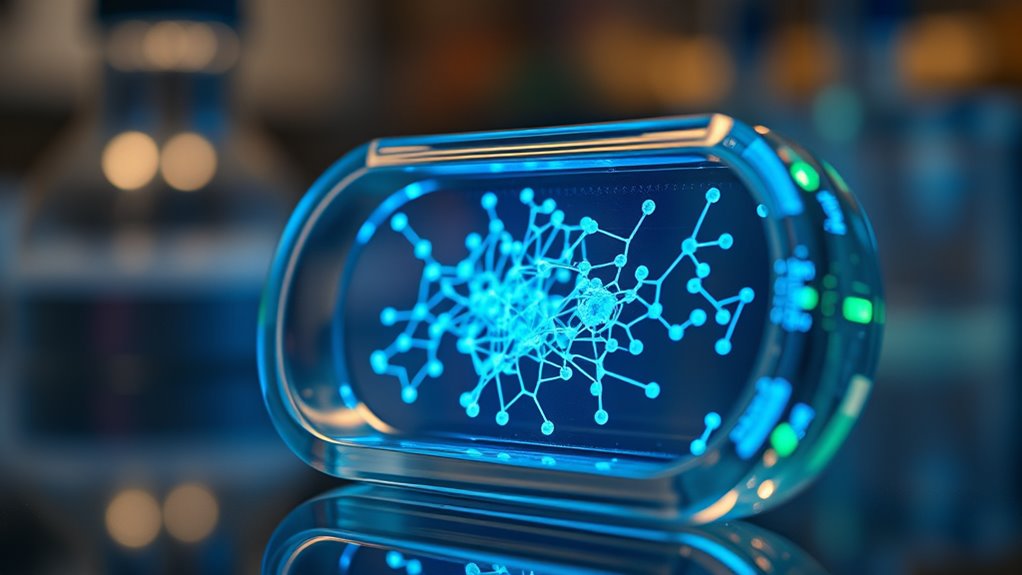
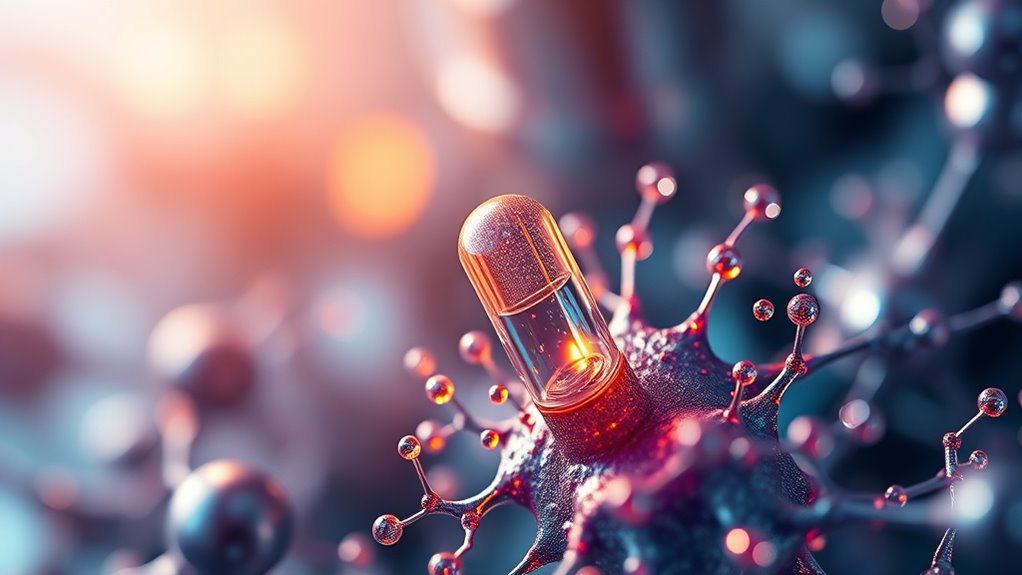
Oral biologics are a promising advancement in medicine, offering a convenient alternative to traditional injectable therapies. One of the key challenges in developing effective oral biologic drugs is ensuring they survive the harsh environment of the gastrointestinal (GI) tract and reach their targets intact. To tackle this, researchers are turning to innovative chemistry solutions, such as nanoparticle carriers, which can protect these sensitive molecules from degradation and enhance their absorption. These tiny carriers are designed to encapsulate biologic drugs, shielding them from enzymes and acid in the stomach, and facilitating their passage through the intestinal lining. By improving stability and permeability, nanoparticle carriers increase the likelihood that the biologic will reach systemic circulation in a functional form, bypassing the need for injections.
Another critical aspect is enzymatic stability. The GI tract is filled with enzymes meant to break down proteins and other complex molecules, which makes oral delivery of biologics particularly difficult. To address this, scientists are developing chemical modifications and protective formulations that enhance enzymatic stability. These include conjugating biologics with polymers or designing them to resist enzymatic attack, ensuring they remain active as they transit through the digestive system. When combined with nanoparticle carriers, these strategies create a robust system that not only shields the biologic from enzymatic degradation but also promotes its absorption through the intestinal mucosa. This dual approach markedly improves the bioavailability of oral biologics, making them more effective and reliable.
Furthermore, advances in chemistry are enabling the customization of nanoparticle surfaces to target specific tissues or cells, further increasing the efficiency of delivery. Surface modifications can help these carriers adhere to intestinal walls or interact with specific receptors, optimizing drug uptake. These innovations reduce the doses needed and minimize potential side effects, making treatments safer and more patient-friendly. As research progresses, the integration of nanoparticle carriers and enhanced enzymatic stability is shaping the future of oral biologics—transforming them from experimental concepts into practical, widely accessible therapies. This progress not only streamlines administration but also opens new possibilities for managing chronic conditions and complex diseases with greater ease and fewer injections. Essentially, chemistry innovations like nanoparticle carriers and stability enhancements are revolutionizing how biologics are delivered, moving towards a future where oral biologics become a standard and effective part of medical treatment.
Additionally, understanding the market dynamics and consumer needs is crucial for successful commercialization of these advanced delivery systems.
Frequently Asked Questions
How Do Oral Biologics Compare to Injectable Biologics in Efficacy?
Oral biologics can be just as effective as injectable ones if they overcome bioavailability challenges, which often limit absorption. You might find oral options more convenient, boosting patient compliance, but their efficacy depends on advances in permeation technologies. When these innovations succeed, oral biologics can deliver comparable therapeutic results, making treatment easier without sacrificing effectiveness. Your choice depends on balancing convenience with the ability to overcome bioavailability hurdles.
What Are the Main Challenges in Formulating Oral Biologics?
You face the challenge of protecting your biologics from a harsh, stomach-like environment, where chemical instability and enzymatic degradation threaten to break your product down. Formulating oral biologics requires creating a shield—using advanced coatings or stabilizers—that withstands these hostile conditions. You must also guarantee the drug passes through the intestinal lining efficiently, maintaining its activity despite the digestive system’s relentless assault.
How Does Permeation Enhancement Affect Biologic Stability?
Permeation enhancement can sometimes threaten biologic stability by disrupting cell membranes or altering the drug’s structure. You need to carefully select permeation mechanisms that maximize absorption while safeguarding stability. Techniques like using biocompatible carriers or controlled release systems help maintain stability. When done correctly, permeation enhancement ensures effective delivery without compromising the biologic’s integrity, leading to better therapeutic outcomes and minimized degradation during absorption.
Are There Any Approved Oral Biologics Currently on the Market?
Yes, there are approved oral biologics on the market. You’ll find that regulatory pathways like the FDA’s have facilitated their approval, boosting market adoption. These biologics, designed to survive the gastrointestinal environment, leverage innovative chemistry to enhance permeation. As a result, they’re increasingly accessible to patients seeking oral alternatives to injections, marking a significant advancement in biologic therapies and expanding treatment options across various medical fields.
What Future Technologies Could Revolutionize Oral Biologic Delivery?
Future technologies like nanoparticle carriers and mucoadhesive polymers could revolutionize oral biologic delivery. You’ll benefit from enhanced stability, targeted release, and improved absorption with these innovations. Nanoparticles protect biologics from degradation, while mucoadhesive polymers increase residence time in the gut. Together, they hold the potential to make oral biologics more effective, patient-friendly, and accessible, transforming treatment options across various medical fields.
Conclusion
In conclusion, oral biologics are revolutionizing medicine with groundbreaking chemistry innovations that tackle permeation challenges. You now have the power to access complex biologics conveniently and effectively, transforming treatment possibilities. These advancements are nothing short of miraculous, opening doors to cures once thought impossible. With continued innovation, you’ll witness a future where oral biologics become the gold standard, making traditional injections seem like relics of the past. Embrace this evolution—it’s truly a game-changer for healthcare worldwide.