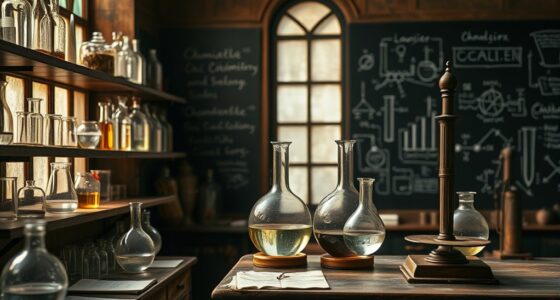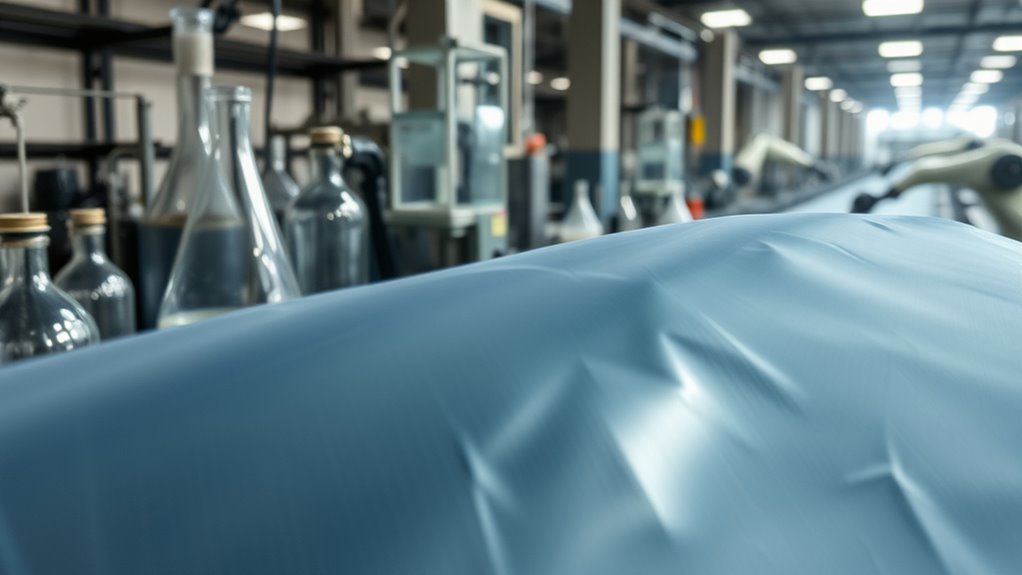

Discover how PVC evolved from a late 19th-century scientific curiosity into a essential, worldwide material. Initially explored for its vinyl compounds, it gained recognition for durability, chemical resistance, and ease of molding. Today, you’ll find it in construction, medical devices, and packaging, thanks to advances in manufacturing and chemistry. Its growth reflects ongoing efforts toward sustainability and innovation, showing how science transformed a lab discovery into a global commodity—stay tuned to explore this fascinating history further.
Key Takeaways
- PVC was discovered in the late 19th century as a scientific curiosity driven by interest in vinyl compounds.
- Advances in chemical research led to the development of durable, chemically resistant, and moldable PVC variants.
- PVC’s versatility made it widely applicable in construction, medical, and industrial sectors due to its stability and reliability.
- Large-scale, low-cost production facilitated global adoption, with ongoing innovations emphasizing sustainability and recycling.
- From a laboratory novelty, PVC evolved into an essential material shaping modern industries worldwide.

Have you ever wondered how PVC, or polyvinyl chloride, became one of the most widely used plastics in the world? Its journey from a scientific curiosity to a versatile, essential material is fascinating. Initially discovered in the late 19th century, PVC’s development was driven by curiosity about vinyl compounds. But it wasn’t until the 20th century that its true potential was realized, thanks to advances in chemical properties and manufacturing techniques. PVC’s chemical properties, such as its durability, chemical resistance, and versatility, made it ideal for countless industrial applications. Unlike many other plastics, PVC is resistant to acids, alkalis, and weathering, which means it can withstand harsh environments without degrading. Its fire-retardant nature and ease of molding further boosted its appeal, making it suitable for everything from piping and window frames to medical devices and packaging.
As industries evolved, PVC found a multitude of applications that transformed modern life. Its industrial applications are broad and varied, ranging from construction materials to electrical wiring insulation. In construction, PVC’s chemical stability and strength make it the go-to choice for pipes, siding, and flooring. These products benefit from PVC’s resistance to corrosion and weathering, providing long-lasting solutions that reduce maintenance costs. In the electrical sector, PVC’s insulating properties help prevent short circuits and electrical failures, highlighting its importance in ensuring safety and reliability. Medical applications also emerged as a significant segment; PVC is used for blood bags, intravenous tubing, and medical packaging because it can be sterilized and is biocompatible. Moreover, the affordability and ease of processing PVC contributed to its rapid adoption across various industries. Advances in production techniques and material modifications have further expanded PVC’s industrial versatility and sustainability options. The ability to modify its chemical makeup allows manufacturers to produce different types of PVC, such as rigid or flexible variants, tailored to specific needs. This adaptability has cemented PVC’s status as a global commodity. Its widespread use is also driven by its cost-effectiveness—PVC can be produced in large quantities at relatively low prices, making it accessible worldwide. As environmental concerns have grown, industries have also worked to develop more sustainable methods of producing and recycling PVC, ensuring its relevance for future generations. From a scientific curiosity in labs to a staple of everyday life, PVC’s evolution demonstrates how understanding chemical properties and industrial applications can turn a simple plastic into an indispensable resource for the modern world.
Frequently Asked Questions
How Has PVC Impacted Environmental Sustainability Efforts?
PVC impacts environmental sustainability efforts by presenting significant sustainability challenges due to its non-biodegradable nature and toxic additives. You might find it difficult to fully minimize its environmental impact, especially when disposal leads to pollution and health concerns. While PVC offers durability and versatility, its production and waste management pose ongoing challenges for sustainability. Addressing these issues requires innovation in recycling and safer material formulations, helping you reduce its overall environmental footprint.
What Are the Health Risks Associated With PVC Production?
Imagine PVC production as a dangerous dance with toxic shadows. You should know PVC toxicity poses health risks, especially during manufacturing. Worker exposure to harmful chemicals like dioxins and vinyl chloride can lead to respiratory issues, skin irritations, and even long-term cancers. If safety measures aren’t strict, those involved in production risk serious health problems, making it essential to monitor and control exposure to keep everyone safe from these hidden hazards.
How Is PVC Recycling Being Improved Worldwide?
You can see that PVC recycling is improving worldwide through innovative recycling methods and global initiatives. Recycling innovations like chemical recycling and improved sorting technology help recover more PVC efficiently. Global initiatives promote standardization and collaboration across industries, increasing recycling rates and reducing environmental impact. These efforts encourage manufacturers to design for recyclability and support policies that foster sustainable PVC usage and recycling practices globally.
What Are Innovative Applications of PVC Today?
Imagine turning a simple plastic pipe into a flexible, solar-powered greenhouse—you’re witnessing cutting-edge applications of PVC today. Innovations like PVC used in smart packaging, medical devices, and even wearable tech showcase its versatility. These PVC innovations are pushing boundaries, making products more sustainable and functional. As more companies embrace these advancements, PVC continues to evolve, proving it’s not just a basic material but a key player in future technology.
How Does PVC Compare to Alternative Materials Economically?
You’ll find that PVC is often more economical than alternative materials due to its low raw material costs and versatile manufacturing processes. Its cost comparison favors PVC for many applications, especially where durability and flexibility are needed. While some eco-friendly options may cost more upfront, PVC generally offers a budget-friendly choice, making it a popular material in construction, healthcare, and packaging industries.
Conclusion
As you reflect on PVC’s journey, it’s clear how a humble lab discovery gently blossomed into a essential, yet quietly influential, part of our world. Its story reminds us that innovation often starts in the shadows, quietly shaping our everyday lives without grand fanfare. While PVC’s presence is everywhere, its true significance lies in the subtle ways it supports and sustains our modern existence, quietly weaving itself into the fabric of our daily routine.