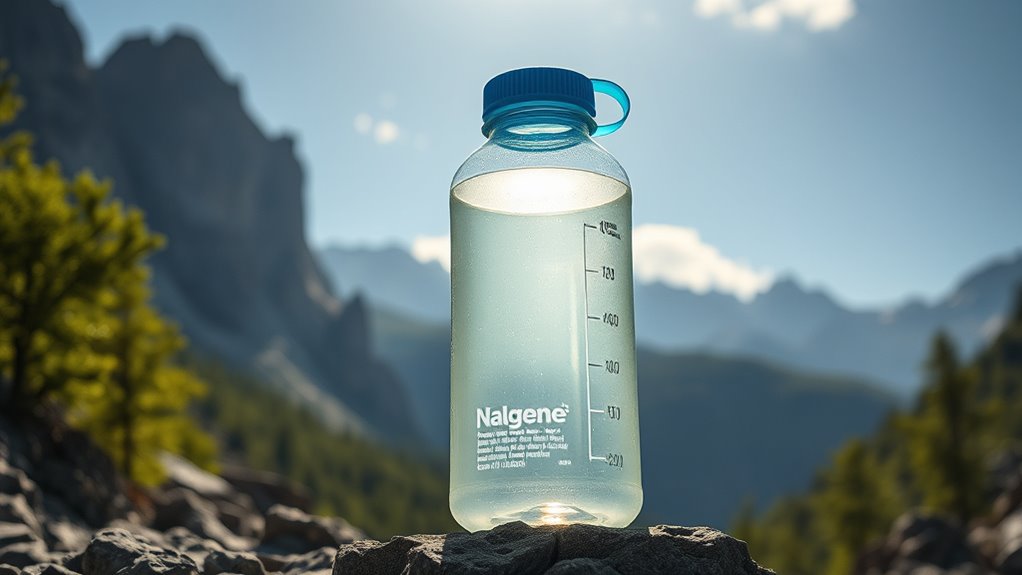

Nalgene bottles evolved from simple lab containers to durable outdoor gear through material and design innovations. They moved from basic plastics to BPA-free, high-quality materials like Tritan, making them stronger, clearer, and safer. Their design shifted from utilitarian to ergonomic, with features like leak-proof caps and wide mouths. These changes increased durability and appeal, turning them into trusted, versatile hydration tools for hikers and adventurers. Discover how these innovations continue to shape their journey beyond the lab.
Key Takeaways
- Transitioned from basic lab containers to durable, BPA-free plastics like Tritan for outdoor and everyday use.
- Improved design features such as wide-mouth openings and leak-proof caps enhanced practicality and user convenience.
- Material advancements increased strength, chemical resistance, and safety, enabling bottles to withstand extreme environments.
- Expanded appeal with various sizes, colors, and customizable options made bottles popular among hikers, travelers, and students.
- Continuous innovation solidified Nalgene’s reputation as a reliable, long-lasting hydration solution from lab benches to hiking trails.
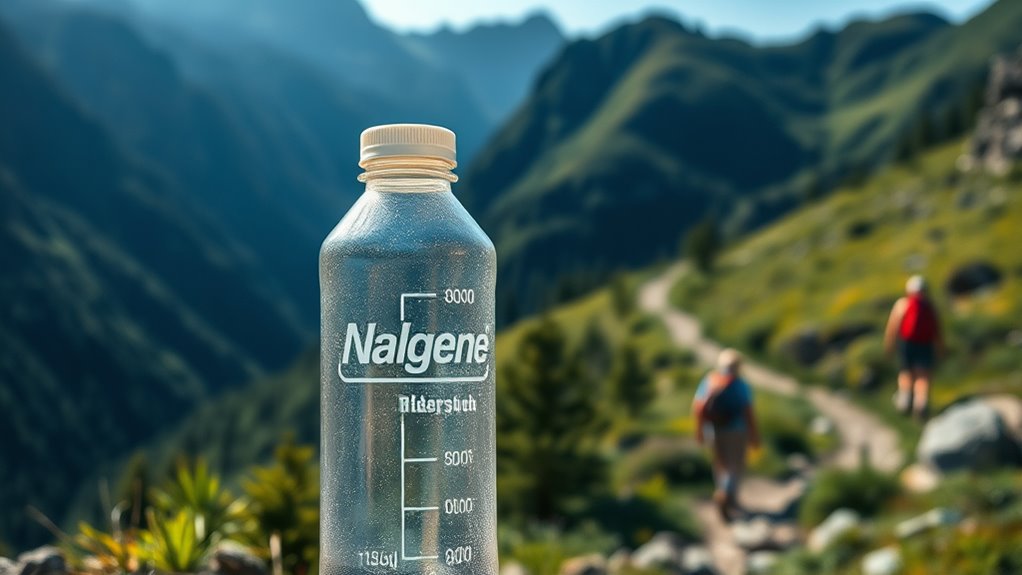
Have you ever wondered how Nalgene bottles transformed from simple plastic containers into the durable, versatile hydration gear we see today? It all begins with material innovation. In the early days, plastic bottles were basic, often flimsy, and prone to cracking. But as scientists and designers sought better solutions, they developed high-quality, BPA-free plastics like polycarbonate and Tritan. These materials offered remarkable strength, clarity, and chemical resistance, making bottles more reliable and safer for everyday use.
Material innovation transformed plastic bottles into durable, safe, and reliable hydration gear.
This shift in materials was a game-changer, enabling Nalgene to produce bottles that could withstand rough handling, extreme temperatures, and repeated use without breaking down or deforming. As a result, what started as a simple laboratory container became a trusted companion for outdoor enthusiasts and adventurers.
Alongside material innovation, there was a significant design transformation. Early Nalgene bottles maintained a utilitarian look, primarily focused on function. But as their popularity grew beyond labs and industrial settings, the design evolved to meet the needs of hikers, students, and travelers.
The introduction of the iconic wide-mouth opening made filling, cleaning, and adding ice cubes much easier. The sturdy, leak-proof caps and ergonomic shapes enhanced portability and usability. These improvements weren’t just about aesthetics—they made the bottles more practical and user-friendly, encouraging people to replace disposable bottles with a reusable alternative.
The design transformation also included making the bottles lighter and more compact without sacrificing durability, so they fit comfortably in backpacks and cup holders.
Over time, Nalgene’s focus on material innovation and design transformation fostered a product that’s both rugged and stylish. They introduced different sizes, colors, and even customizable features, appealing to a broad audience. This evolution has helped solidify Nalgene’s reputation as a dependable hydration solution that’s perfect for everything from lab experiments to mountain summits.
The combination of innovative materials and thoughtful design has allowed Nalgene bottles to stay relevant for decades, adapting to changing needs and lifestyles. Today, they’re more than just containers—they’re symbols of durability, sustainability, and adventure. Incorporating advanced plastics technology has further enhanced their resilience and safety.
You can carry one confidently, knowing it’s built to last, whether you’re on a hike, at work, or just running errands. Their journey from lab bench to hiking trail is a testament to how continuous innovation can transform a simple idea into a trusted, lifelong companion.
Frequently Asked Questions
What Materials Are Used in Modern Nalgene Bottles?
Modern Nalgene bottles are made from BPA-free plastics, ensuring safe, durable, and lightweight hydration options. They often feature Tritan or Eastman Tritan copolyester, which is known for its clarity and robustness.
These bottles are produced through sustainable manufacturing practices, reducing environmental impact. You can trust that your Nalgene is both eco-friendly and safe, making it ideal for daily use or outdoor adventures without compromising on quality or sustainability.
Are Nalgene Bottles Eco-Friendly and Recyclable?
Like a river flowing toward a greener future, Nalgene bottles are designed with eco-friendliness in mind. They’re generally considered recyclable and made through sustainable manufacturing practices.
Many companies participate in recycling initiatives, encouraging you to reuse and recycle your bottles.
While not entirely biodegradable, their durability means you can use them for years, reducing waste.
How Do Nalgene Bottles Compare to Other Hydration Options?
When comparing Nalgene bottles to other hydration options, you’ll notice their exceptional plastic durability, making them resistant to cracks and breakage. They’re lightweight enough for easy carrying, yet sturdy enough for rugged outdoor use.
Unlike thinner plastic bottles, Nalgene’s design offers a better balance of durability and weight, making them an ideal choice for active lifestyles. Their long-lasting build often outperforms disposable options, giving you a reliable, eco-friendly hydration solution.
Can Nalgene Bottles Withstand Extreme Temperatures?
You’ll find that Nalgene bottles excel in temperature resilience, handling both hot and cold liquids without cracking or warping. Their durable plastic offers great thermal insulation, keeping drinks at the desired temperature longer.
While they’re not designed for extreme temperature fluctuations like specialized thermal bottles, they perform well in most outdoor conditions. So, you can confidently take your Nalgene on adventures, knowing it can withstand a range of temperatures without losing integrity.
What Innovations Are Upcoming in Nalgene Bottle Design?
Imagine smart insulation that keeps your drinks perfectly hot or cold, and custom branding that makes your bottle uniquely yours.
Upcoming innovations in Nalgene design focus on integrating smart insulation, enhancing temperature control, and offering customizable options for personal or promotional branding.
You’ll soon experience bottles that adapt to your lifestyle, blending advanced technology with personal expression to elevate your hydration game on every adventure.
Conclusion
From lab bench to hiking trail, Nalgene bottles have traveled a remarkable journey, transforming from fragile glass containers into rugged companions that withstand life’s adventures. They’ve become as reliable as an old friend, ready to face any challenge you throw at them. So next time you take a sip on a mountain summit or during a busy day, remember—these bottles are like steadfast guardians, standing tall and proud, silently supporting your journey every step of the way.