
Stephanie Kwolek transformed safety gear by inventing Kevlar, a groundbreaking, lightweight fiber with incredible strength. Her work pushed the boundaries of polymer science, creating fibers stronger and more reliable than traditional materials. Kevlar’s molecular structure allows it to absorb energy and stop bullets effectively, revolutionizing protective equipment like bulletproof vests and helmets. Her dedication changed safety standards forever—if you want to discover how her scientific curiosity led to this remarkable invention, keep exploring.
Key Takeaways
- Stephanie Kwolek was a chemist at DuPont who invented Kevlar, a high-strength synthetic fiber.
- Her research involved manipulating polymer chains to create fibers stronger and lighter than traditional materials.
- Kevlar’s molecular structure provides exceptional tensile strength, making it ideal for protective gear like bulletproof vests.
- The invention revolutionized safety equipment, enabling more effective, lightweight protective gear for law enforcement and military.
- Kwolek’s pioneering work significantly advanced fiber technology, impacting safety, industrial applications, and inspiring future material innovations.
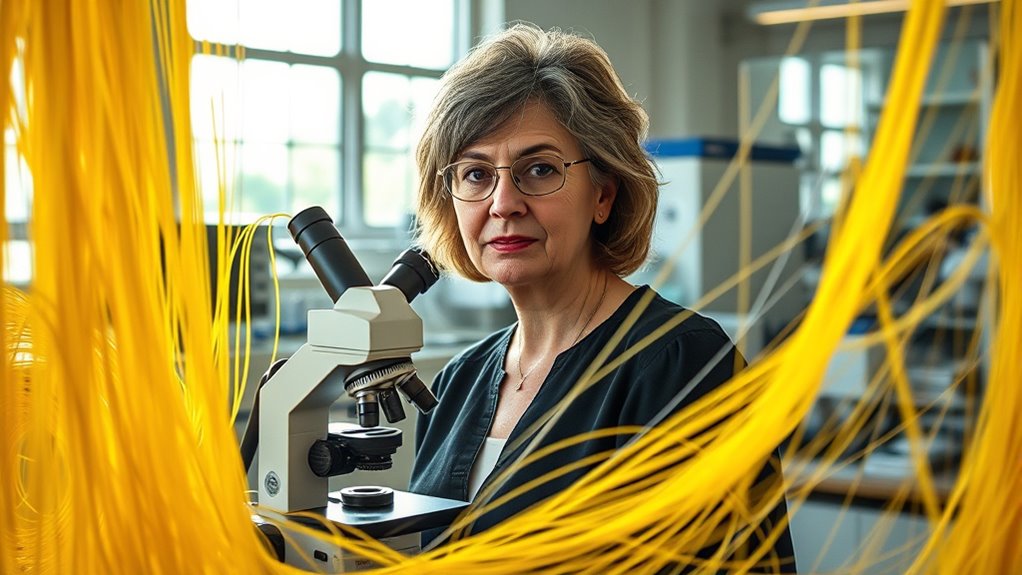
Stephanie Kwolek’s groundbreaking work in polymer chemistry led to the invention of Kevlar, a material that revolutionized safety equipment. You might not realize it, but her contributions markedly advanced fiber innovation, making protective gear stronger, lighter, and more reliable than ever before. When you think about modern safety advancements—whether in bulletproof vests, helmets, or even sports gear—Kevlar’s impact is undeniable. Kwolek’s discovery changed the game, offering a new level of security that was previously unattainable with traditional fibers.
You see, before Kevlar, most protective materials were bulky and cumbersome, limiting mobility and comfort. Kwolek’s insight into polymer solutions allowed her to develop a synthetic fiber with an unmatched combination of strength and flexibility. This innovation was driven by her keen understanding of chemistry and her relentless pursuit of better materials. As you explore the evolution of safety equipment, you’ll notice how fiber innovation like Kevlar has transformed protective gear from heavy, uncomfortable armor into lightweight, effective defense. Her work exemplifies how scientific curiosity and persistence can lead to breakthroughs that benefit society at large.
Before Kevlar, protective gear was bulky; her innovations made safety equipment lighter, stronger, and more comfortable.
What makes Kevlar so revolutionary is its molecular structure. You might imagine it as a web of incredibly strong, tightly bonded fibers woven together, providing exceptional tensile strength. Its ability to absorb and disperse energy means that it can stop bullets and shrapnel more effectively than traditional materials. When you wear a Kevlar vest, you’re experiencing the culmination of years of research aimed at enhancing safety advancements. It’s not just about stopping projectiles; it’s about saving lives and reducing injuries in dangerous situations.
Kwolek’s contribution also highlights how fiber innovation can push the boundaries of safety technology. Her work showed that by manipulating polymer chains at the molecular level, you could create materials with properties that surpass natural fibers like cotton or nylon. This shift opened doors for numerous applications beyond just personal safety—ranging from industrial uses to aerospace. Her pioneering spirit and scientific rigor continue to inspire the development of new, safer materials today.
In essence, your understanding of safety advancements is enriched by Kwolek’s legacy. Her dedication to fiber innovation didn’t just produce a new material—it transformed how society approaches safety, making protective equipment more effective and accessible. Thanks to her, you benefit from safer environments and more reliable gear, all built on the foundation of her groundbreaking research. Innovation in fiber technology continues to evolve, building on her remarkable achievements.
Frequently Asked Questions
What Inspired Stephanie Kwolek’s Research Interests?
You’re inspired by the challenge to improve fiber innovation through material science. Your curiosity drives you to explore new, stronger, and more durable materials that can transform industries. With a focus on pushing boundaries, you seek solutions that enhance safety, performance, and versatility. This passion fuels your research, encouraging you to experiment and discover groundbreaking fibers that could revolutionize everything from protective gear to everyday products.
How Did Kwolek’s Background Influence Her Scientific Work?
Your ethnic heritage and early education shaped your scientific work by instilling a strong sense of curiosity and perseverance. Growing up, you were encouraged to explore and question, which fueled your passion for research. Your background gave you a unique perspective and resilience, helping you tackle complex problems like developing Kevlar. These influences motivated you to push boundaries and innovate, making a lasting impact in materials science.
Are There Any Other Notable Inventions by Kwolek?
You’ll find that Stephanie Kwolek’s most notable contribution is Kevlar, but she also advanced polymer innovations in material science. While Kevlar remains her hallmark, her research led to other fiber developments that improved safety gear and industrial materials. Her work continually pushes boundaries in polymer science, inspiring ongoing innovations in high-performance materials. Kwolek’s dedication to material science has left a lasting legacy beyond her famous invention.
What Challenges Did She Face as a Woman Scientist?
You face gender bias and workplace barriers that make it tougher to succeed as a woman scientist. These challenges can include limited opportunities, unequal recognition, and stereotypes about women’s abilities. Despite these obstacles, you persist by proving your skills and dedication. Your resilience helps break down barriers, encouraging more women to pursue science and innovation, just like Stephanie Kwolek did with her groundbreaking work.
How Has Kevlar Impacted Other Industries Besides Law Enforcement?
You’ll see that Kevlar’s impact reaches far beyond law enforcement. Its strength and durability drive textile innovations and industrial applications like aerospace, automotive, and sporting goods. This material has revolutionized safety gear, cut down weight in vehicles, and improved protective equipment. It’s like hitting two birds with one stone—enhancing safety while pushing technological boundaries. Kevlar’s versatility truly shows how a single innovation can transform multiple industries.
Conclusion
You now see how Stephanie Kwolek spun her brilliance into a fiber as strong as a lion’s roar and as light as a feather. Her invention, Kevlar, is like an unbreakable spider’s web, shielding you from harm while remaining delicate to the eye. Thanks to her, your world is safer, woven with the threads of innovation. Her legacy is a shining thread in the fabric of progress, holding us all together stronger than ever before.