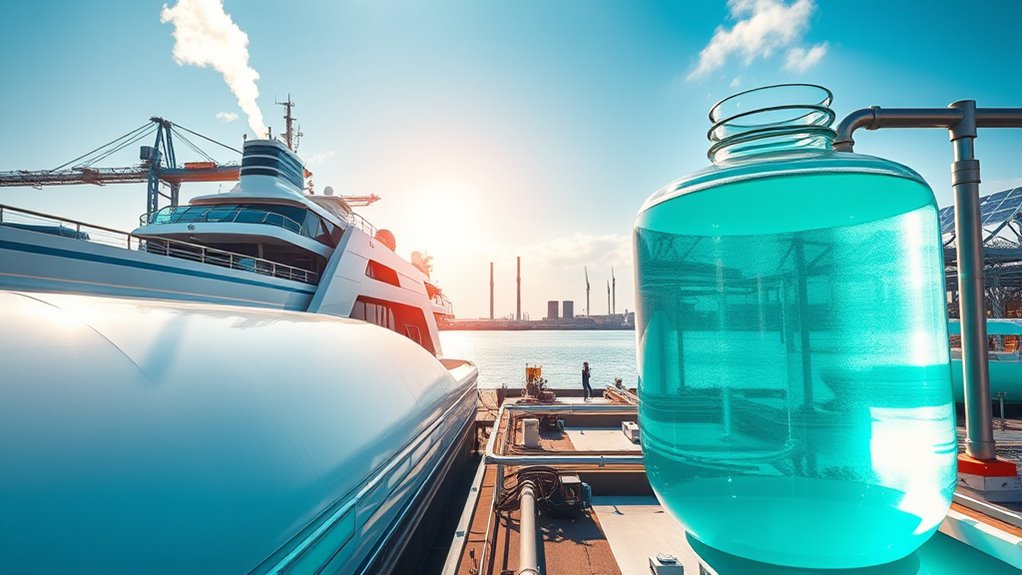

E-fuels and e-methanol play a key role in decarbonizing shipping with chemistry that converts renewable energy into sustainable liquid fuels. By capturing CO₂ and using green hydrogen, these fuels become nearly carbon-neutral and compatible with existing engines and infrastructure. They help reduce reliance on fossil fuels, lower emissions, and support international climate targets. Stay with us to explore how chemistry drives the clean energy shift in maritime transport.
Key Takeaways
- E-methanol is produced by converting captured CO₂ and green hydrogen, enabling carbon-neutral fuel synthesis for shipping.
- The chemistry of e-fuels allows compatibility with existing engines and infrastructure, facilitating decarbonization without major modifications.
- Synthetic fuels like e-methanol support a circular carbon economy by recycling emissions and reducing reliance on fossil fuels.
- Advances in renewable energy and electrolysis chemistry decrease production costs, making e-fuels increasingly economically viable.
- Incorporating chemical processes such as vertical storage enhances fuel handling, storage capacity, and scalability for maritime use.
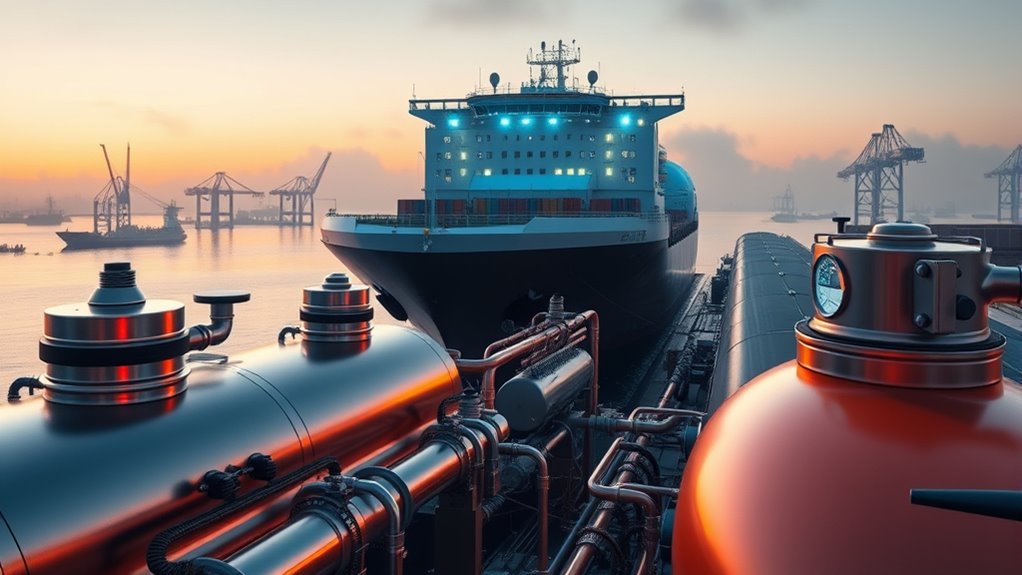
E-fuels and e-methanol are emerging as promising solutions to reduce carbon emissions in transportation and industry. These synthetic fuels are produced through an innovative process called synthetic fuel production, which involves converting renewable energy into liquid fuels. This approach offers a viable pathway to decarbonize sectors that are difficult to electrify, especially maritime transportation. As someone interested in sustainable shipping, you’ll find that e-fuels and e-methanol can considerably lower the carbon footprint of ships, helping meet global climate targets. Unlike traditional fossil fuels, these fuels are created from captured carbon dioxide and green hydrogen, making them carbon-neutral when used properly. This process not only reduces reliance on fossil fuels but also promotes a circular carbon economy, where CO₂ emissions are recycled rather than released into the atmosphere.
In the context of maritime decarbonization, e-methanol stands out because of its compatibility with existing engine technology and infrastructure. Ships powered by e-methanol can operate with minimal modifications, making it a practical solution for the maritime industry seeking to lower emissions without overhauling entire fleets. The energy density of e-methanol is sufficient for long voyages, and its liquid form simplifies storage and handling on ships, unlike gaseous fuels that require high-pressure tanks. As you explore options for greener shipping, you’ll see that implementing e-methanol can lead to immediate emissions reductions, helping shipping companies comply with stricter international regulations like IMO 2030 and 2050 targets.
Furthermore, the production of synthetic fuels through renewable energy sources creates a sustainable supply chain that can scale with demand. As investments in green hydrogen and renewable electricity increase, the cost of synthetic fuel production decreases, making e-fuels and e-methanol more economically attractive. These fuels also have the advantage of existing supply chains and refueling infrastructure, enabling easier integration into current maritime logistics. For you, this means a smoother transition to cleaner fuels without the need for entirely new vessels or extensive infrastructure upgrades. The potential for synthetic fuel production to support maritime decarbonization is notable, offering a practical, scalable, and effective way to reduce the shipping industry’s carbon footprint. Additionally, incorporating vertical storage solutions can optimize space on ships and ports, facilitating larger fuel storage capacities for extended voyages.
Frequently Asked Questions
How Cost-Effective Are E-Fuels Compared to Traditional Shipping Fuels?
E-fuels are currently less cost-effective than traditional shipping fuels due to high production costs and limited market adoption. However, policy incentives like subsidies and regulations are gradually making them more competitive. As demand grows and technology advances, e-fuels could become more affordable, encouraging wider adoption. Your decision to invest or switch will depend on how quickly these market and policy factors evolve to favor cleaner alternatives.
What Are the Current Technological Challenges in E-Methanol Production?
You face challenges in e-methanol production, notably with catalyst efficiency and process integration. Improving catalyst efficiency is vital to speed up conversion rates and reduce costs, while better process integration helps streamline the production, making it more scalable and sustainable. Overcoming these hurdles requires innovative research and collaboration, but doing so will markedly advance the viability of e-methanol as a clean fuel alternative for shipping.
How Scalable Is E-Fuel Production for Global Shipping Needs?
You might find that e-fuel production faces significant scalability barriers due to limited infrastructure development and high costs. To meet global shipping needs, you’ll need widespread facilities for renewable energy and electrolysis, which currently aren’t in place. Scaling up will require substantial investments, policy support, and technological breakthroughs to make e-fuels a viable, sustainable alternative on a large scale, but progress is gradually being made toward overcoming these challenges.
What Environmental Impacts Could Arise From Large-Scale E-Fuel Use?
When using e-fuels at a large scale, you could unintentionally impact marine ecosystems through increased pollution or accidental spills. Additionally, producing e-fuels might lead to resource depletion if you rely heavily on freshwater or rare materials. These environmental impacts highlight the need to carefully manage e-fuel production and use, ensuring that marine ecosystems stay protected and resource use remains sustainable as you shift to greener shipping options.
How Do E-Fuels Compare to Other Renewable Energy Options for Shipping?
Think of e-fuels as the slow-moving tortoise in a race of alternative energy options. They offer promise but lag behind renewables like solar or wind, which are quicker and more efficient. You can accelerate this race with policy incentives that boost renewable energy adoption. While e-fuels can complement other options, prioritizing renewables may yield faster decarbonization, making them your best bet for cleaner shipping.
Conclusion
E-fuels and e-methanol are like sparks of hope igniting the path to cleaner shipping. By embracing these innovative fuels, you can help steer the maritime industry toward decarbonization, reducing emissions much like a lighthouse guides ships through dark waters. Your support for chemistry’s role in developing sustainable solutions can turn the tide on climate change, making a difference as steady and essential as the heartbeat of a greener, brighter future.