
As industries like aerospace and automotive prioritize safety and durability, there’s a rising need for advanced materials testing. Environmental chambers simulate real-world climate conditions, helping you identify corrosion and aging effects quickly. Tensile testers assess material strength and fatigue, ensuring products can withstand stress. Combining these tools provides thorough insights into performance under environmental stresses. If you keep exploring, you’ll discover how these testing methods are shaping safer, longer-lasting products and driving industry standards forward.
Key Takeaways
- Growing industry emphasis on testing materials for durability, safety, and compliance drives demand for advanced environmental chambers and tensile testers.
- Environmental chambers enable accelerated aging simulations, helping identify corrosion and degradation issues early in material development.
- Tensile testers provide critical data on material strength and fatigue life, essential for ensuring product safety and performance.
- Integrating environmental chambers with tensile testing allows comprehensive evaluation of materials under real-world conditions.
- Increased safety standards and technological innovation propel investments in testing equipment to verify long-term reliability.

Have you noticed a recent spike in materials testing activities across industries? It’s no coincidence. As technology advances and industries push the boundaries of performance, the need for thorough testing becomes more essential than ever. Companies are investing heavily in environmental chambers and tensile testers because they want to guarantee their materials can withstand the demands placed on them. Whether it’s aerospace, automotive, or construction, understanding how materials behave under various conditions is fundamental to delivering safe, reliable products. This surge in testing reflects a heightened focus on corrosion resistance, fatigue analysis, and overall durability, all of which are indispensable for long-term success. Proper testing practices ensure materials meet safety standards and perform reliably in real-world applications.
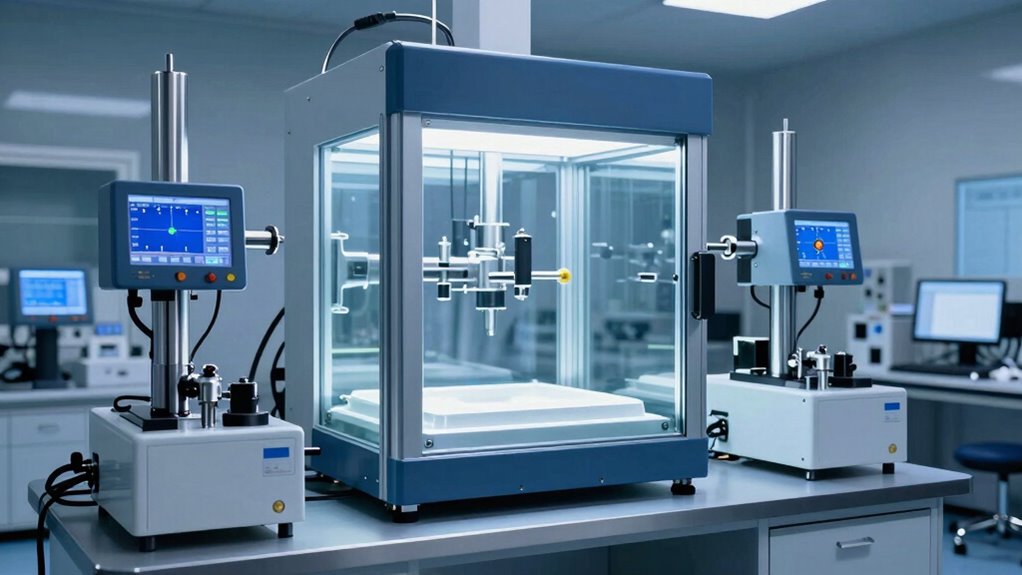
Environmental chambers play a key role in simulating real-world conditions, allowing you to observe how materials respond to humidity, temperature fluctuations, and exposure to corrosive elements. These chambers can replicate decades of aging in just weeks or months, so you gain insights quickly without waiting years. This accelerated testing helps identify vulnerabilities related to corrosion resistance early in the development process, saving you time and reducing costly recalls or failures down the line. As industries become more stringent about safety standards, rigorous testing of materials for corrosion resistance becomes non-negotiable. You need to know whether your materials will resist rust, pitting, or degradation when exposed to harsh environments, and environmental chambers provide the controlled conditions necessary for such assessments.
Environmental chambers simulate real-world conditions, accelerating aging tests to identify corrosion vulnerabilities quickly and cost-effectively.
Similarly, tensile testers are in high demand because they measure how materials respond under stress, revealing their strength and ductility. These tests are essential for fatigue analysis, which determines how materials perform under cyclic loading over time. Fatigue can lead to sudden failure if not properly understood, so testing provides the data needed to improve design and material selection. When you perform these tests, you gain valuable insights into the material’s fatigue life, helping you predict failure points and optimize safety margins. This proactive approach minimizes risks in the final product, ensuring it can withstand repetitive stresses without catastrophic failure.
The combination of environmental chambers and tensile testing equipment offers a thorough picture of a material’s performance. You can simulate real-life conditions, analyze how materials age, and evaluate their mechanical properties—all in one integrated testing process. As industries recognize the importance of durability and safety, investing in these testing tools has become a priority. The current surge in materials testing activity isn’t just about compliance; it’s about pushing the boundaries of innovation while ensuring that products remain safe, reliable, and long-lasting under the most demanding conditions.
Frequently Asked Questions
How Do Environmental Chambers Simulate Real-World Conditions?
Environmental chambers simulate real-world conditions through precise climate simulation, controlling temperature, humidity, and other factors to mimic outdoor environments. You set specific parameters to replicate seasonal changes, UV exposure, or temperature fluctuations, which helps assess how materials age over time. This process allows you to predict material performance and durability, ensuring products can withstand actual environmental stresses and prolong their lifespan effectively.
What Are the Key Factors Influencing Tensile Testing Accuracy?
Imagine you’re testing a new aerospace alloy; proper sample preparation guarantees consistency, directly impacting tensile testing accuracy. Key factors include adhering to testing standards, which define procedures for sample size, shape, and loading rates. Additionally, calibrating equipment regularly and controlling environmental conditions prevent errors. When you follow these practices, your results become reliable, helping you make informed decisions about material performance and durability in real-world applications.
How Do Material Properties Affect Testing Equipment Selection?
Material properties directly influence your choice of testing equipment. If you’re dealing with material fatigue, you’ll need a tester capable of repeated stress cycles to accurately assess durability. For surface analysis, you’ll want precise environmental chambers to simulate real-world conditions. Selecting the right equipment guarantees reliable data, especially when evaluating how surface characteristics or fatigue impact material performance under various environmental factors.
What Advancements Are Emerging in Materials Testing Technology?
You’ll see advancements like advanced imaging techniques that enable you to analyze material structures at microscopic levels, improving testing precision. Nanomaterials integration is also emerging, allowing you to test innovative, lightweight, and stronger materials. These technologies help you better understand material behavior under various conditions, making your testing more accurate and efficient. Embracing these innovations guarantees you stay ahead in developing and certifying cutting-edge materials.
How Can Testing Data Improve Product Durability and Safety?
Testing data enhances your product durability and safety by providing precise insights into material performance under various conditions. It helps you identify potential failure points early through failure analysis, reducing risks. By ensuring rigorous quality assurance, you can optimize designs, meet safety standards, and extend product lifespan. Accurate data empowers you to make informed decisions, improve reliability, and maintain customer trust, ultimately strengthening your brand reputation.
Conclusion
As materials testing demand skyrockets, environmental chambers and tensile testers become your ultimate allies. With innovation advancing faster than lightning, staying ahead means investing in these essential tools. They’re not just equipment—they’re your secret weapon against failure, ensuring your products withstand anything thrown their way. Embrace this testing surge now, or risk being left in the dust of competitors who harness the power of cutting-edge technology. Don’t just keep up—lead the charge!