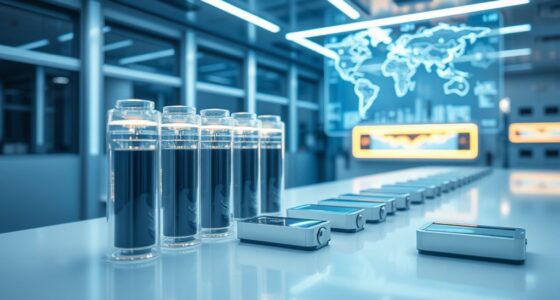

As sodium-ion batteries gain popularity, you’ll see significant changes in supply chains for cathode and anode materials. Sodium’s abundance offers cost and sourcing advantages, reducing reliance on rare lithium resources. However, developing efficient recycling methods and reliable supply networks remains a challenge. These shifts could lower costs and improve sustainability, but they also require new processing techniques. To understand how these trends will shape energy storage, keep exploring the evolving landscape of sodium-ion technology.
Key Takeaways
- Increased demand for sodium-ion batteries may reduce pressure on lithium supply but heighten need for sodium-based electrode materials.
- Development of scalable recycling methods for sodium-ion electrodes is essential to ensure sustainable supply chains.
- Abundance of sodium offers supply advantages, but high-quality cathode precursors require sustainable mining and processing practices.
- Supply chain resilience depends on innovation in electrode material synthesis and efficient recycling technologies.
- Strategic partnerships and material sourcing innovations are vital to meet growing sodium-ion battery production demands sustainably.

As the demand for sustainable energy storage grows, sodium-ion batteries are emerging as a promising alternative to lithium-ion systems. Their potential to reduce costs and reliance on geographically concentrated resources makes them especially attractive. Central to their development are electrode materials, which determine the batteries’ performance, stability, and lifespan. For cathodes, materials like sodium manganese oxide and sodium layered oxides are gaining attention due to their abundance and electrochemical properties. Anodes often utilize hard carbon or other carbon-based materials, offering a balance of capacity and durability. However, as the industry shifts toward these new electrode chemistries, it faces recycling challenges that could impact supply chains.
Recycling electrode materials in sodium-ion batteries presents unique hurdles. Unlike lithium-ion systems, where established recycling processes exist, sodium-ion batteries are still in their infancy, and their electrode compositions vary considerably. This variability complicates the development of efficient recycling methods. For example, recovering sodium from spent cathodes or anodes isn’t straightforward because sodium can diffuse into other materials or form compounds that are difficult to extract. Additionally, the lower energy density and different chemistry mean that current recycling techniques are not directly transferable, requiring innovation and adaptation. This could lead to increased waste or higher costs if recycling isn’t streamlined early on.
Supply chains for electrode materials are also influenced by the sourcing and manufacturing of raw components. The abundance of sodium offers an advantage over lithium, which is geographically limited, but the supply of high-quality electrode materials like cathode precursors still depends on mining and processing infrastructure. As the demand for sodium-ion batteries grows, ensuring a stable and sustainable supply of electrode materials becomes essential. Manufacturers will need to forge partnerships with raw material suppliers and invest in advanced processing technologies to meet future demand without bottlenecks. Moreover, the development of recycling processes will directly impact the longevity and environmental footprint of sodium-ion batteries. Efficient recycling can reduce the need for new raw materials, lower costs, and minimize waste, making the entire supply chain more sustainable. However, until these processes mature, the industry must navigate potential recycling challenges, including contamination, inefficiency, and economic viability. Addressing these issues now will be critical to establishing a resilient, eco-friendly supply chain that supports the widespread adoption of sodium-ion batteries. In sum, electrode materials and recycling challenges are intertwined factors that will shape the future landscape of sodium-ion battery supply chains, demanding innovation and strategic planning.
Frequently Asked Questions
How Does Sodium-Ion Battery Performance Compare to Lithium-Ion Batteries?
You’ll find that sodium-ion batteries generally have lower performance compared to lithium-ion batteries, especially in energy density and charge cycles. However, they tend to be more cost-effective and environmentally friendly. Longevity factors like cycle life are improving, but sodium-ion batteries still lag behind lithium-ion in durability and fast charging capabilities. Overall, they’re promising for large-scale storage but need advancements for high-performance applications.
What Are the Environmental Impacts of Sodium Extraction?
You might think sodium extraction is eco-friendly, but the environmental footprint isn’t always so light. Extraction methods like mining can cause habitat destruction, water pollution, and soil degradation, ironically harming the environment while aiming to provide sustainable energy. While sodium’s abundance seems promising, its extraction’s environmental impacts remind us that even seemingly greener options come with costs. So, be cautious; sustainability isn’t guaranteed just because a resource is plentiful.
Can Existing Lithium-Ion Manufacturing Facilities Be Adapted for Sodium-Ion Production?
You can adapt existing lithium-ion manufacturing facilities for sodium-ion production through facility retrofits, which involve modifying current equipment and processes. Manufacturing adaptation is feasible because sodium-ion cells share similarities with lithium-ion ones, allowing for cost-effective upgrades. However, you’ll need to address specific challenges like different electrode materials and electrolyte handling. Overall, retrofitting can accelerate sodium-ion deployment without building entirely new factories, making it a practical shift.
What Are Cost Differences Between Sodium-Ion and Lithium-Ion Battery Components?
Ever wonder if sodium-ion batteries are more affordable than lithium-ion? Material costs for sodium are generally lower because sodium is more abundant and cheaper than lithium, which reduces overall material expenses. Manufacturing expenses can also be lower due to simpler processing requirements. However, sodium-ion batteries may have trade-offs in energy density and longevity. Still, their cost advantages could make them attractive for large-scale, cost-sensitive applications.
How Scalable Are Sodium-Ion Battery Supply Chains Globally?
You can scale sodium-ion battery supply chains globally, thanks to their potential for increased supply chain diversity and abundant raw material availability. Unlike lithium, sodium is widely accessible, reducing bottlenecks. While establishing a robust infrastructure takes time, the widespread availability of raw materials allows for flexible sourcing and geographic expansion, making sodium-ion supply chains more adaptable and scalable to meet growing demand worldwide.
Conclusion
As sodium-ion batteries rise, you’ll see supply chains evolve, adapt, and expand. You’ll witness new sources emerge, new partnerships form, and new technologies develop. You’ll navigate shifting demands, overcoming challenges, and seizing opportunities. This shift offers growth, innovation, and resilience. Embrace the change, prepare for the future, and stay agile. Sodium-ion’s ascent isn’t just a shift in chemistry; it’s a transformation in supply chain dynamics, shaping tomorrow’s energy landscape.