
Synthetic biology startups are transforming how we produce goods by engineering microbes to make everything from medicines to biofuels and biodegradable plastics. These microbes are designed with genetic circuits that act like tiny internal computers, precisely controlling gene expression to optimize production. They operate efficiently at a microscopic level, reducing waste and costs. If you want to explore how these innovative microbes are shaping the future of manufacturing, you’ll find more exciting details ahead.
Key Takeaways
- Startups in synthetic biology engineer microbes with genetic circuits to produce pharmaceuticals, biofuels, and biodegradable plastics efficiently.
- They utilize advanced gene editing tools like CRISPR to rapidly customize microbes for industrial applications.
- Microbial factories operate sustainably, reducing waste and energy consumption while increasing production yields.
- These startups enable rapid adaptation to market demands, democratizing manufacturing and opening new economic opportunities.
- They support a practical revolution in manufacturing by designing microbes capable of making virtually everything.
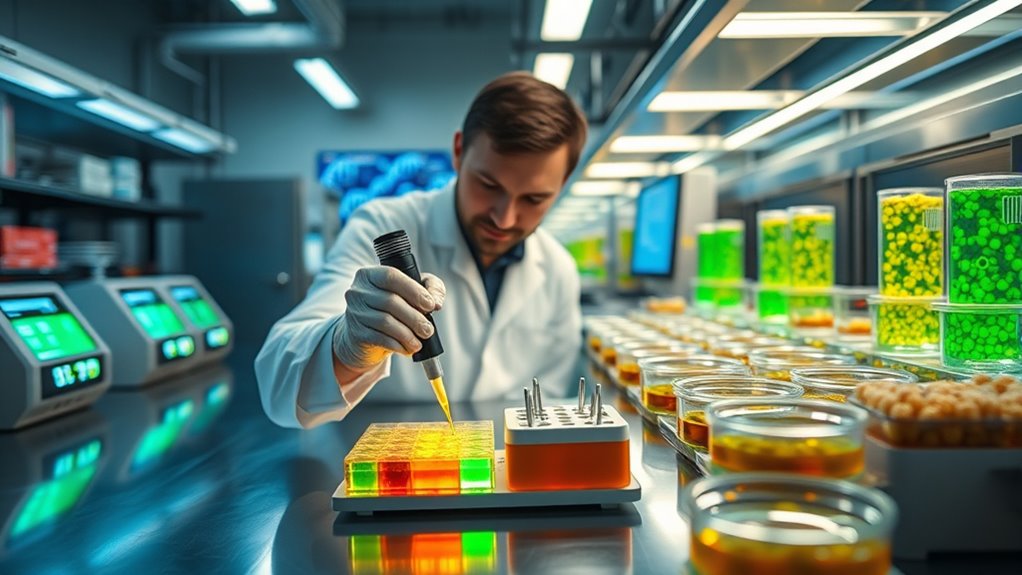
Have you ever wondered how startups are transforming the future of biology? It’s all about harnessing the power of synthetic biology to reprogram microorganisms into tiny, efficient factories that produce a myriad of products. These innovative companies are designing complex genetic circuits within microbes, enabling them to perform specific tasks with precision.
Startups are revolutionizing biology by engineering microbes to become precise, efficient manufacturing factories.
Unlike traditional manufacturing, which relies heavily on chemical processes or large-scale industrial setups, these microbial factories operate at a microscopic level, making production more sustainable, cost-effective, and adaptable.
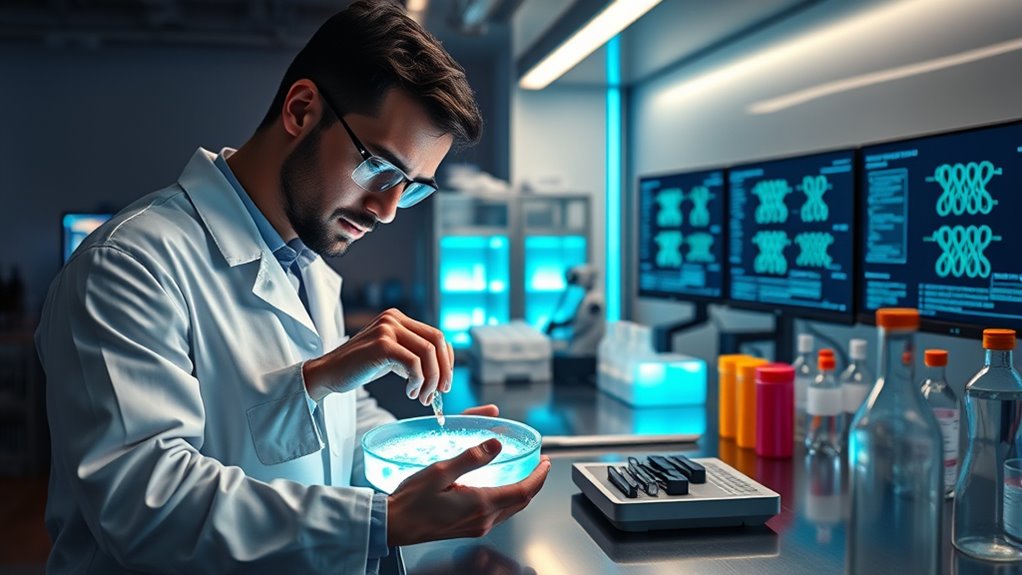
When you think of genetic circuits, imagine them as the microbes’ internal computer programs. They control gene expression, turning pathways on or off in response to environmental cues or internal signals. This level of control allows startups to engineer microbes that can produce pharmaceuticals, biofuels, or even biodegradable plastics.
For instance, engineers are now developing microbes with highly specific genetic circuits, which improve the efficiency and precision of product synthesis. By inserting synthetic genetic circuits into bacteria, companies can create microbial factories that synthesize complex molecules that would otherwise be expensive or impossible to produce through conventional methods. This approach reduces waste, minimizes energy consumption, and speeds up production cycles.
The concept of microbial factories isn’t just a fancy term; it’s a practical revolution in manufacturing. These engineered microbes are designed to optimize production pathways, increasing yields and reducing costs.
You might see bacteria producing insulin more efficiently or yeast generating bio-based materials traditionally derived from petrochemicals. Startups leverage advanced gene editing tools like CRISPR to rapidly modify these organisms, tailoring them to specific needs.
They also focus on creating robust strains that can withstand industrial conditions, ensuring consistent output. Incorporating mindfulness techniques into their development processes can help researchers maintain focus and reduce stress during complex genetic modifications.
More than just a technological breakthrough, this approach opens new economic opportunities. It democratizes production, allowing smaller companies to develop and scale up products without the need for massive industrial infrastructure.
Additionally, the flexibility of microbial factories means they can be quickly adapted to produce new compounds as market demands shift. This agility is vital in fields like medicine, where rapid development of new drugs can save lives.
Frequently Asked Questions
How Do Synthetic Biology Startups Secure Funding and Investments?
You secure funding and investments by showcasing your startup’s innovative potential and clear market impact. Venture capitalists look for scalable ideas, so demonstrate how your synthetic biology solutions address real-world problems.
Additionally, applying for government grants can provide non-dilutive funding to support research and development.
Building strong relationships with investors and government agencies helps you gain credibility and resources needed to grow your startup successfully.
What Are the Biggest Ethical Concerns in Engineering Microbes?
You’re tackling some of the biggest ethical concerns in engineering microbes, and trust me, it’s no small feat. The risks of biosafety concerns are huge—accidental releases could cause chaos—and genetic privacy issues threaten individual rights.
You must weigh the potential benefits against these risks carefully, ensuring proper regulations and oversight. It’s about protecting both public health and personal data while harnessing the incredible power of microbial engineering responsibly.
How Do Startups Ensure Safety and Containment of Engineered Microbes?
You guarantee safety and containment of engineered microbes by strictly following biosafety protocols and implementing robust containment strategies.
You might use physical barriers, like secure laboratories, and biological safeguards, such as gene drives or kill switches, to prevent accidental release.
Regular monitoring and risk assessments help you stay ahead of potential issues.
What Are the Main Challenges in Scaling Microbial Production?
When scaling microbial production, you face challenges like optimizing bioreactors for maximum efficiency and maintaining microbial strain stability over time.
You need to carefully control conditions such as pH, temperature, and oxygen levels to prevent contamination and guarantee consistent yields.
Additionally, managing genetic stability helps keep your microbes functioning as intended, avoiding mutations that could reduce productivity or cause safety issues.
These factors are vital for successful large-scale production.
How Do Regulatory Policies Impact Synthetic Biology Startups?
Regulatory policies act like a tightrope walker, balancing innovation with safety. As a startup, you might find your progress slowed by concerns over environmental impact and intellectual property rights.
Strict regulations can increase costs and create delays, making it harder to bring products to market. Steering through these policies requires careful planning and compliance, but ultimately, it guarantees your innovations are safe, sustainable, and protected.
This fosters trust and long-term success.
Conclusion
As you explore these startups, remember they’re like seeds planted in fertile soil, promising a future where microbes bloom with innovations. Their work is the tiny brushstroke shaping a vibrant, sustainable landscape—each breakthrough a drop of water nourishing the earth. With every engineered microbe, you’re witnessing the dawn of a new era, where science becomes the roots of a thriving forest. Embrace this journey, knowing you’re part of cultivating a greener, smarter world.