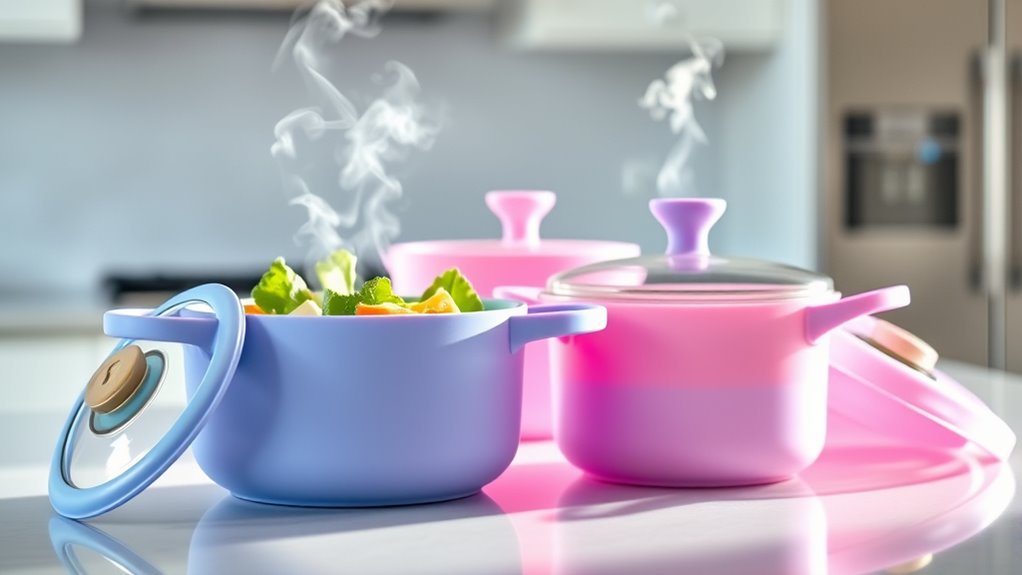

Silicone cookware is generally safe when made from certified, food-grade silicone, as it doesn’t readily leach chemicals under normal use. However, lower-quality or uncertified products may contain additives or fillers that could migrate into food, especially at high temperatures or with acidic foods. To guarantee safety, always check for proper certifications and proper care. If you continue exploring, you’ll discover ways to choose and maintain your silicone cookware safely.
Key Takeaways
- Food grade silicone is inert and stable at typical cooking temperatures, minimizing chemical leaching.
- Properly certified silicone products undergo testing to prevent harmful chemical migration during use.
- Additives or fillers in lower-quality silicone may leach chemicals, especially under high heat or acid conditions.
- Regular inspection and proper maintenance reduce the risk of damage that could increase chemical migration.
- Choosing certified, food-grade silicone and following usage guidelines ensures safe, chemical-free cooking.
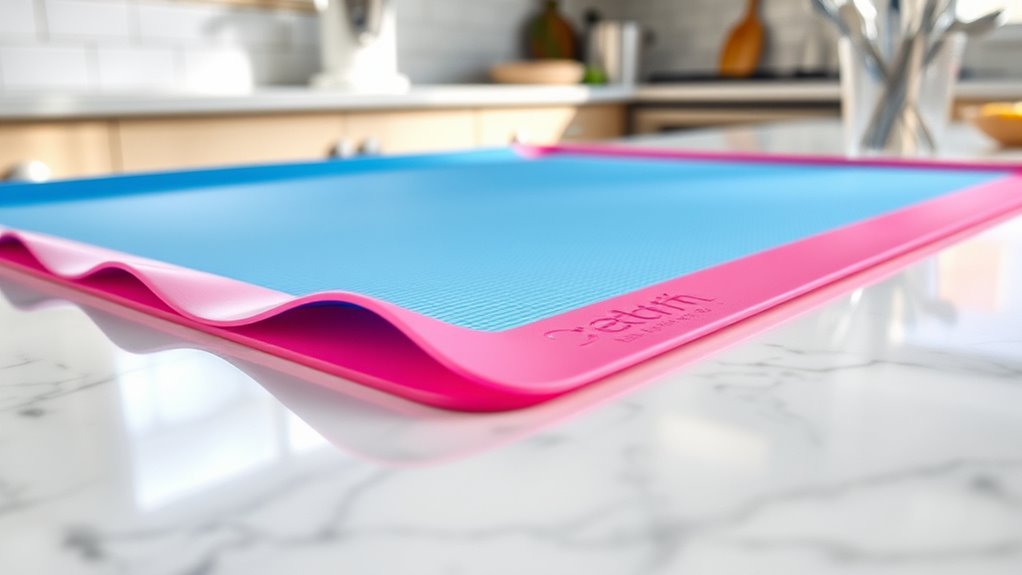
Silicone cookware has become popular for its flexibility and non-stick properties, but understanding its safety is vital. When you’re choosing silicone kitchen tools, it’s important to know that many products are manufactured to meet food grade standards. These standards ensure that the silicone used is safe for contact with food and doesn’t contain harmful chemicals.
Food grade silicone is designed to withstand high temperatures without breaking down or releasing toxins, giving you confidence that your cookware is safe to use. However, not all silicone products are created equal. Some cheaper or poorly manufactured items may not adhere to these standards, raising concerns about chemical migration.
Food grade silicone resists heat and toxins, but quality varies—choose certified products for safety.
Chemical migration refers to the transfer of substances from the silicone into your food. While silicone itself is inert and stable at typical cooking temperatures, the concern arises from additives or fillers that might be used in lower-quality products. These additives can sometimes migrate into your food, especially when exposed to high heat or acidic ingredients.
To minimize this risk, always opt for silicone cookware labeled as food grade and approved by relevant safety authorities. These labels indicate that the product has been tested and verified to prevent harmful chemical migration, giving you peace of mind during cooking. Additionally, proper storage of silicone cookware can help maintain its safety and longevity.
You should also pay attention to how you care for your silicone cookware. Even the highest-quality silicone can degrade if exposed to harsh cleaning agents or sharp utensils. Over time, small cracks or tears could develop, potentially increasing the likelihood of chemical migration.
Proper cleaning—using gentle dish soap and avoiding abrasive scrubbers—helps maintain the integrity of your silicone tools. When purchasing, check for certifications or safety marks that validate the product’s compliance with safety standards. This extra step ensures you’re not inadvertently exposing yourself to materials that could leach chemicals into your food.
In addition, be cautious about extreme temperature changes, such as moving hot silicone directly into cold water, which might cause stress and compromise the material. Using silicone within the recommended temperature range preserves its structure and safety.
Furthermore, understanding the natural properties of silicone can help you better appreciate its resilience and safety features in the kitchen. If you notice any discoloration, warping, or damage, it’s best to replace the item. While silicone is generally considered safe, being vigilant about product quality and proper use helps prevent potential issues related to chemical migration.
Ultimately, if you select silicone cookware that meets food grade standards and take good care of it, you can enjoy its convenience without worry. Knowing about food grade standards and understanding the risks of chemical migration allows you to make informed choices, ensuring your kitchen remains a safe space for preparing meals.
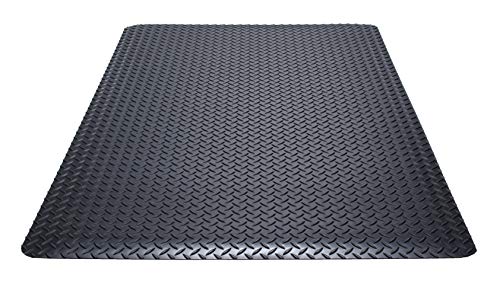
Guardian Safe Step Anti-Fatigue Floor Mat, Vinyl, 2'x3', Black
2' x 3' Black anti-fatigue floor mat
As an affiliate, we earn on qualifying purchases.
Frequently Asked Questions
Is Silicone Cookware Safe for Use in the Microwave?
You’re wondering if silicone cookware is microwave safe. The good news is, silicone is generally safe for microwave use because it withstands high temperatures without melting or releasing harmful chemicals.
Its durability makes it a reliable choice, and many silicone products are specifically labeled microwave safe. Just confirm your silicone cookware is free from fillers or dyes, and follow manufacturer instructions to enjoy its convenience and safety in your microwave cooking.
How Does Silicone Cookware Compare to Teflon in Safety?
When comparing silicone cookware to Teflon, you might think it’s a David vs. Goliath battle. Silicone is generally safer, with minimal chemical leaching and fewer durability concerns, especially at high temperatures.
Teflon, on the other hand, can release harmful fumes if overheated and may scratch over time. Silicone’s flexibility and heat resistance make it a safer, long-lasting choice, giving you peace of mind in your kitchen.
Can Silicone Leach Chemicals at High Cooking Temperatures?
You’re wondering if silicone can leach chemicals at high temperatures. Generally, silicone is stable and safe up to around 428°F (220°C).
However, at very high temperature effects beyond this, there’s a potential for chemical leaching. To minimize risks, avoid exposing silicone cookware to extreme heat, and always follow manufacturer guidelines.
When used properly, silicone remains a safe, non-toxic option for cooking at typical temperatures.
Are There Any Health Risks Associated With Long-Term Silicone Use?
You might wonder if long-term silicone use poses health risks. While silicone is generally considered safe, ongoing chemical leaching could potentially impact your health over time.
However, most studies show that silicone cookware and utensils don’t release harmful chemicals at normal use temperatures. To stay safe, avoid high heat and choose reputable brands.
Being cautious helps minimize any potential long-term health concerns related to chemical leaching.
What Certifications Should I Look for on Silicone Cookware?
When choosing silicone cookware, look for certification standards that guarantee safety and quality assurance.
Certifications like FDA approval, LFGB, or BPA-free labels indicate the product meets rigorous safety guidelines.
These standards help you trust that the silicone is free from harmful chemicals and safe for cooking.
Always check for reputable certification marks to make confident, healthy choices in your kitchen.

NORTHSKY Olympia Anti Fatigue Mat, Fatigue Mats for Standing, Ribbed, 5 x 3 ft, 5/8" Thick, Waterproof PU, Slip-Resistant, High-Density Memory Foam, for Garage Repair, Kitchen&Balcony
WATERPROOF PU BUILD - Anti fatigue mat adopts waterproof and oil-resistant top layer, plus chemical durability. Wipes clean...
As an affiliate, we earn on qualifying purchases.
Conclusion
While silicone cookware may seem like a safe choice, it’s natural to wonder if it leaches chemicals. Remember, choosing high-quality, FDA-approved silicone can reduce your worries—think of it as a shield for your health. With proper care and knowledge, you can enjoy cooking without fear. So, stay informed, trust reputable brands, and let your kitchen be a haven of safety and flavor—because your well-being deserves nothing less.

ISXACFF Anti Fatigue Mats Industrial 3' x 5' 15/16" Extra Thick Ergonomic Standing Mat Commercial Kitchen Mat Heavy Duty Diamond Plate Cushioned Shop Floor Mats Helps Relieve Back and Leg Soreness
NOTE: Long-term transportation may cause creases in the anti fatigue mat, please lay the mat flat for a...
As an affiliate, we earn on qualifying purchases.

Buy-Rite Professional 3'x4' Anti-Fatigue Salon Mat – 1/2" Thick, Puncture-Proof, Low-Static, Rectangular Mat with Chair Depression – Reduces Leg & Back Strain, Easy to Clean, Black, SHP-AF3040R1/2
𝐓𝐑𝐔𝐒𝐓𝐄𝐃 𝐁𝐘 𝐒𝐀𝐋𝐎𝐍 𝐏𝐑𝐎𝐅𝐄𝐒𝐒𝐈𝐎𝐍𝐀𝐋𝐒: This salon mat combines premium product quality with a robust design tailored for high-volume...
As an affiliate, we earn on qualifying purchases.