You might think natural pesticides are always safer, but that’s not true. Their safety depends on chemical properties, exposure levels, and doses, not just their natural origin. Some natural pesticides can be highly toxic, mutagenic, or cause long-term health issues, similar to synthetic options. Safety labels and regulatory standards help, but understanding toxicity and proper application is key. To learn more about how natural and synthetic pesticides compare, keep exploring the details below.
Key Takeaways
- Natural pesticides generally have higher LD50 values, indicating lower toxicity compared to synthetic pesticides, but they are not inherently safe.
- Both natural and synthetic pesticides can cause genetic mutations, DNA damage, and long-term health issues when misused or overexposed.
- The safety of a pesticide depends on dose and exposure level, not solely on whether it is natural or synthetic.
- Natural pesticides can leave residues that accumulate environmentally and in food, posing health and ecological risks.
- Proper application, regulation, and understanding of toxicity are essential, as natural pesticides are not automatically safer than synthetics.
Understanding Toxicity Classifications of Pesticides
Understanding toxicity classifications of pesticides is essential for evaluating their potential risks and ensuring safe handling. These categories are based on acute toxicity data, mainly LD50 values from animal tests, indicating the dose needed to kill 50% of test animals.
Pesticides are grouped into four main classes: Category I (highest toxicity), Category II, Category III, and Category IV (lowest toxicity). The classifications focus on oral and dermal LD50 measures, helping identify how dangerous a pesticide is through ingestion or skin contact. Regulatory standards often use these classifications to establish safe exposure limits and handling guidelines.
Packaging and labeling reflect these categories with specific hazard warnings and signal words like “Danger” or “Warning.” Remember, though, these classifications only indicate immediate toxicity and don’t account for long-term health effects like carcinogenicity or reproductive harm. Additionally, understanding the toxicity classifications can guide safer application and storage practices to minimize accidental exposure.
Comparing Acute Toxicity: Natural vs. Synthetic
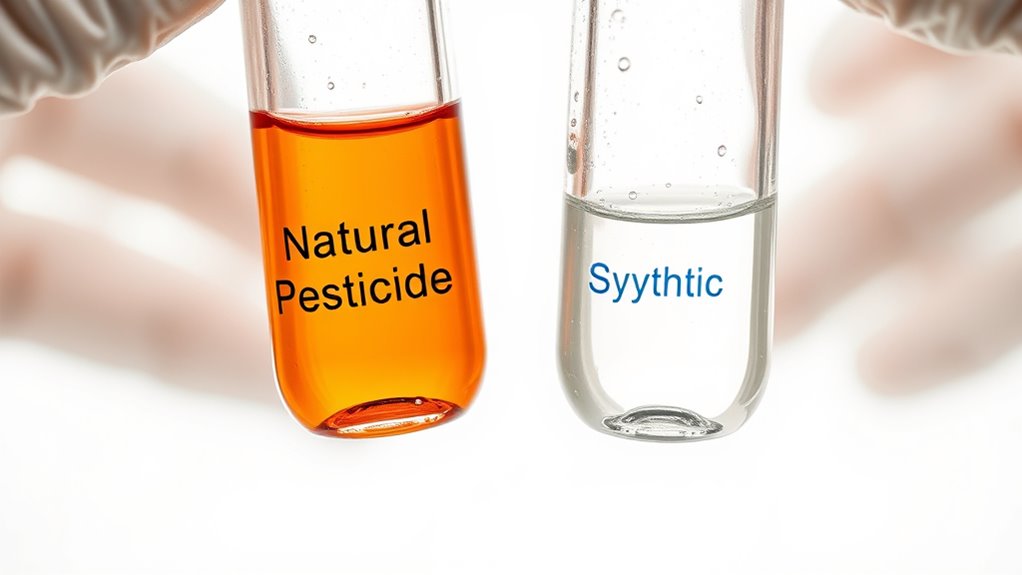
When comparing acute toxicity between natural and synthetic pesticides, it’s clear that natural options generally pose lower immediate risks to humans. The median LD50 for natural pesticides is about 569.6 mg/kg, placing them in the slightly toxic range, while synthetics have a lower median of 176.9 mg/kg, classified as moderately toxic. The mean LD50 values follow the same pattern—natural pesticides average around 1431.9 mg/kg, higher than synthetics at 974.3 mg/kg—indicating lower toxicity. Additionally, about 24.6% of synthetic active substances are harmful or fatal if swallowed, compared to only 1.5% for natural ones. Synthetic pesticides also show higher hazard levels for skin contact and inhalation. Recognizing the toxicity levels of different pesticide types can help users make informed decisions. Understanding the environmental considerations surrounding pesticide use can help inform safer choices and promote sustainable practices.
Mutagenic and Long-term Health Effects

Though often perceived as safer alternatives, natural pesticides can still pose mutagenic and long-term health risks. They may induce genetic mutations, damaging DNA in organisms, just like synthetic chemicals. Essential oils and natural compounds have shown genotoxic effects in studies, raising concerns about DNA integrity. Natural pesticide toxicity highlights the importance of understanding their potential risks. Some natural insecticides also have evidence suggesting carcinogenic potential, although findings vary. Long-term exposure can lead to health issues such as liver and kidney toxicity, hematotoxicity, neurotoxicity, and reproductive problems. These pesticides can trigger oxidative stress, causing cellular damage over time. Additionally, natural pesticide residues can accumulate in the environment and food supply, increasing potential exposure. While natural pesticides are often viewed as safer, their mutagenic and chronic health effects highlight the importance of understanding their risks thoroughly. Ongoing research is needed to clarify long-term safety profiles.
Regulatory Standards and Safety Labels
Have you ever wondered how natural pesticides are regulated to guarantee your safety? The USDA’s National Organic Program (NOP) sets strict standards for organic pesticides, allowing only naturally derived substances and a few low-toxicity synthetics like boric acid. These products must have approved inert ingredients, and the NOP regularly updates the list of permitted substances with input from experts and the public. Cookie policies also influence how safety information is communicated to consumers. Additionally, the evaluation process includes consideration of toxicity levels to ensure consumer safety. The regulatory process for these pesticides involves ongoing review and adjustments to maintain safety standards.
All pesticides, natural or synthetic, need EPA registration or exemption before sale. Organic pesticides undergo additional scrutiny, with organizations like OMRI certifying compliant products. Labels are designed to inform you about ingredients, safety precautions, and regulatory approval, ensuring transparency.
These standards emphasize low toxicity and ongoing safety reviews, helping you make informed, safer choices.
Environmental Impact and Ecological Considerations
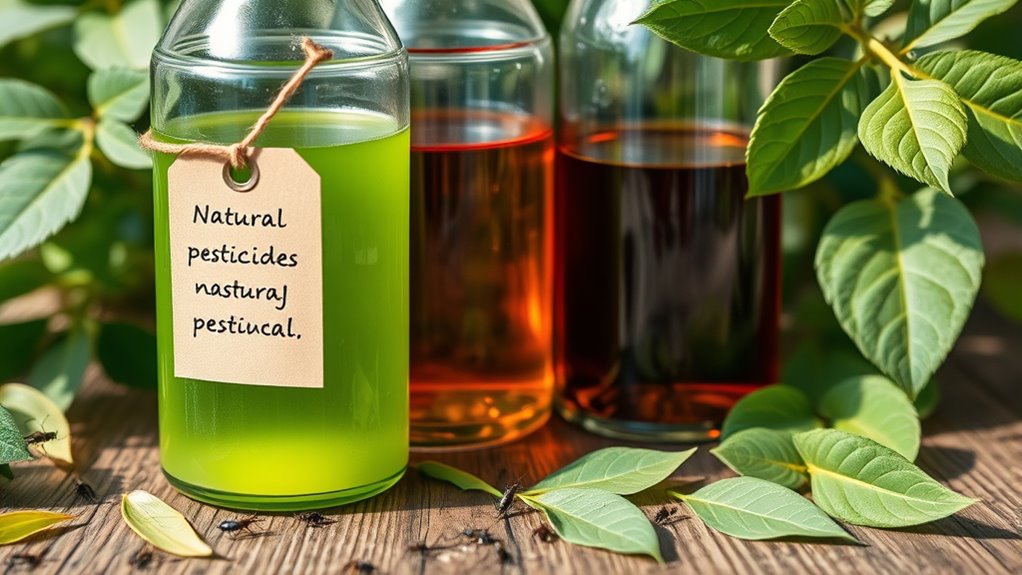
Organic pesticides can still have significant environmental impacts, often comparable to synthetic chemicals. You might need larger doses and frequent applications due to reduced potency, which increases environmental load. These repeated treatments can harm beneficial insects like pollinators and natural predators, disrupting ecological balances.
Organic compounds such as rotenone and pyrethrins can also contaminate water bodies, affecting aquatic ecosystems. Their breakdown rates vary; some linger in soil and water, creating long-term risks, while others degrade quickly. Residual metabolites may remain toxic, and leaching into groundwater is a concern.
Over time, repeated use can degrade soil health, reduce biodiversity, and trigger pest resurgence. Despite being labeled “natural,” these pesticides may still cause habitat loss and ecological imbalance, challenging the assumption that they’re inherently safer for ecosystems.
Human Health Risks and Exposure Concerns
Pesticide exposure can pose significant health risks, especially when you consider the different ways these chemicals can enter your body. You might ingest residues on food or breathe in vapors from contaminated air or water. Agricultural workers and pesticide applicators face the highest risks due to direct contact, but residents near treated fields or households using pesticides aren’t immune.
Some pesticides are classified as carcinogens, increasing your cancer risk, while others mimic or block hormones, disrupting your endocrine system. Exposure can cause respiratory issues like asthma or allergic rhinitis, and neurological problems such as cognitive decline or Parkinson’s disease.
Children are particularly vulnerable, with exposure linked to developmental disorders like ADHD and autism. Even low-level, chronic exposure may lead to long-term health effects, highlighting that natural doesn’t always mean safe.
Evaluating Safety: The Role of Dose in Toxicity
Understanding how much of a pesticide enters your body is key to evaluating its safety. The dose determines whether toxic effects occur, as most substances have a threshold below which no harm is observed. For example, the LD50 indicates acute lethality, but effects like reproductive toxicity can happen at much lower doses.
Different toxic responses require multiple dose-response curves for accurate assessment. Even natural pesticides with high LD50s can cause irritation or other issues if doses are high enough. Both acute and chronic toxicity depend on dose, exposure duration, and frequency.
Variability among individuals influences responses, so safety evaluations consider these factors. Ultimately, understanding the dose-response relationship helps you assess risk and ensures proper handling, regardless of whether a pesticide is natural or synthetic.
Frequently Asked Questions
Can Natural Pesticides Be More Harmful Than Synthetic Ones in Certain Situations?
You might think natural pesticides are always safer, but that’s not true in every case. Natural options can sometimes be more harmful, especially at higher doses or with persistent exposure.
Certain natural pesticides have high toxicity warnings, and they can cause developmental or mutagenic effects similar or worse than synthetic chemicals.
Always handle all pesticides with caution, regardless of whether they’re natural or synthetic, and follow safety guidelines carefully.
How Do Natural Pesticides Affect Non-Target Beneficial Organisms?
You might think natural pesticides are harmless, but they can unexpectedly devastate beneficial organisms like bees, lacewings, and parasitic wasps.
Larger doses needed for effectiveness increase environmental exposure, risking contamination of pollinators through direct contact or residues on plants.
Some pesticides can subtly impair pollinator reproduction, memory, and navigation, threatening ecosystems.
Protecting habitats and choosing pesticides carefully are essential to minimize these harmful impacts on beneficial beneficials.
Are Natural Pesticides More Sustainable Than Synthetic Options Long-Term?
You might think natural pesticides are always more sustainable, but that isn’t always true. Their rapid breakdown reduces long-term environmental buildup, but they can require frequent applications, increasing usage.
Synthetic pesticides can be more effective and sometimes less environmentally impactful with proper management.
Long-term sustainability depends on integrated strategies that balance efficacy, environmental effects, and economic factors, rather than relying solely on whether a pesticide is natural or synthetic.
What Are the Economic Implications of Choosing Natural Over Synthetic Pesticides?
Choosing natural pesticides comes with costs and consequences you should consider. You might face higher initial investments due to scaling challenges, and yields could dip temporarily, impacting income.
However, long-term savings are possible as biopesticides lower resistance risks and environmental expenses. You’ll need to balance the benefit of reduced health hazards and ecological impact against increased production costs and market uncertainties, making strategic decisions essential for sustainable success.
How Do Regulatory Standards Differ Globally for Natural and Synthetic Pesticides?
You should know that global regulatory standards for pesticides vary widely. In some regions, like the EU, strict risk assessments apply to both natural and synthetic products.
While others, such as parts of Asia, favor promoting biopesticides and easing regulations for natural options. Many countries require extensive toxicity data for synthetics, but natural pesticides often get exemptions.
However, they still undergo safety evaluations to protect consumers and the environment.
Conclusion
Ultimately, understanding that natural pesticides aren’t necessarily safer helps you make more mindful, measured decisions. Recognize the risks, respect the regulations, and remember that dosage determines danger. Don’t dismiss synthetic solutions outright, nor glamorize natural ones blindly. By balancing benefits and boundaries, you protect your health, preserve the environment, and promote safer, smarter pest management. Stay savvy, stay safe, and steer clear of complacency when it comes to chemical choices.